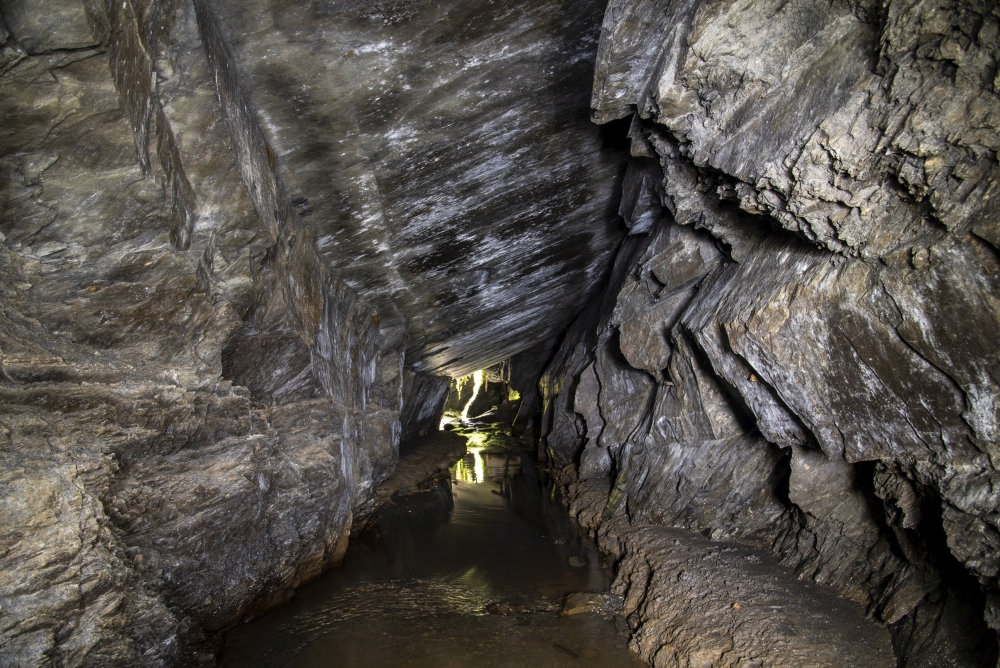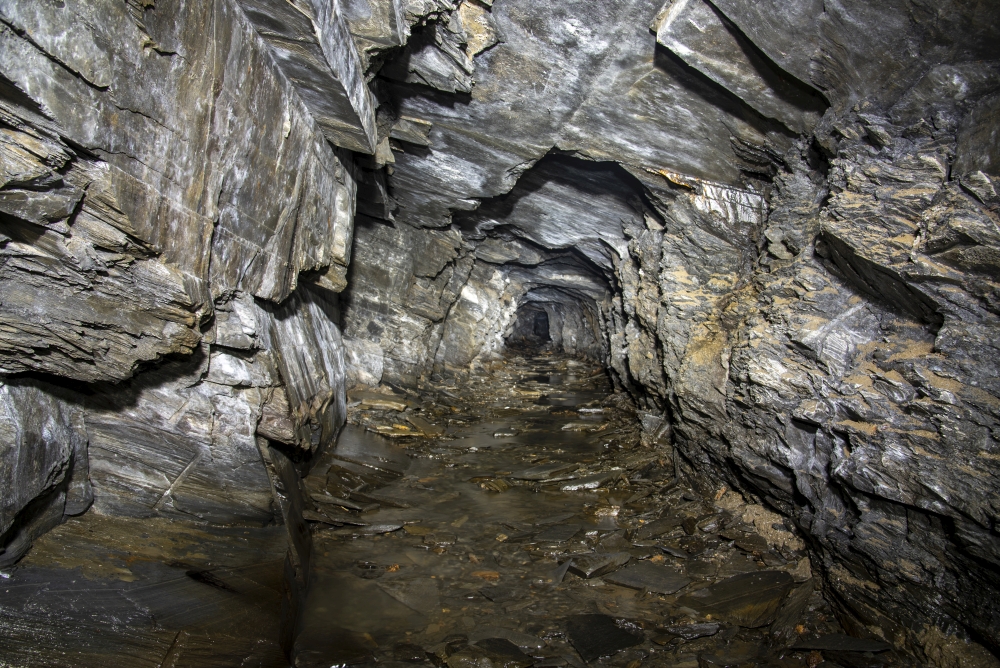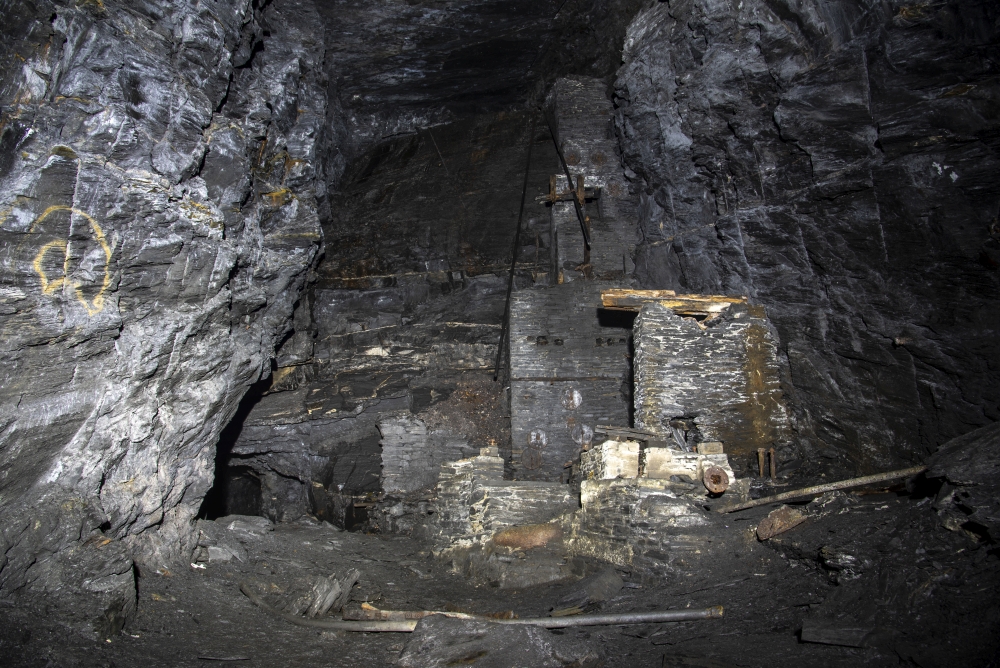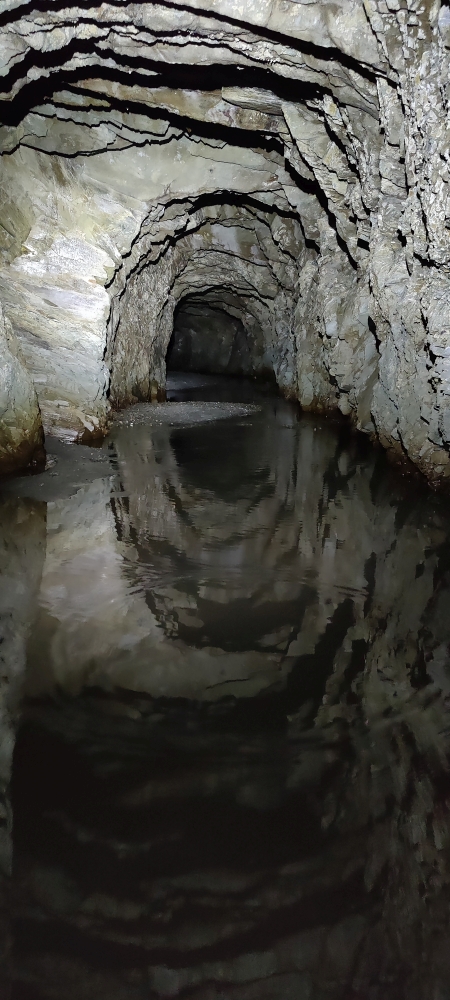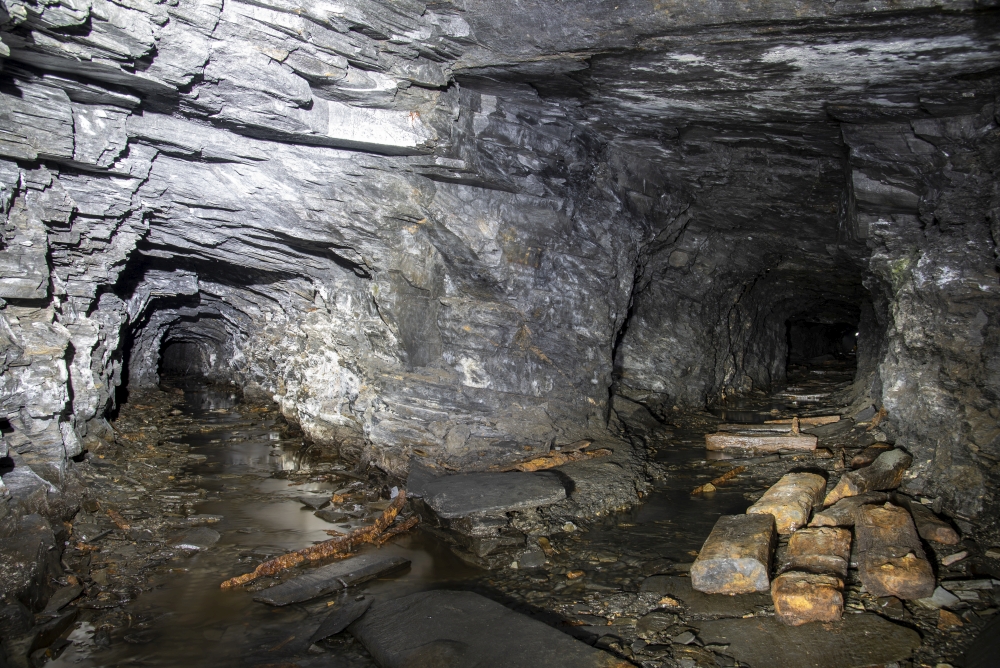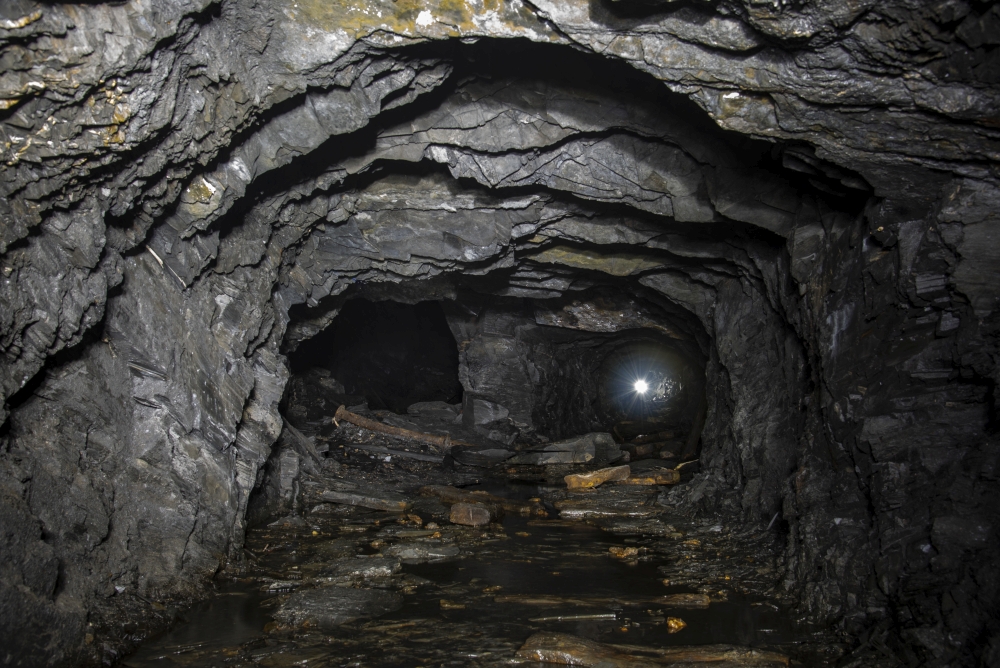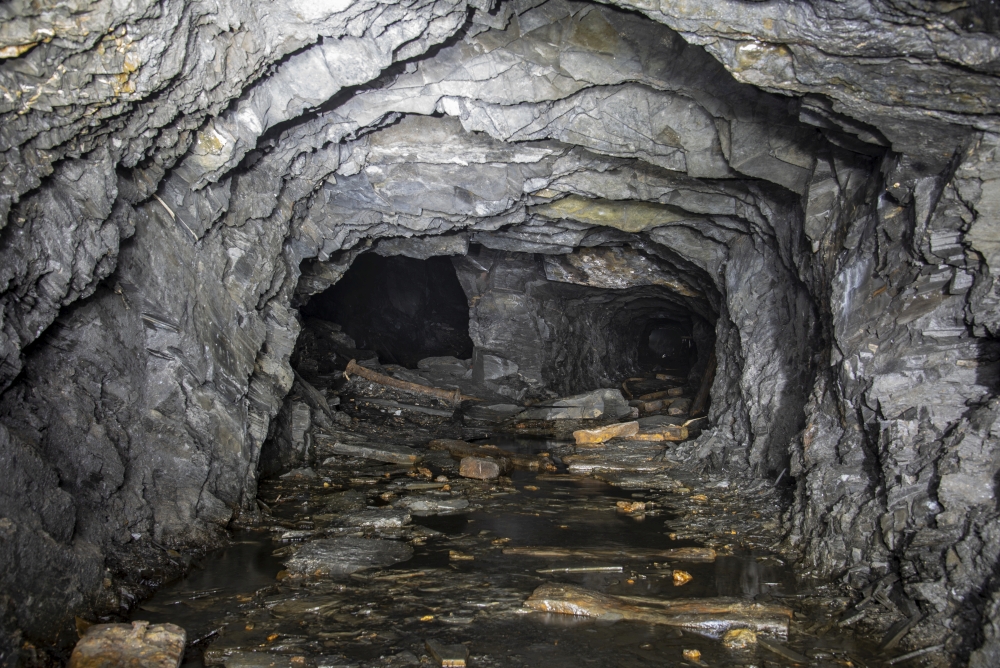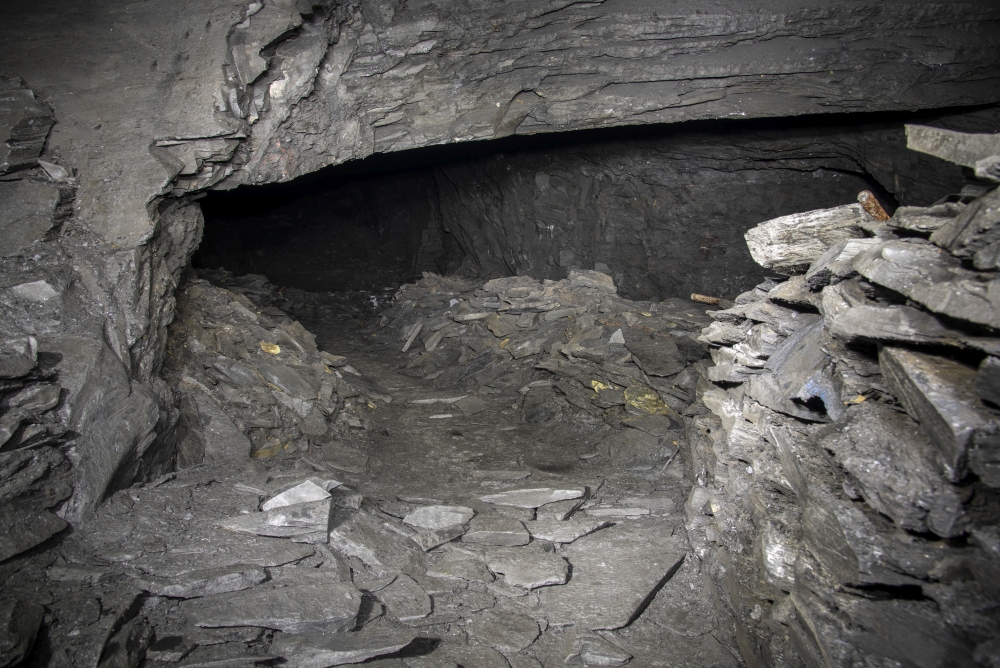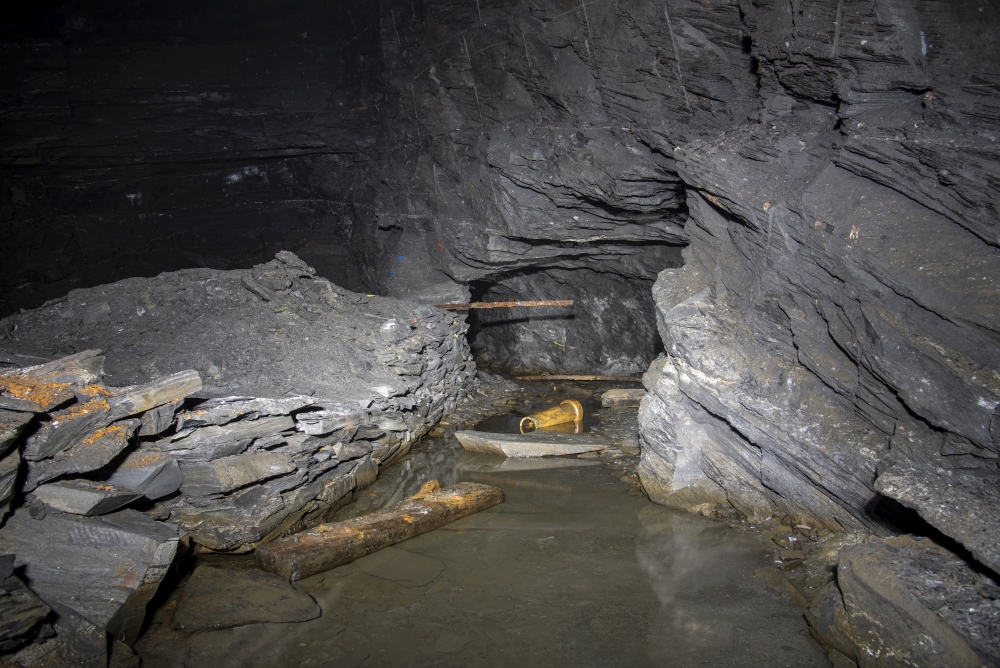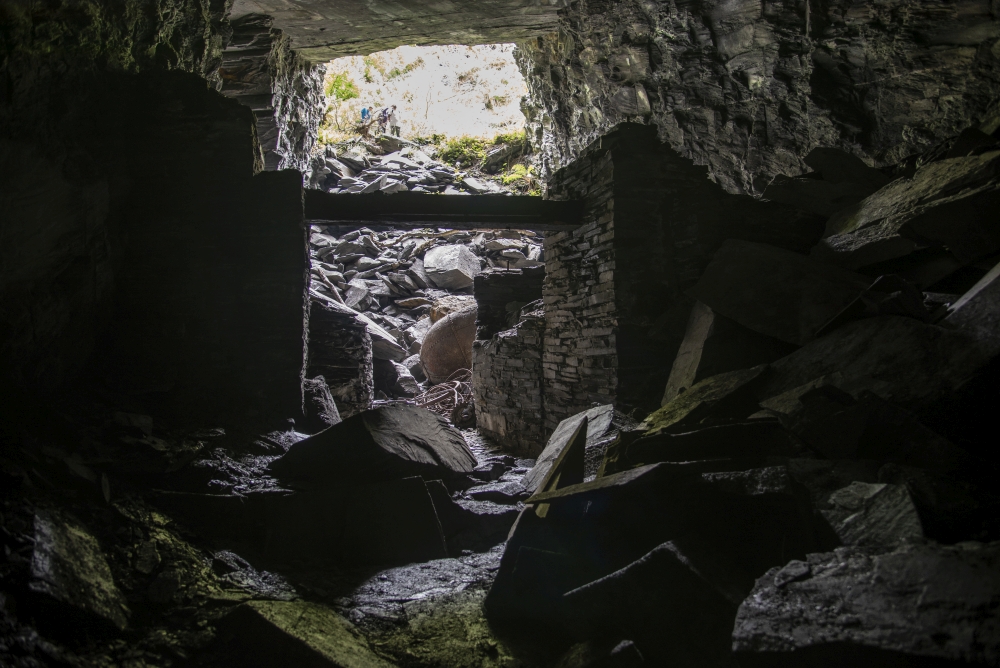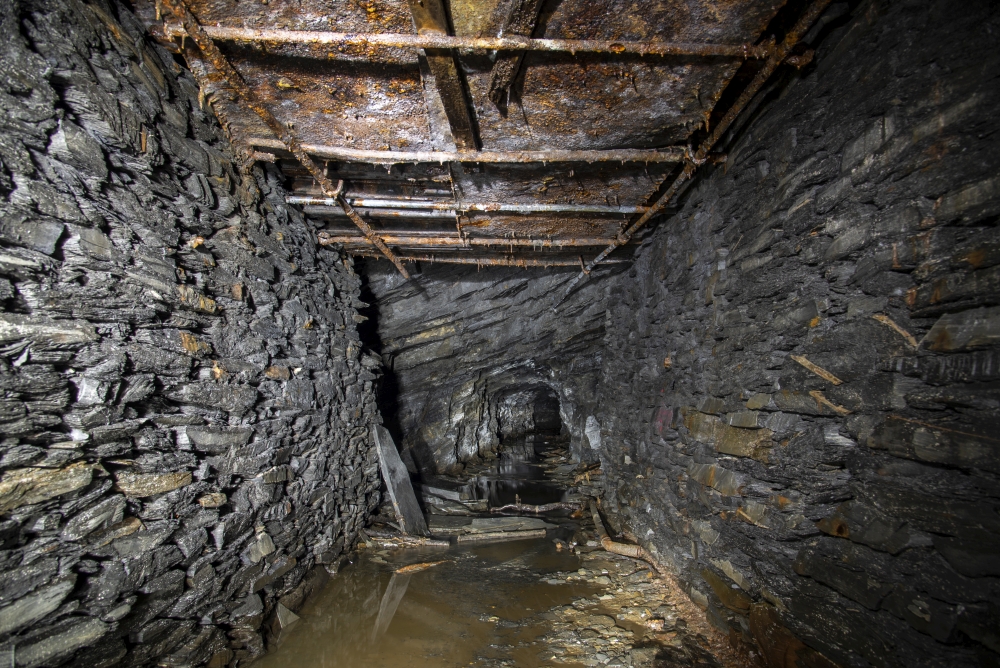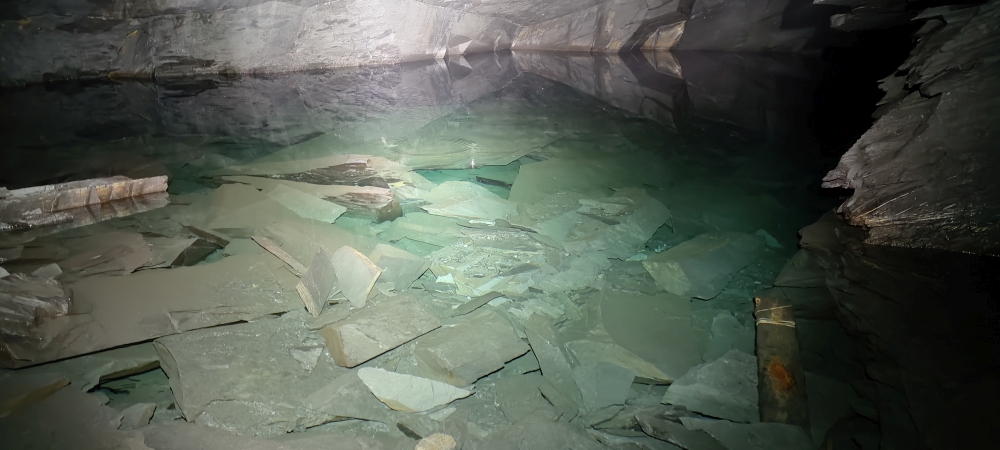



Extensive underground workings. ***
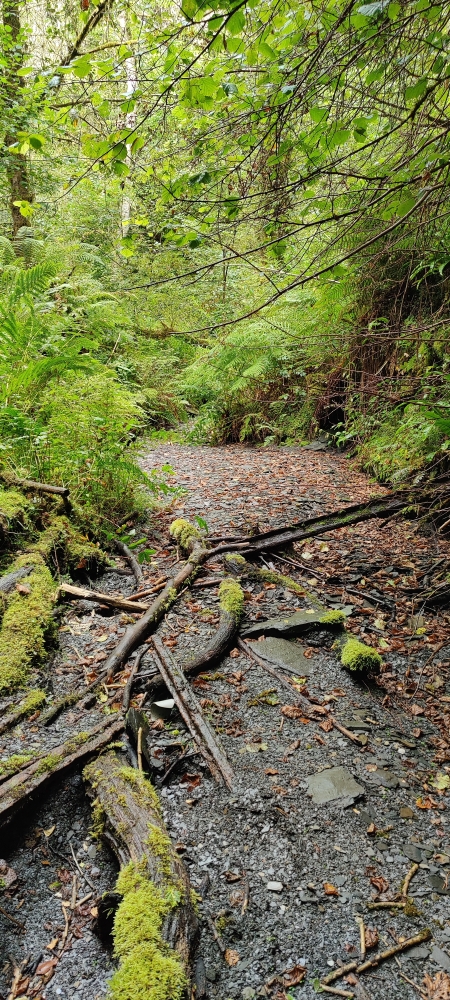
Entire site is now afforested, and few surface buildings survive due to demolition and materials that degrade easily; even large waste tips have weathered back into soil. Northwest of the by-road, near the reservoir, a rubbish-haul incline emerges from underground chambers, with the remains of an engine house and weighbridge visible, though drainage is blocked by rockfalls. Martin’s pit lies inside a road loop that was diverted in 1878, and almost nothing remains of the original water-powered mill and dressing sheds, which were quarried away in the 1880s.
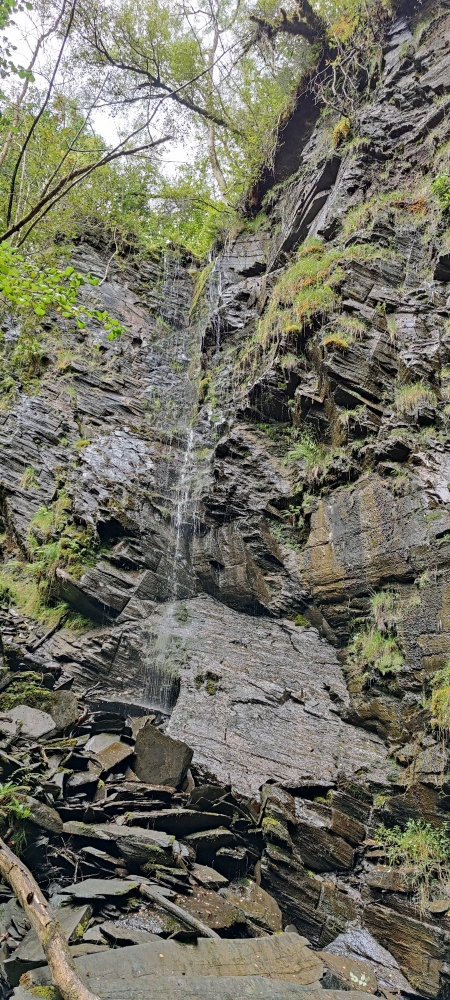
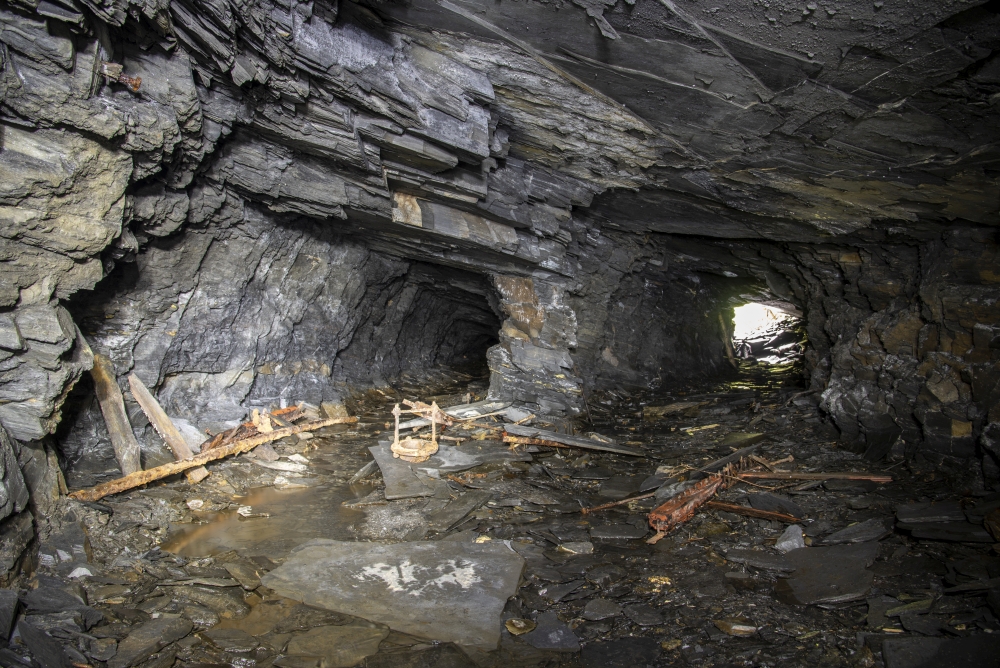
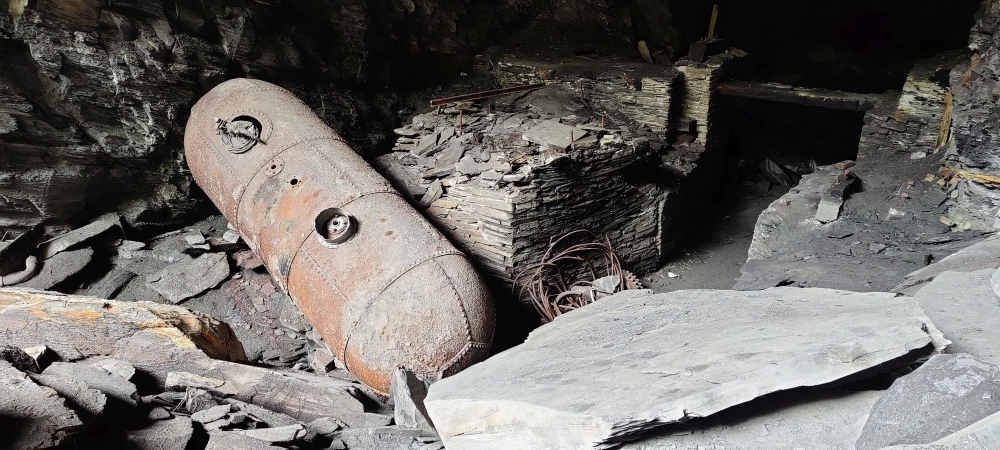
Inside Martin’s pit are a degraded up-haul ramp, a trwnc carriage frame, parts of an engine house and coal bin, and remnants of an air receiver and compressor machinery. The tramway floor still crosses the pit, with a northwest adit blocked by a fall and a southeast adit marking the start of the main drainage tunnel. Near the northwest adit sit two trwnc-incline carriage frames and a rusting tank-like body thought to be a water-balance vessel for internal waste lifting. The southeast adit leads to chambering containing two triangular timber frames of uncertain origin, possibly incline trwnc components.
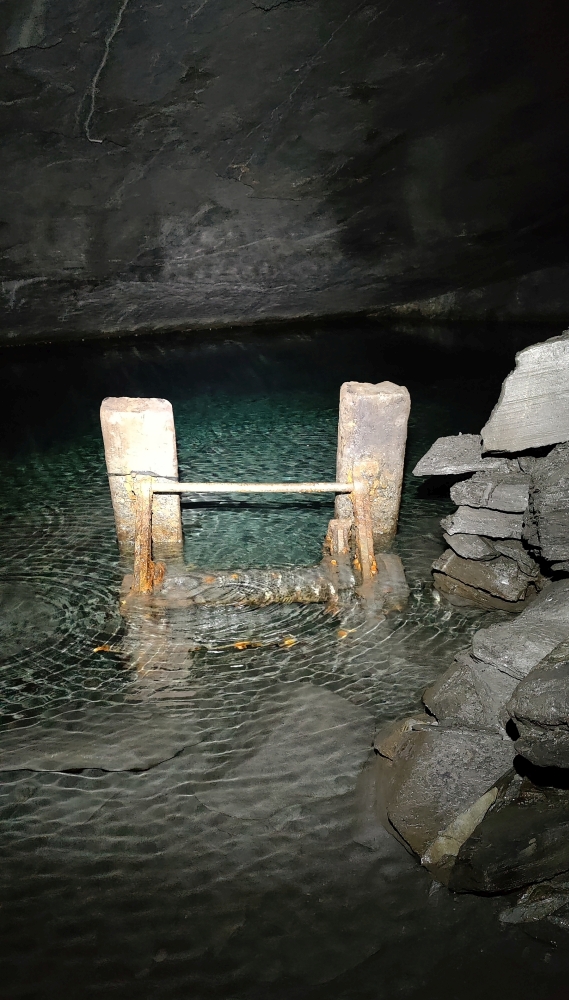
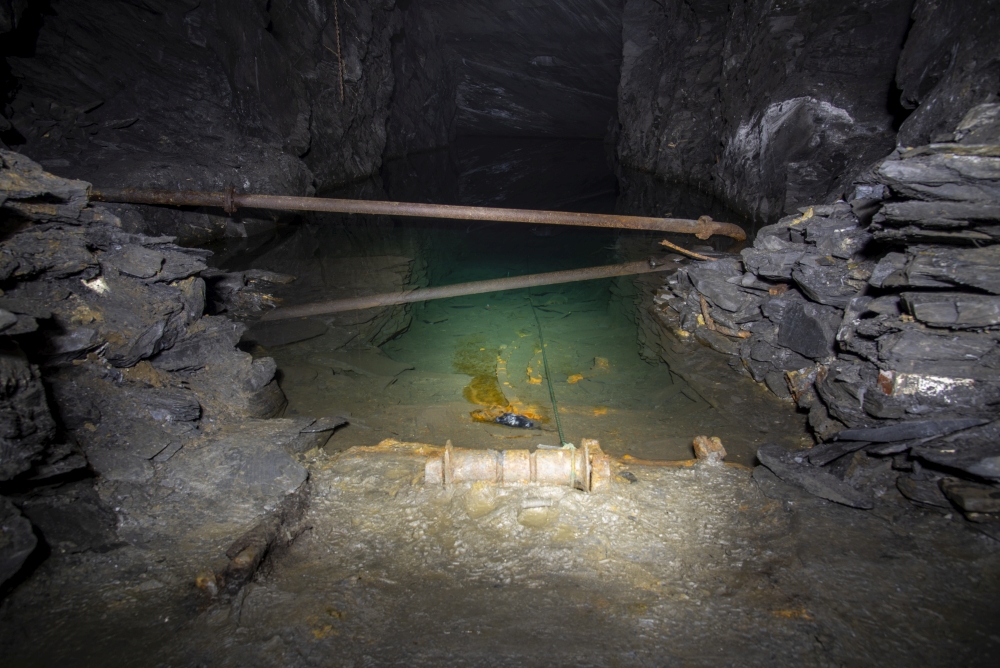
Deep in the workings are evidence of cupboarding, pillar robbing, and a flooded incline to long-abandoned lower chambers with remains of a compressed-air engine mount. Another chamber holds Pelton-wheel mountings and pipework for a compressor, including improvised washers made from worn saw blades. A further chamber opens into Townsend’s, where a well-preserved caban, an iron pressure and boiler vessel, and the steam-engine mounting for an up-haul chain incline remain.
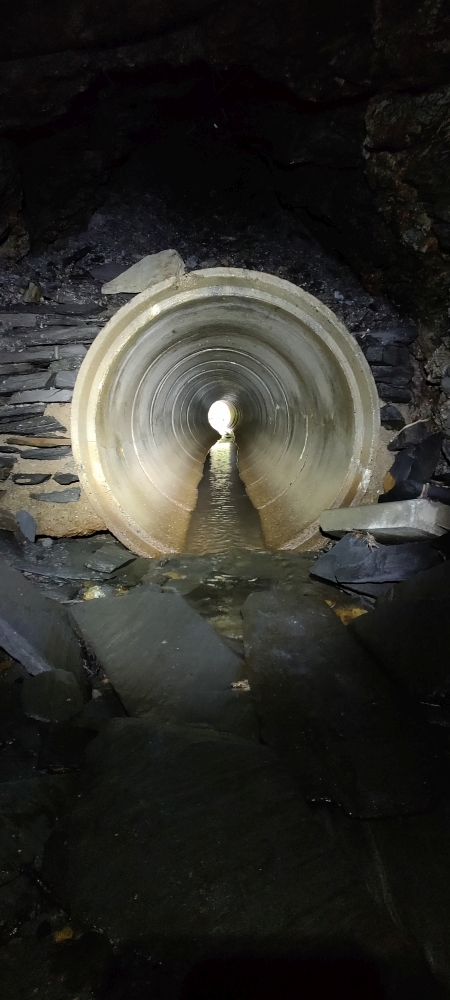
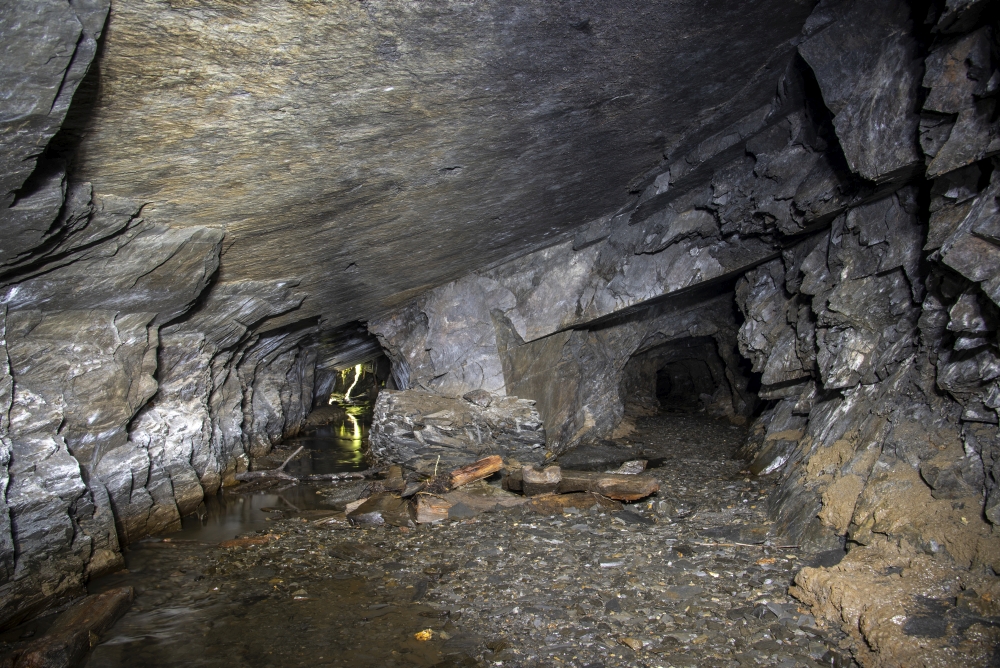
The main tunnel retains heavy rail and a set of weighted-lever points. A side-tunnel sealed by a concrete plug and valve links to the flooded Dennis pit; a trench in the floor may have carried a feed pipe to water-power machinery below tunnel level. McEwen’s lies on a loop off the main tunnel, with the original local tunnel forming the final stretch of the modern route. The last thirty yards of the tunnel are culverted into a three-foot pipe.
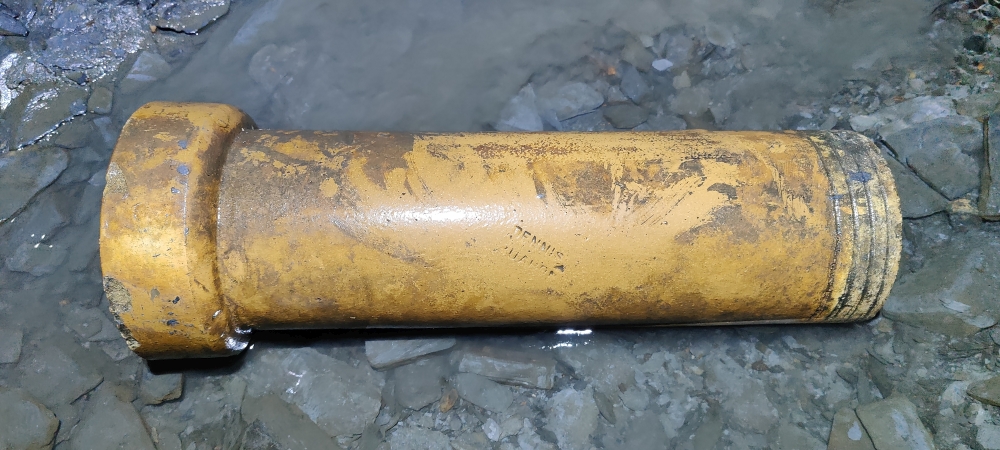
Dennis pit appears in two flooded sections linked by a short high-level tunnel and another lower one. Near the piped exit are faint remains of the waterwheel, later replaced by an internal-combustion mill, along with offices and workshops; one newer building may be constructed from reused masonry. The head of the rubbish incline running toward the village and the Glyn Valley line is faint but still traceable.
Major working began in 1854 at Martin’s, formerly known as Chwarel Uchaf, where operations were pumped and hauled by a waterwheel. The 1860s saw rapid expansion occurring at McEwen’s, situated near the ancient Chwarel Isaf. A one-third-mile tunnel was driven out below McEwen’s, carrying a tramway to a mill at the adit and then down an incline to the Glyn Valley Tramway. By the mid-1870s, two shafts were sunk to meet the tunnel: one east of Martin’s, later called Townsend’s, and one between Martin’s and McEwen’s, later named Dennis. Four pits—Martin’s, Townsend’s, McEwen’s, and Dennis—were interconnected and drained, with the first three able to send stone and waste through the tunnel by locomotive haulage.
Dennis was served by two separate southward tunnels, the earlier one being abandoned while the later one was linked by tramway to the main adit mill. Underground development extended from the main tunnel beneath Townsend’s and westward beyond Martin’s into four new levels. Waste was up-hauled from Martin’s, Townsend’s, and the western chambers due to limited space eastward. Dennis was eventually abandoned and repurposed as a reservoir. Output in the late nineteenth and early twentieth century averaged 2,500 or more tons annually, peaking at nearly 4,000 tons in 1908, with between 80 and 100 men employed. Production remained strong until the Second World War, after which closure followed when most of the remaining 50 workers left for better-paid jobs during the winter lay-off of 1946 and 1947.
External Links
Publications (11)
- (1993); CATMHS - Newsletter 034-April; 56 pages
- (2021); CATMHS - Newsletter 144-August; 43 pages
- Anon; Cambrian Slate Quarry - Accessible Workings; 1 pages
- Anon; Cambrian Slate Quarry 1; 1 pages
- Anon; Cambrian Slate Quarry 3; 1 pages
- Cristea, Critian (2015); Cambrian Slate Quarry 2; 2 pages
- Jarratt, Tony (1974); Logbook 1; 105 pages
- Milner, W.J. (2007); Slates from Glyn Ceiriog; Ceiriog. ISBN: 9781900622110
- NMRS; Memoirs 1966; pp.57
- NMRS; Newsletter May/1980; pp.4
- Richards, Alun John (1991); Gazeteer of the Welsh Slate Industry, A; Gwasg Carreg Gwalch 978-0863811968