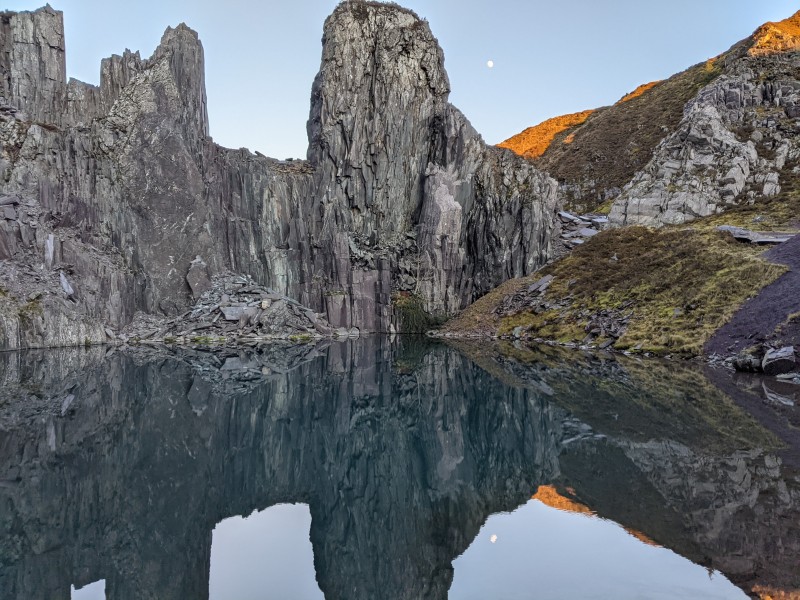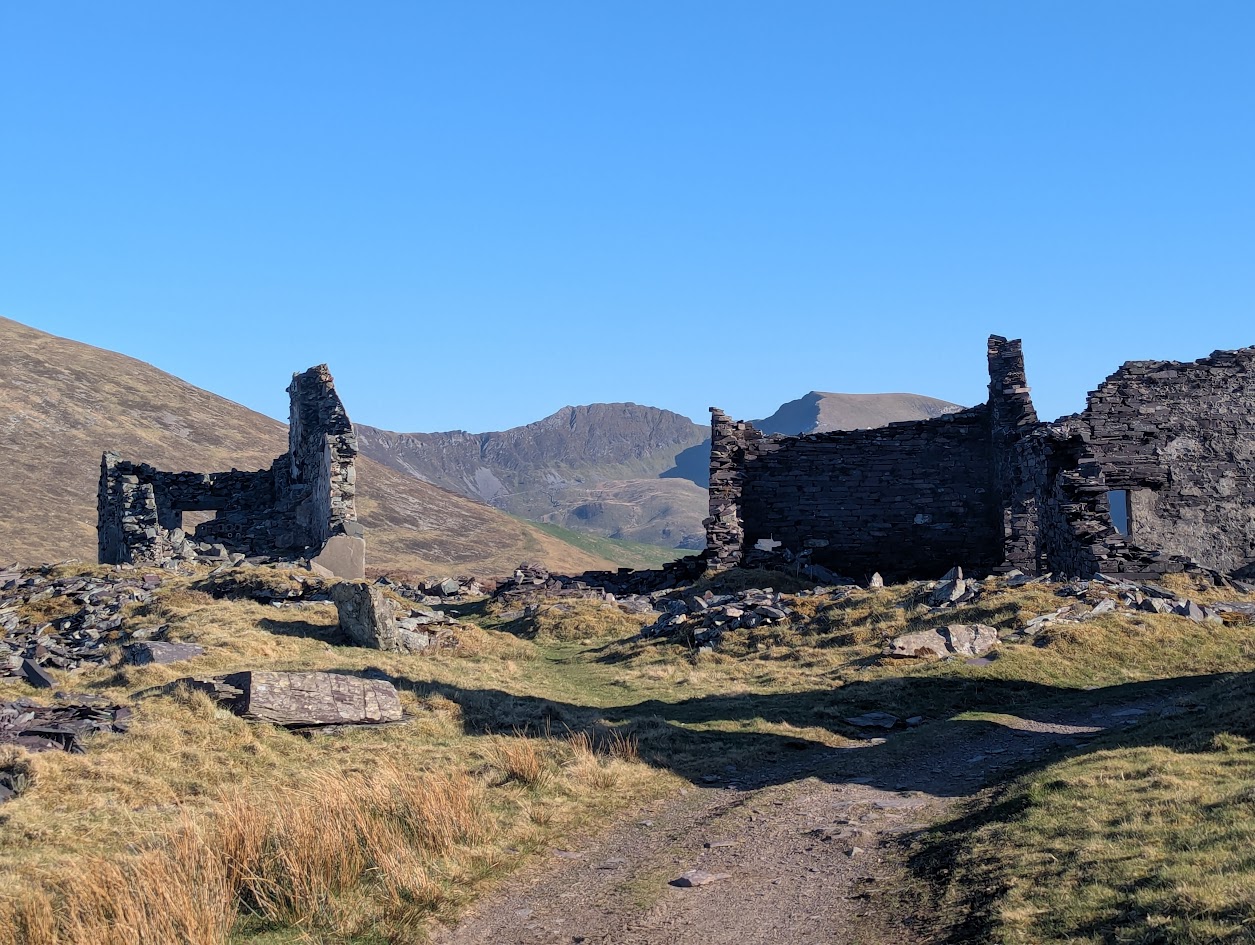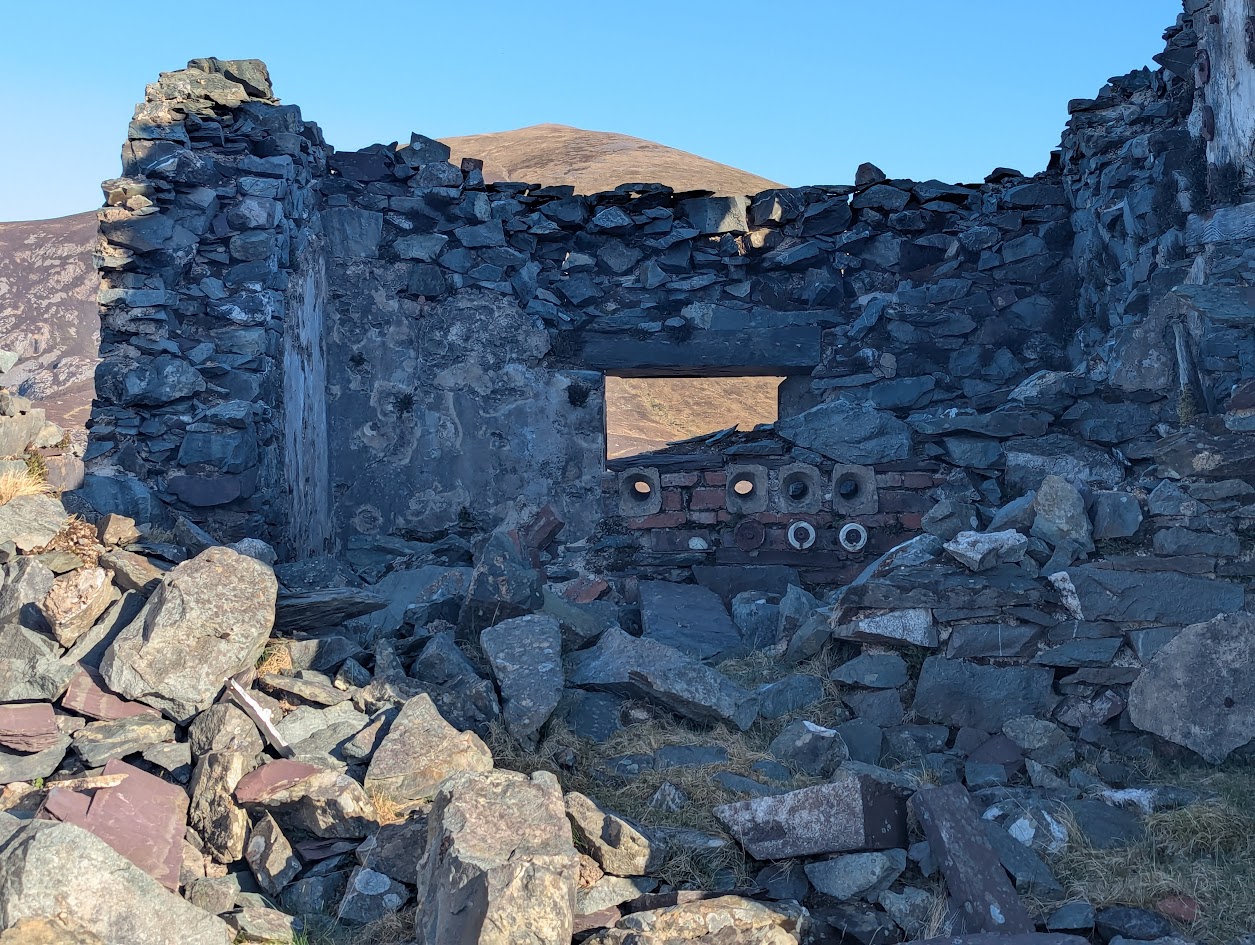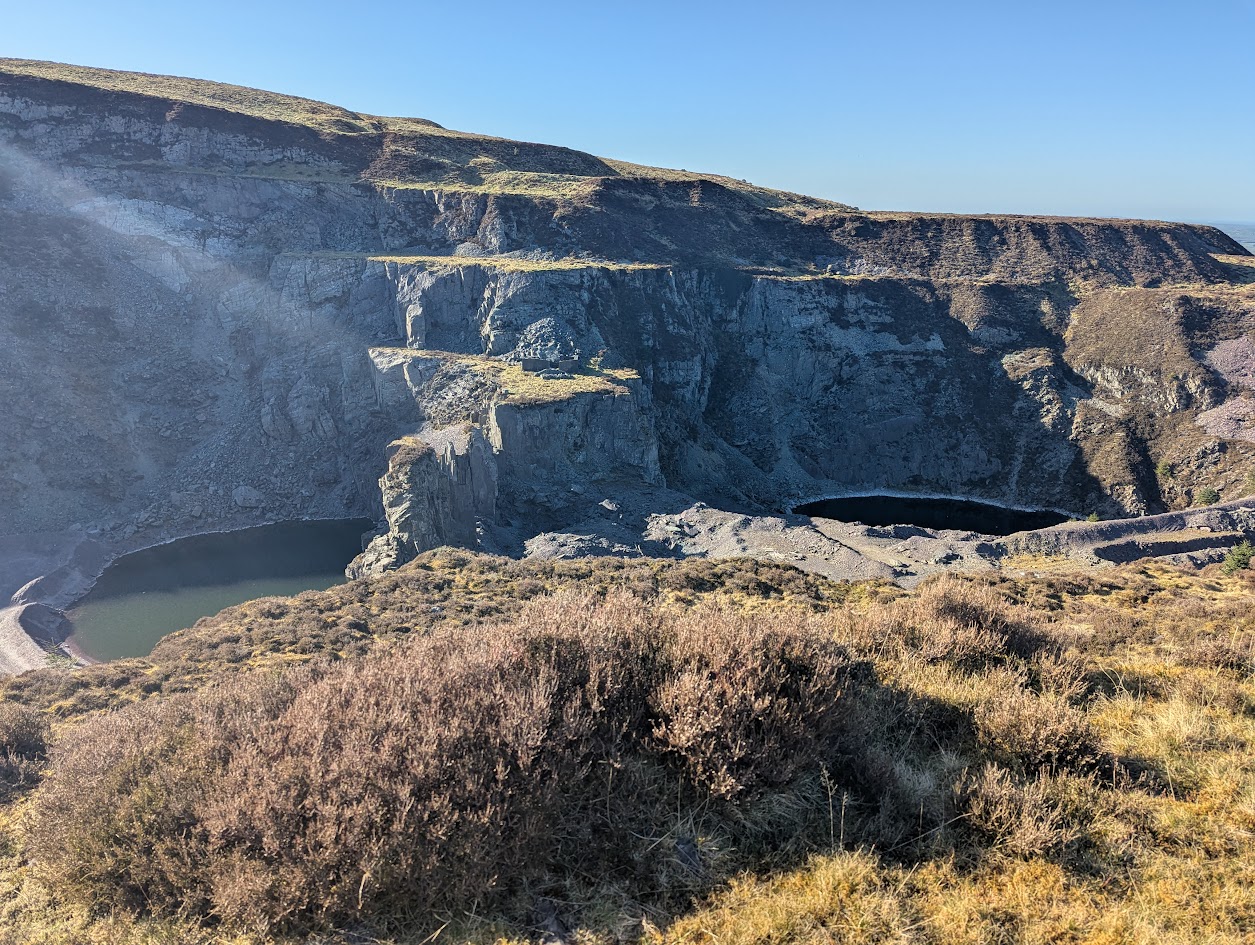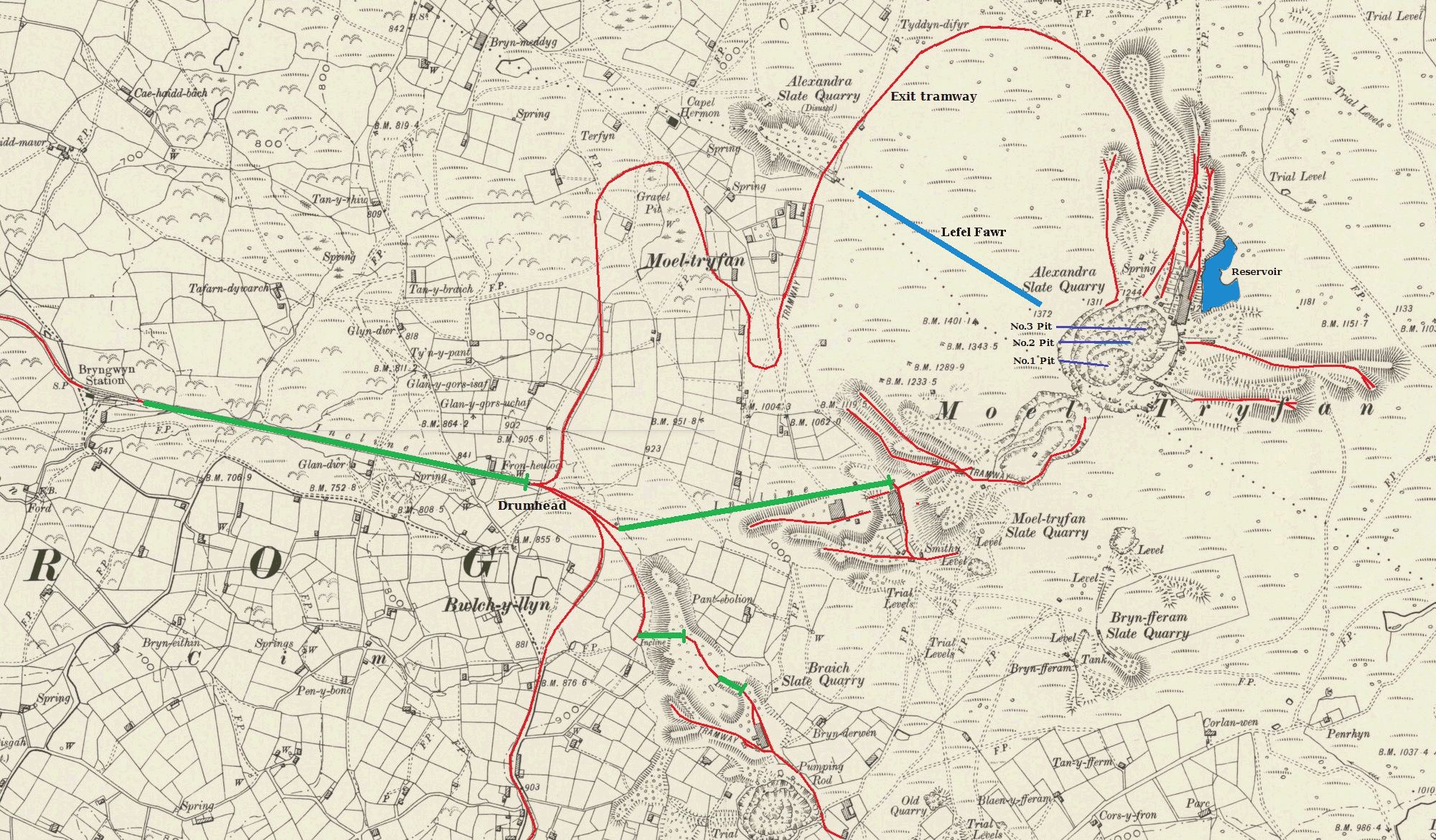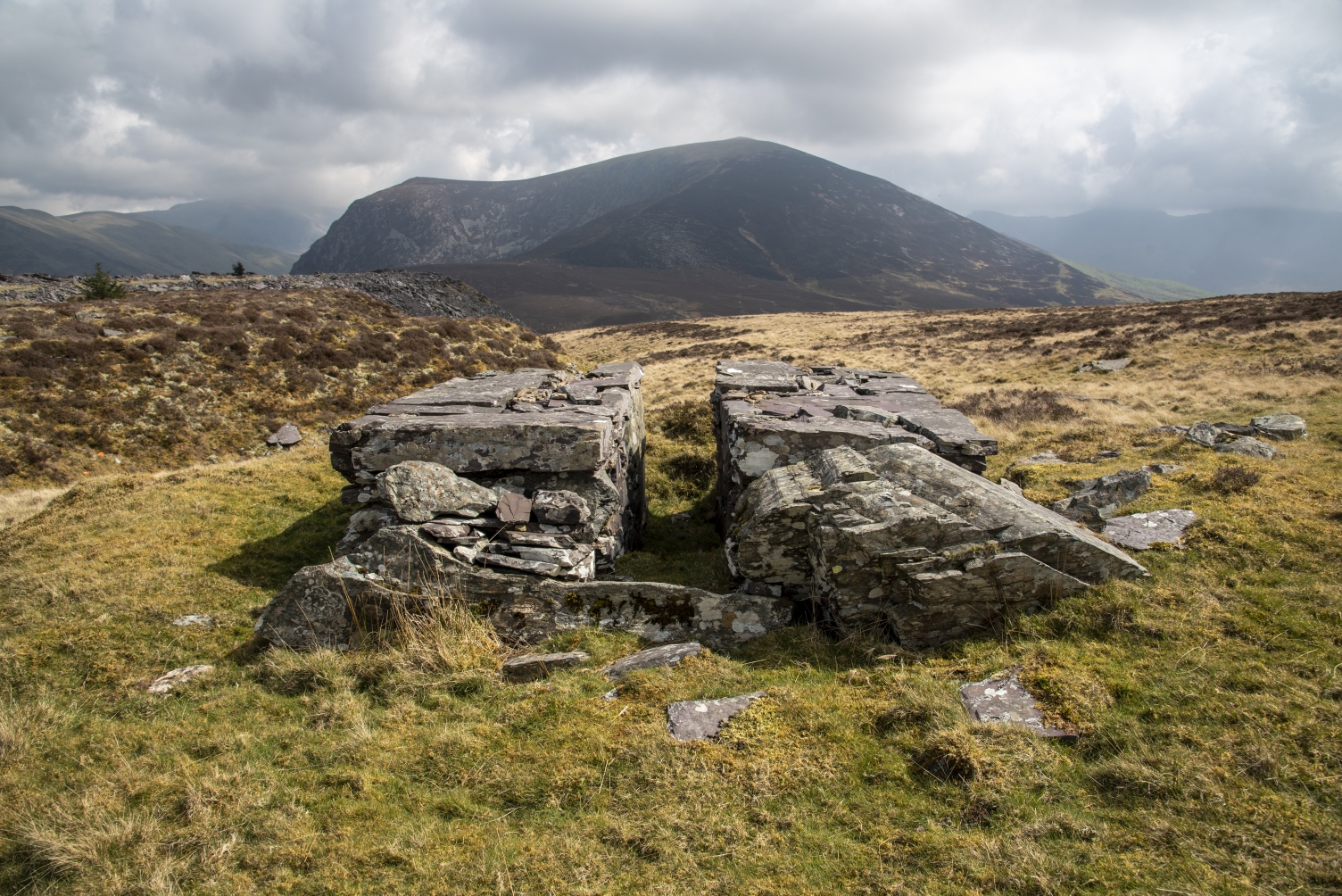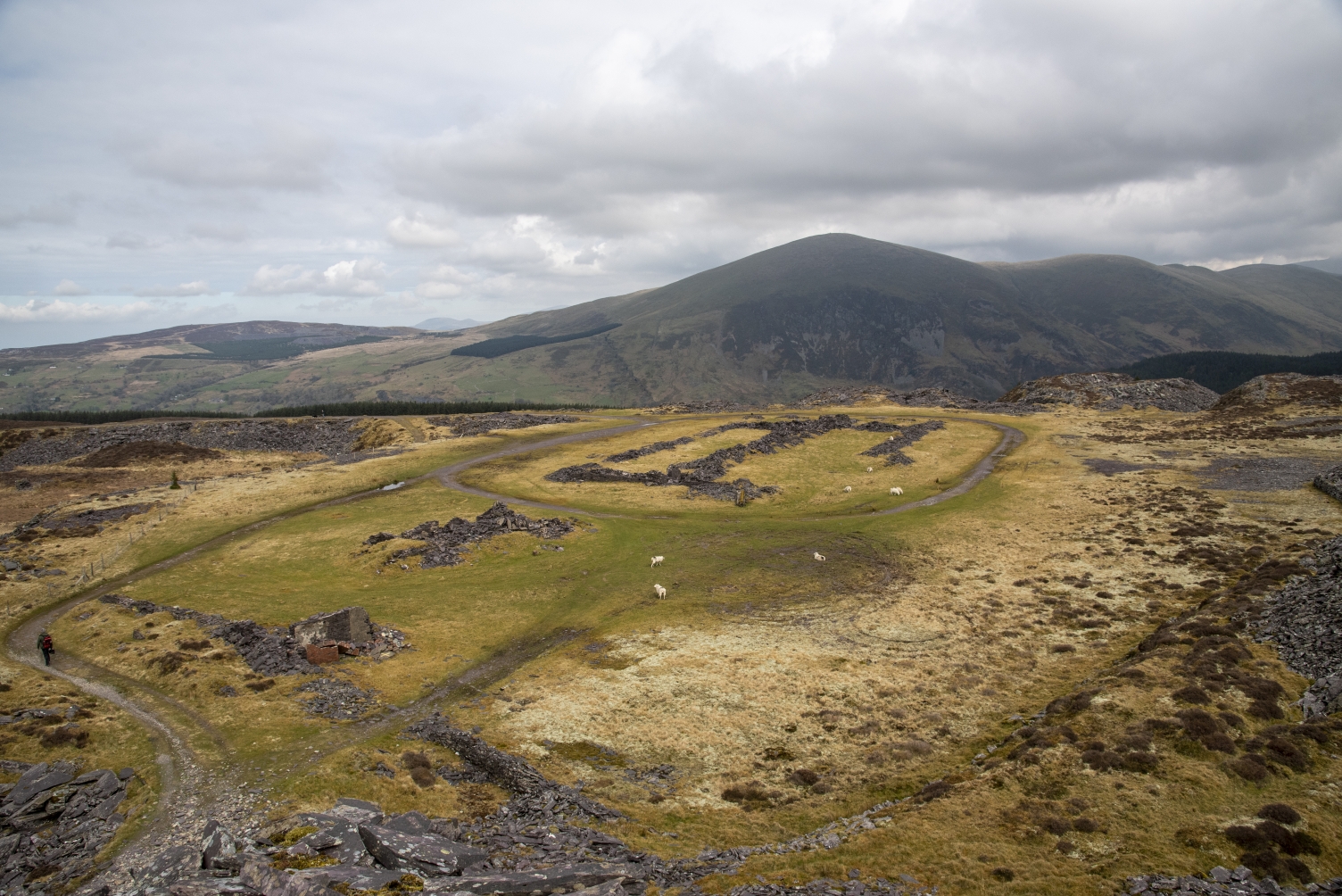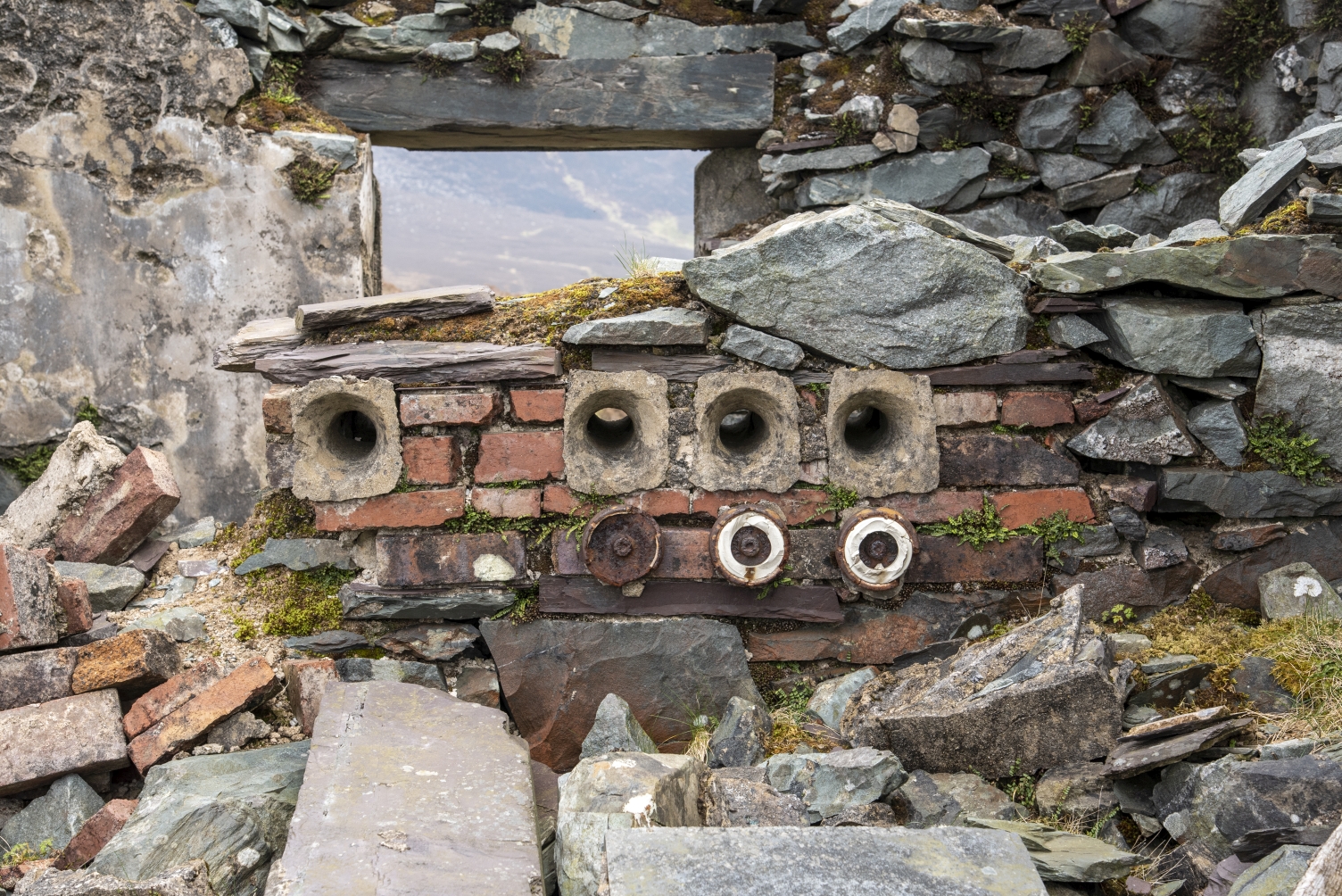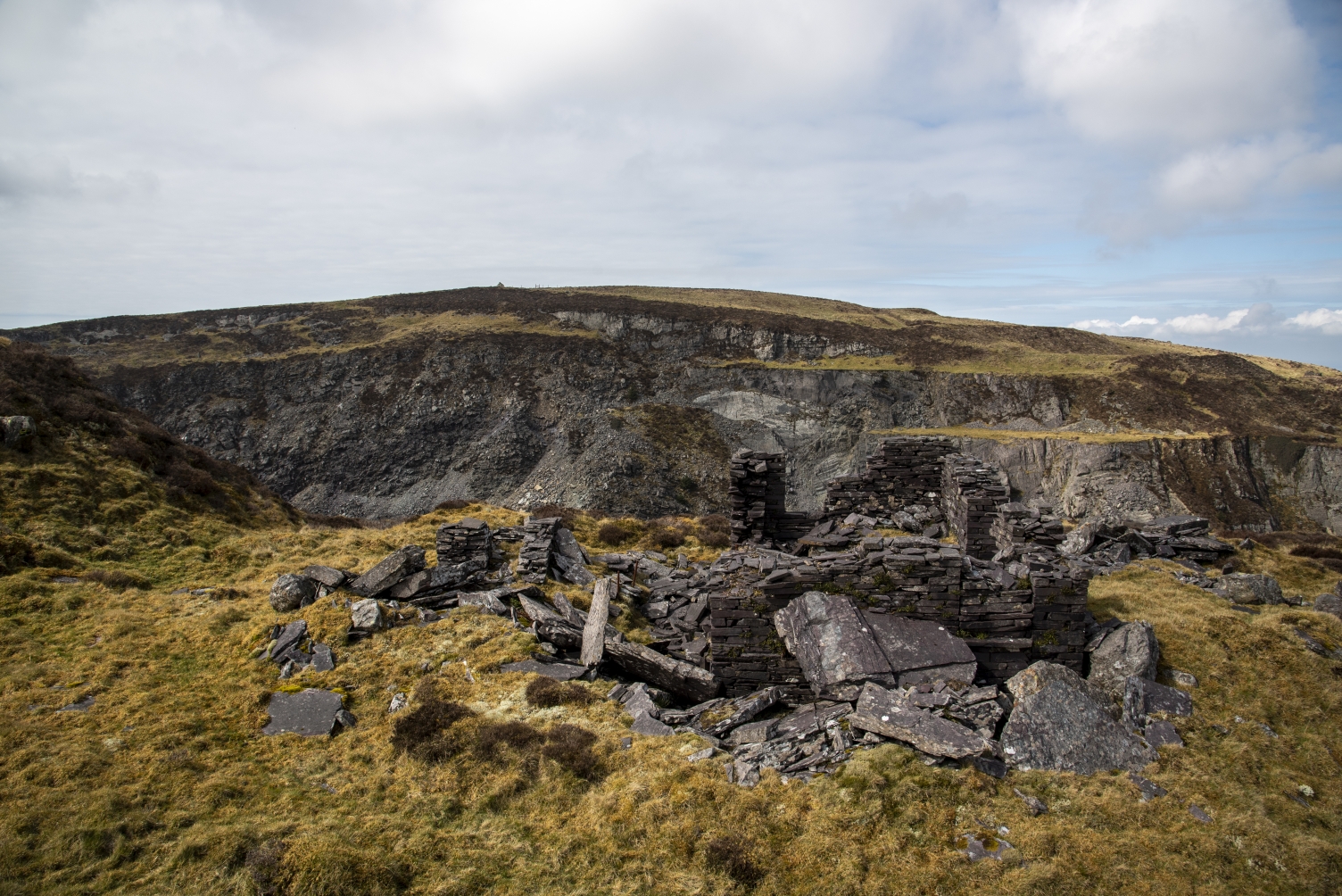



Pits 1 and 2 have been heavily degraded by 1960s lorry roads and bulk working methods, while pit 3 is now completely buried. Flooding up to the Floor 5 tunnel level has drowned four galleries, and debris from Moeltryfan engulfed them after the pits were merged in the later phase of operations. Little remains of the old mill complex, with only fragments of the twinned new mills, office, workshop, and winding engine rooms surviving to hint at the scale of processing that once took place here. The upper banks retain more substantial features, including Blondin anchorages from the cableways installed between 1901 and 1925, six winder houses, a weighbridge, and remnants of what was once an impressive electricity substation that powered the quarry’s modernized operations from 1913 onwards. The most striking surviving feature is undoubtedly the two-mile “Alpine” rail formation that leads dramatically across the hillside to the head of the Bryngwyn incline. Partway along the Alpine line sits an isolated tipping site at the end of the Floor 5 run-in tunnel, known locally as “Lefel Fawr,” where waste rock was discharged from the main workings. Lefel Fawr is probably being used as a water source as there is a nearby Welsh Water underground reservoir.
Alexandra was a substantial multi-pit quarry that opened in the 1860s on the eastern slopes of Moel Tryfan and grew to become one of the major slate producers in the region. The quarry was named after Princess Alexandra of Denmark, who had recently married the Prince of Wales. Development was challenging and costly, requiring a deep access tunnel driven through hard greenstone that ultimately cost over £33,000, with much of it funded personally by investor Samuel Bateson. At its height in the 1890s, the quarry produced around 6,000 tons per year and employed over 200 men across its extensive operations. The site included three steam-powered mills and an elaborate internal tramway system worked by locomotives to move material efficiently between the various workings. The finished product was sent down to Bryngwyn Drumhead via the famous two-mile “Alpine” railway line, completed in 1877, from where an incline descended to Bryngwyn station. The quarry was electrified in 1913 with power from the Cwm Dyli hydro-electric station. The original mills closed in the late 1930s after a series of major rock falls and financial difficulties, though further reduction and reworking of existing material continued at Moeltryfan up to the 1960s. In 1918, the quarry became part of the Amalgamated Slate Association Ltd, which combined several Crown quarries in an attempt to compete with larger operations like Dinorwic and Penrhyn. Remarkably, some small-scale work still continues on the site today.
External Links
Publications (7)
- (2003); WMS Newsletter Issue 49 Winter; 32 pages
- Gwyn, David, (2015); Welsh Slate: archaeology and history of an industry; Royal Commission on the Ancient and Historical Monuments of Wales; 9781871184518
- Jones, Gwynfor P., Richards, Alun J. (2004); Cwm Gwyrfai; pp.294-334; Gwasg Carreg Gwalch ISBN 0-86381-897-8
- Lindsay, Jean (1974); History of the North Wales Slate Industry; David & Charles; pp.310; ISBN 0-71536-264-X
- Richards, Alun J. (2013); Slate Quarrying in Wales; Gwasg Carreg Gwalch; ISBN 1-84527-026-6
- Richards, Alun John (1991); Gazeteer of the Welsh Slate Industry, A; Gwasg Carreg Gwalch 978-0863811968
- Richards, Alun John, (1999); The Slate Regions of North and Mid Wales and their Railways; Gwasg Carreg Gwalch; 0863815546