



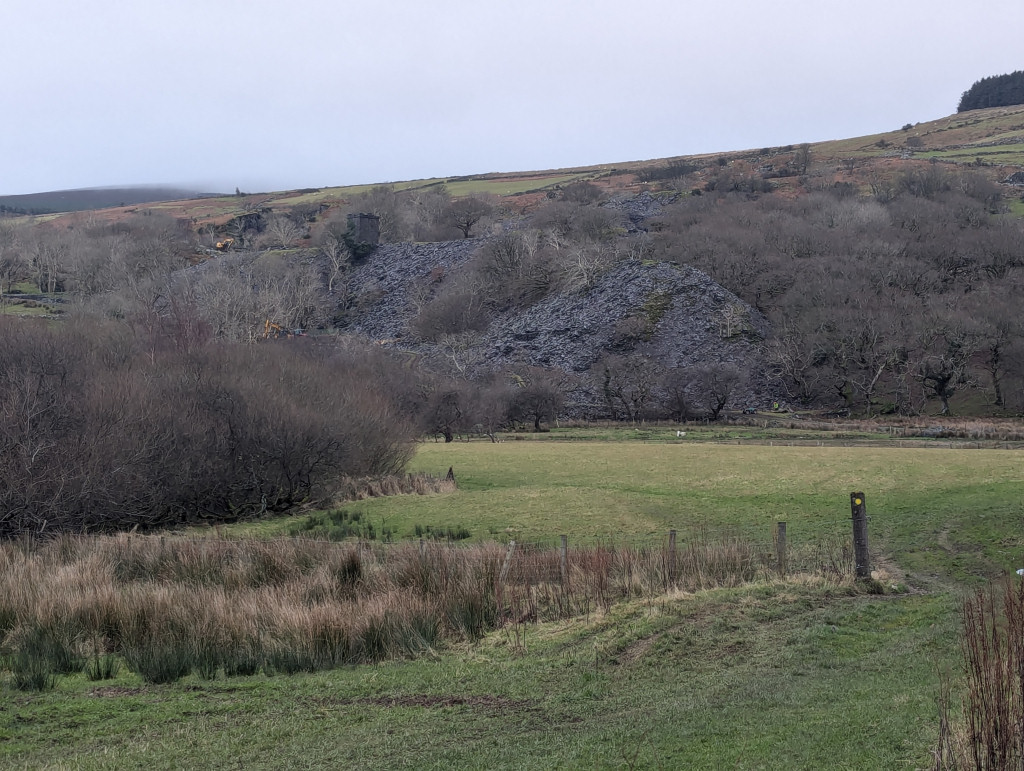
Small pit with later underground development.
A planned incline was never constructed at the site, and the intended drumhouse was instead converted into a two-storey office building. Another office building survives that is older in character and features decorative, castle-like rectangular keep. Several dressing sheds and related structures remain standing across the site. A modern brick-built air-compressor house survives from the later period of working.
The quarry began as a small pit, probably opened in the early 1880s, with underground workings added later as a separate phase of development. It was worked intermittently through the mid-1880s, producing 96 tons with a workforce of just 6 men in 1883. Occasional small-scale extraction continued sporadically into the 1960s, though operations remained limited throughout this extended period. Slate from the quarry was transported by cart to Caernarfon for sale and distribution. Although a branch of the North Wales Narrow Gauge Railway later served the nearby ironstone mine, the quarry was already in decline by the time the rail link was built in 1902 and never benefited from the improved transport connections.
Publications (8)
- BGS - Mine Plans (large, zoomable) - Garreg Fawr Iron Mine; 1 pages
- Gwyn, David, (2015); Welsh Slate: archaeology and history of an industry; Royal Commission on the Ancient and Historical Monuments of Wales; 9781871184518
- Jones, Gwynfor P., Richards, Alun J. (2004); Cwm Gwyrfai; pp.28-35; Gwasg Carreg Gwalch ISBN 0-86381-897-8
- Lindsay, Jean (1974); History of the North Wales Slate Industry; David & Charles; pp.320; ISBN 0-71536-264-X
- NMRS; British Mining 78 - Memoirs 2005; pp.69,93,95-96,98-99,105-111
- Richards, Alun J. (2013); Slate Quarrying in Wales; Gwasg Carreg Gwalch; ISBN 1-84527-026-6
- Richards, Alun John (1991); Gazeteer of the Welsh Slate Industry, A; Gwasg Carreg Gwalch 978-0863811968
- Richards, Alun John, (1999); The Slate Regions of North and Mid Wales and their Railways; Gwasg Carreg Gwalch; 0863815798


