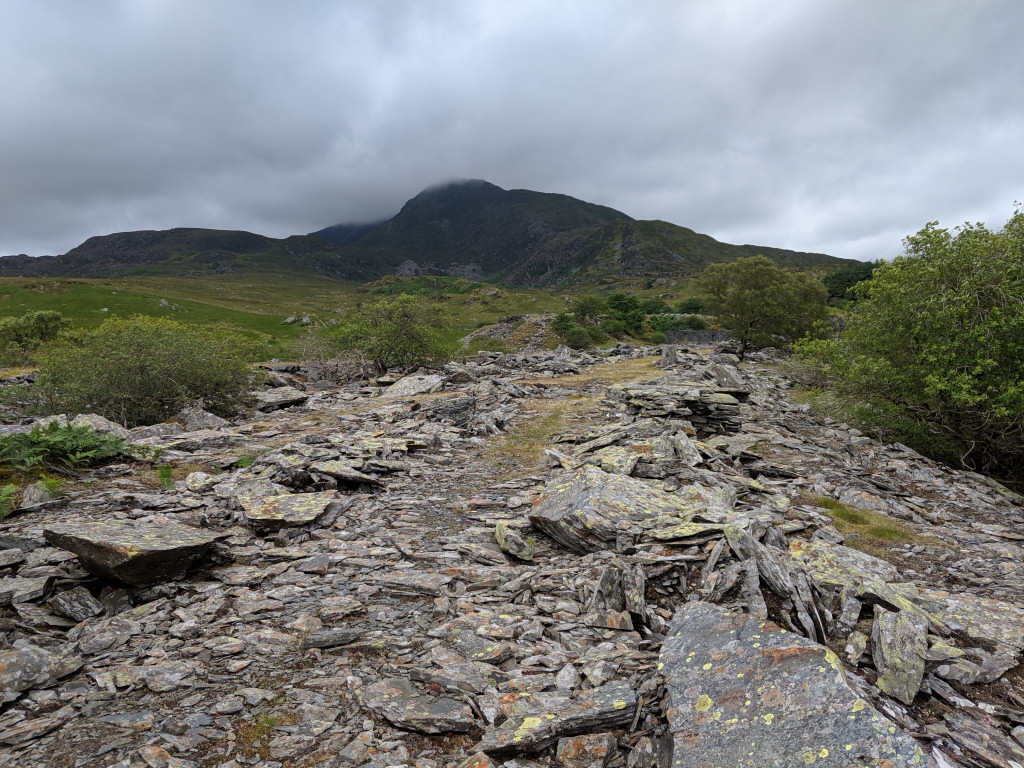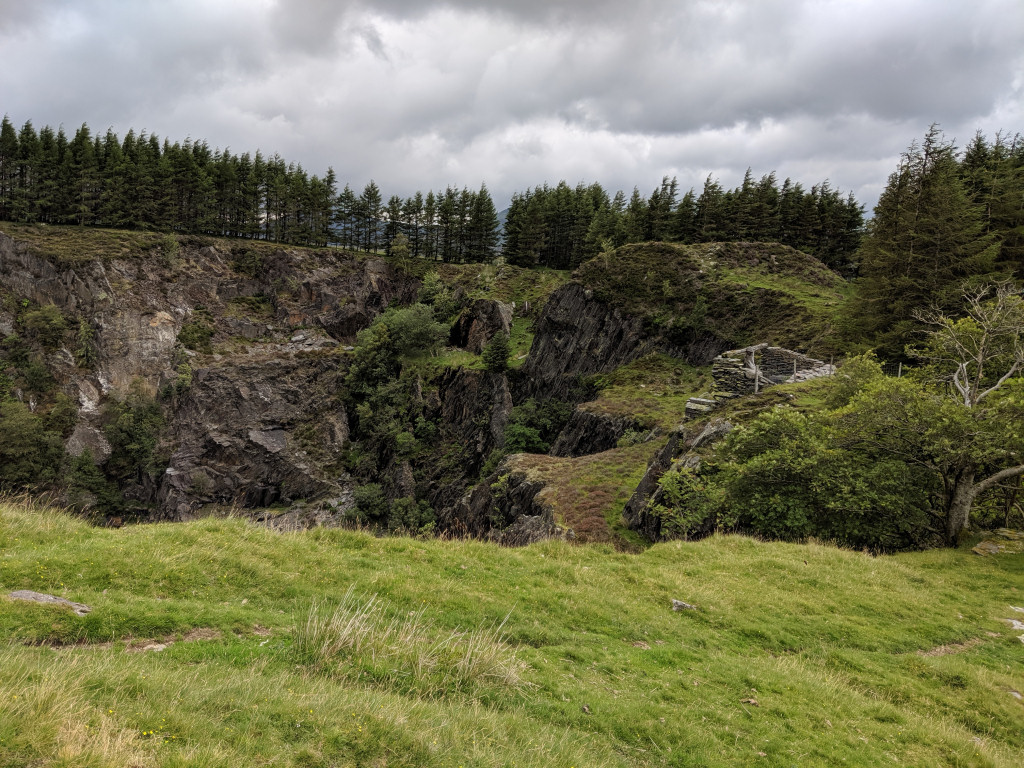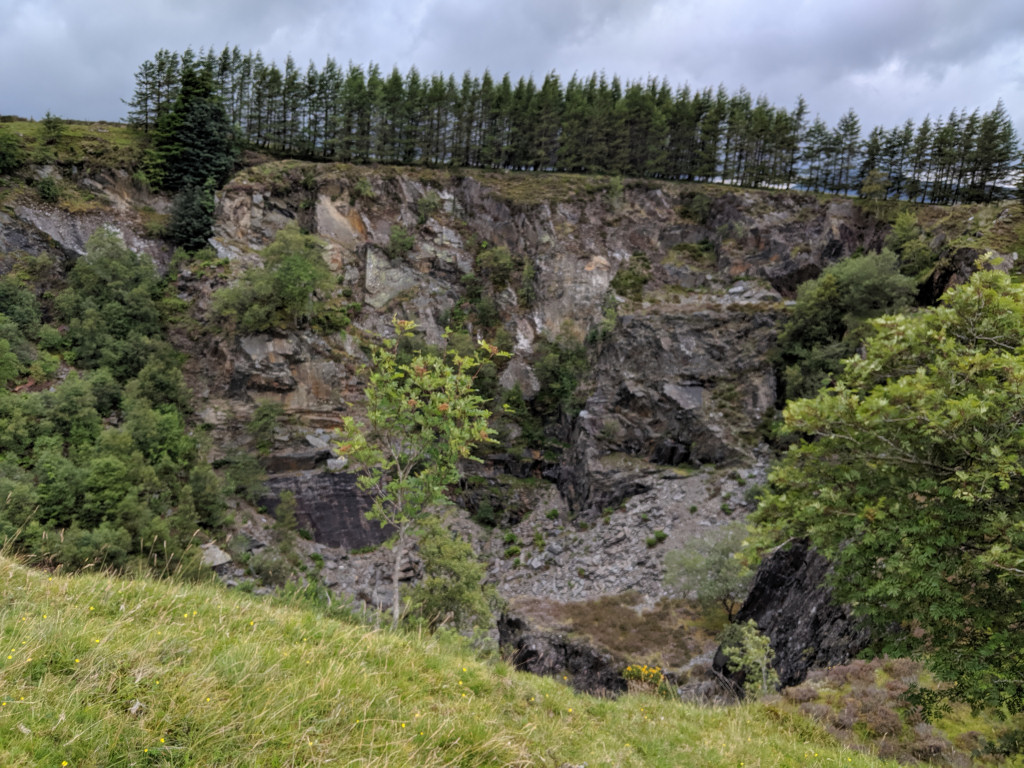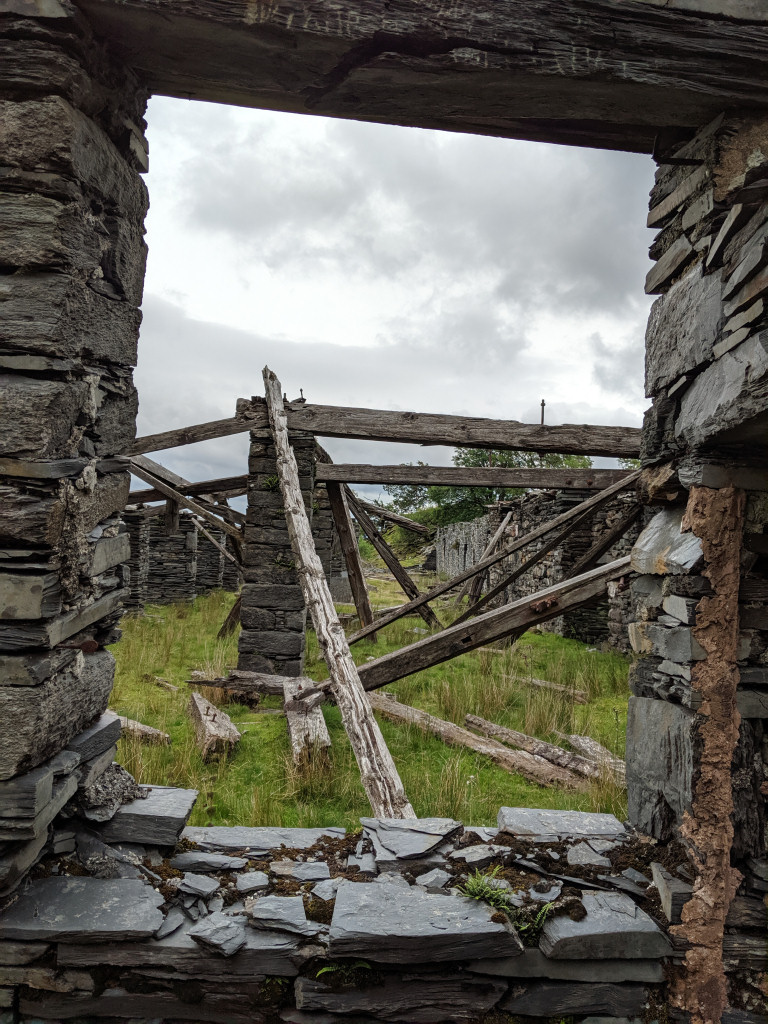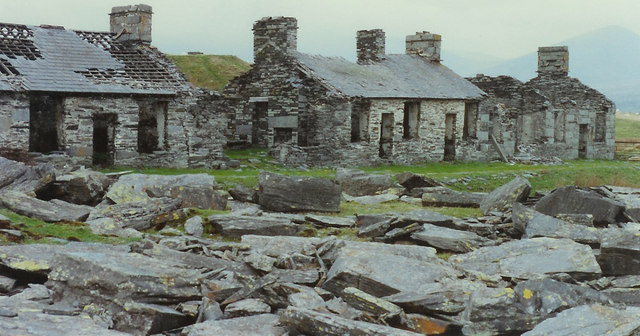



Large, well developed pit working with remains.***
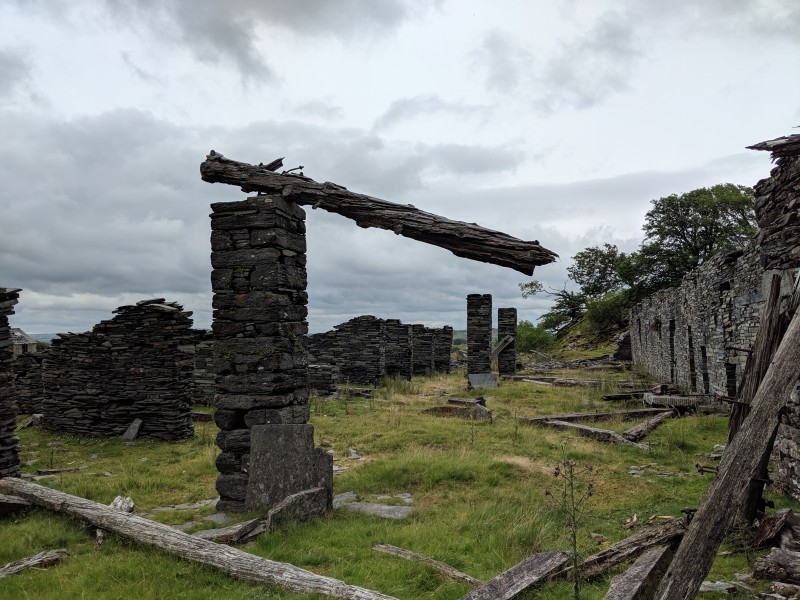
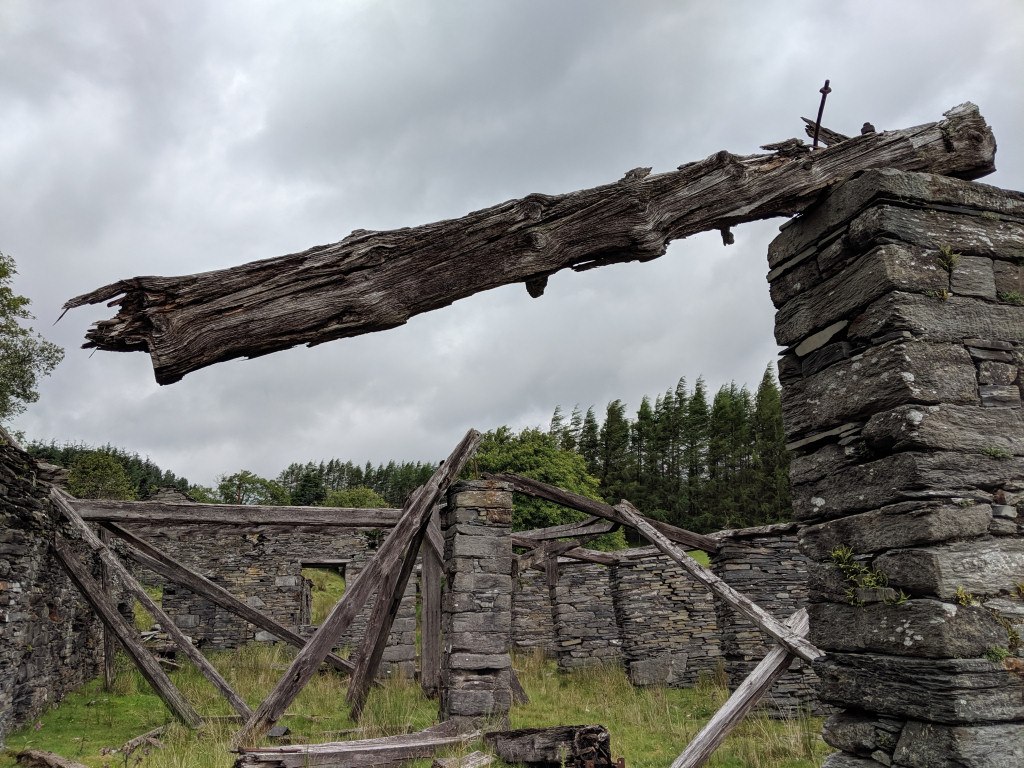
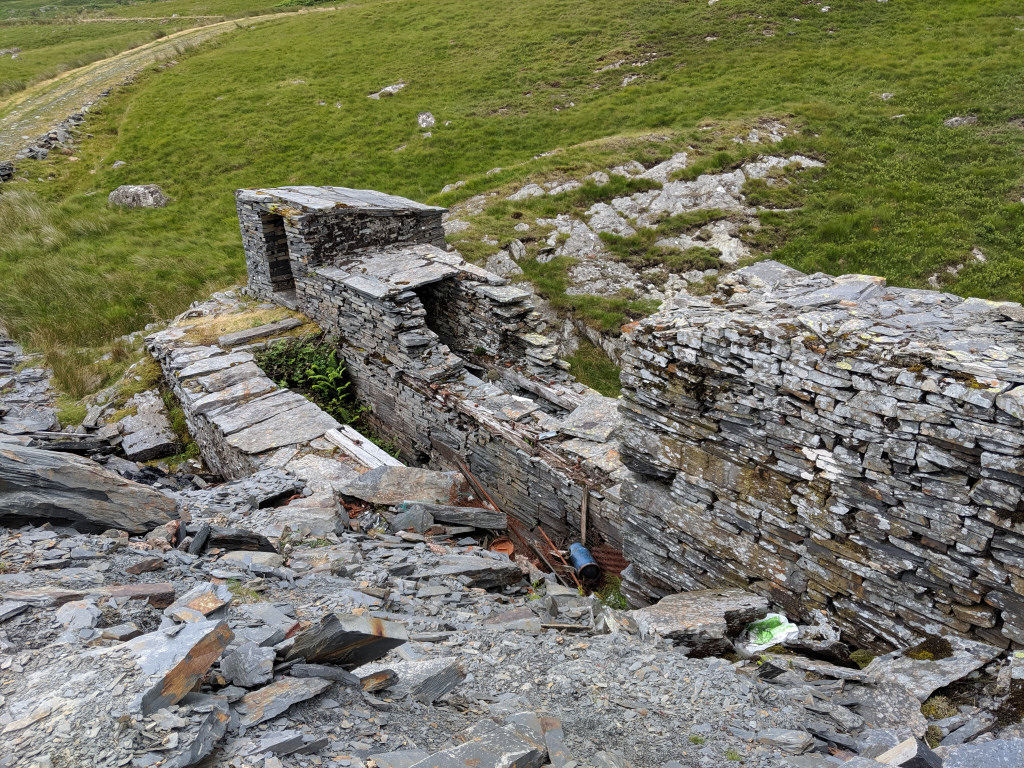
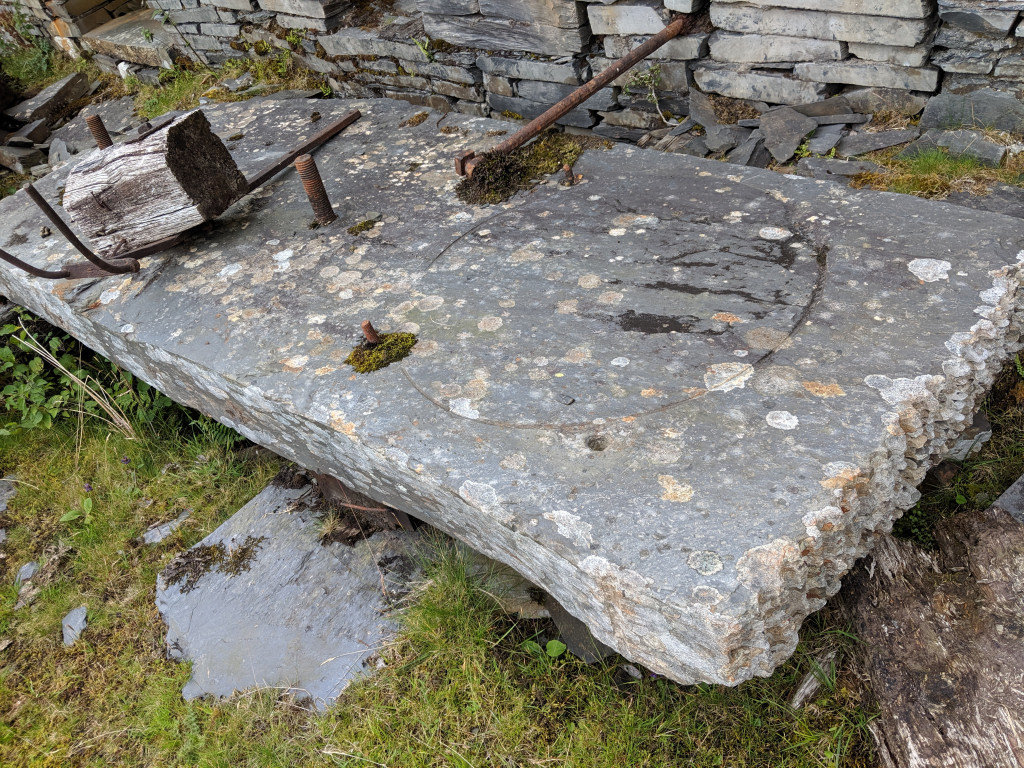
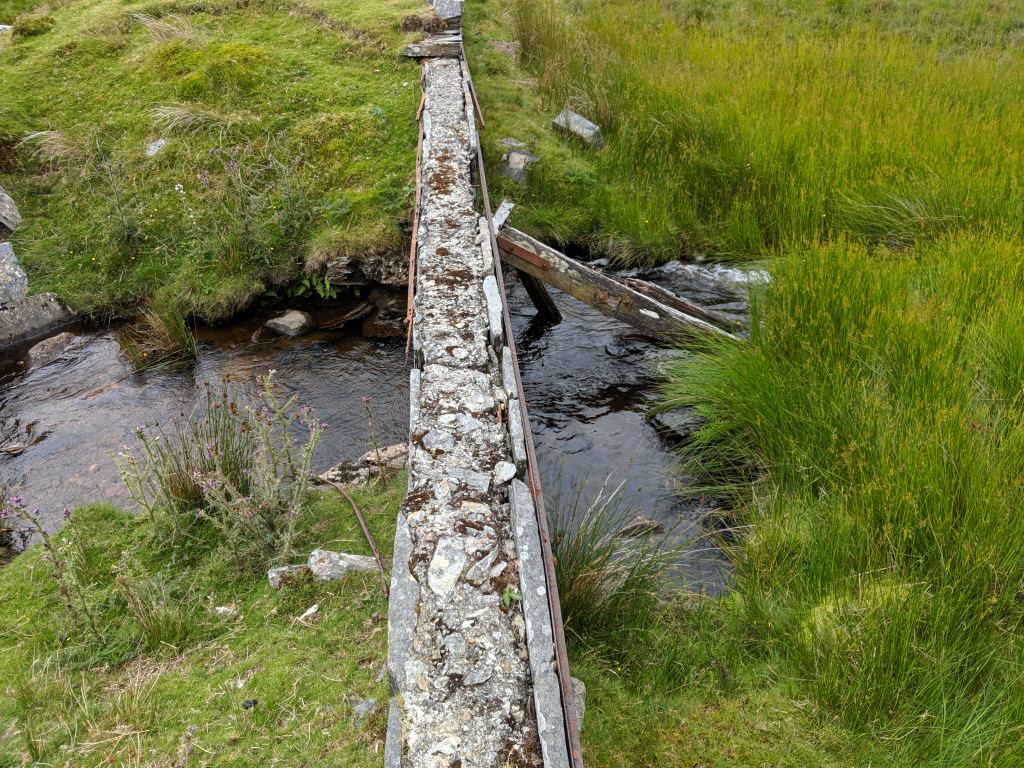
A top level reservoir fed 3 waterwheels, the top two via wooden launders on slate pillars. The first is above pit level, the second is integrated with the mill building, and the third is below tip level. At the botom level is drainage adit. Although launders and wheels are gone, it is still possible to get a good impression of the use of water power on site.
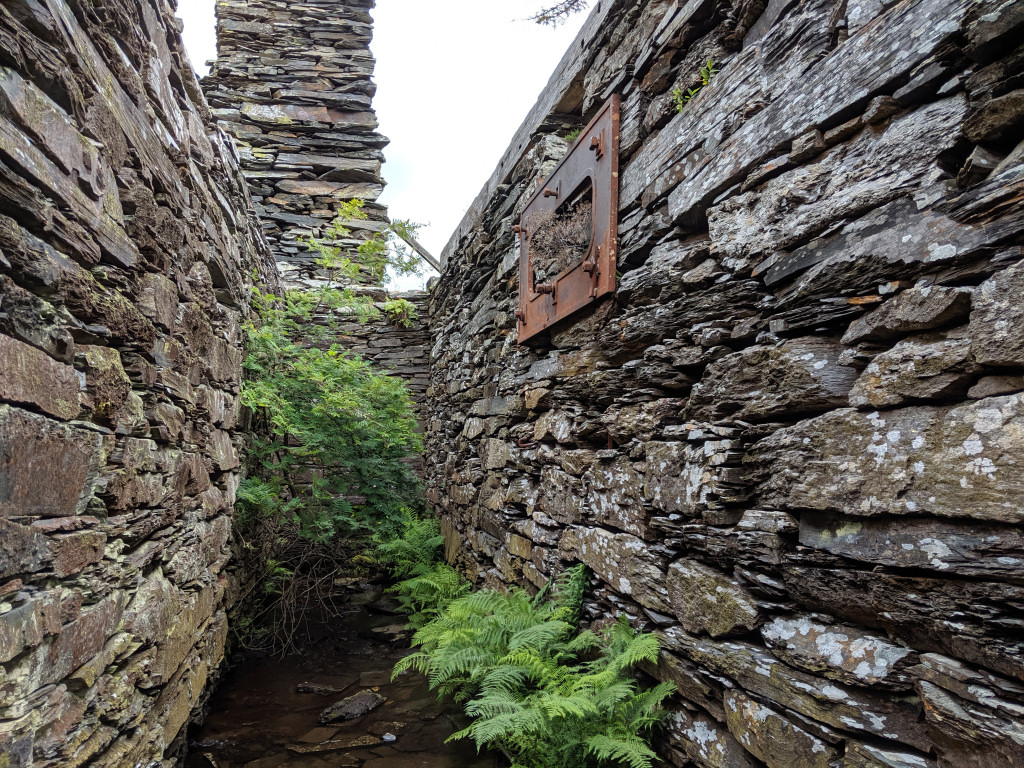
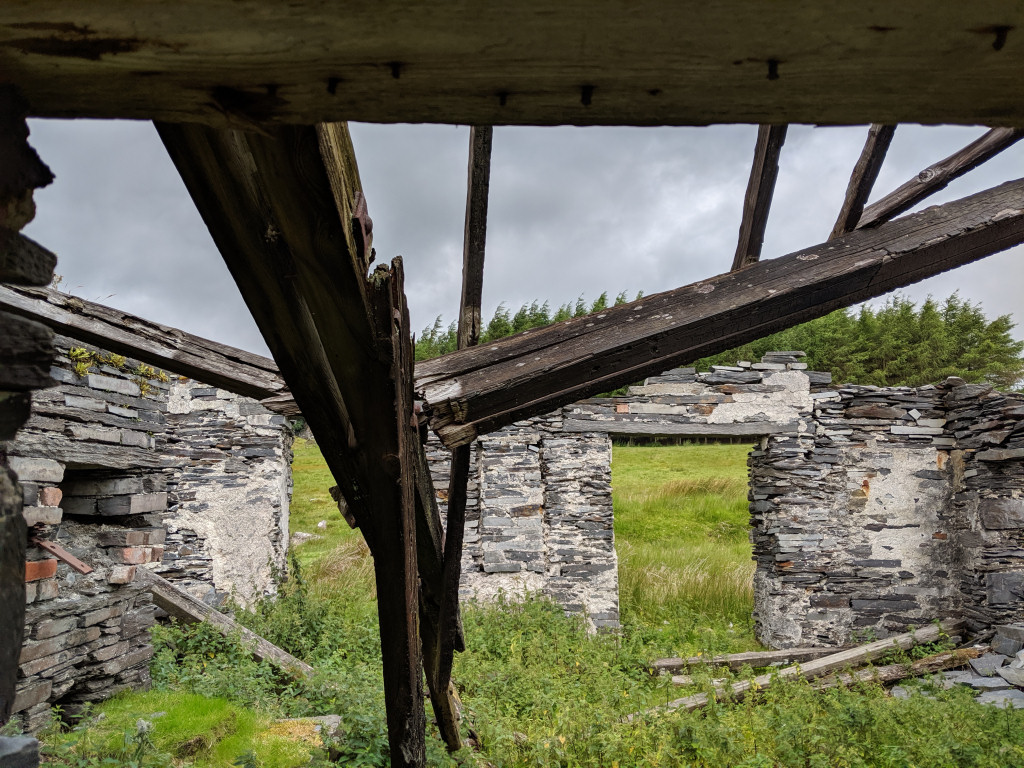
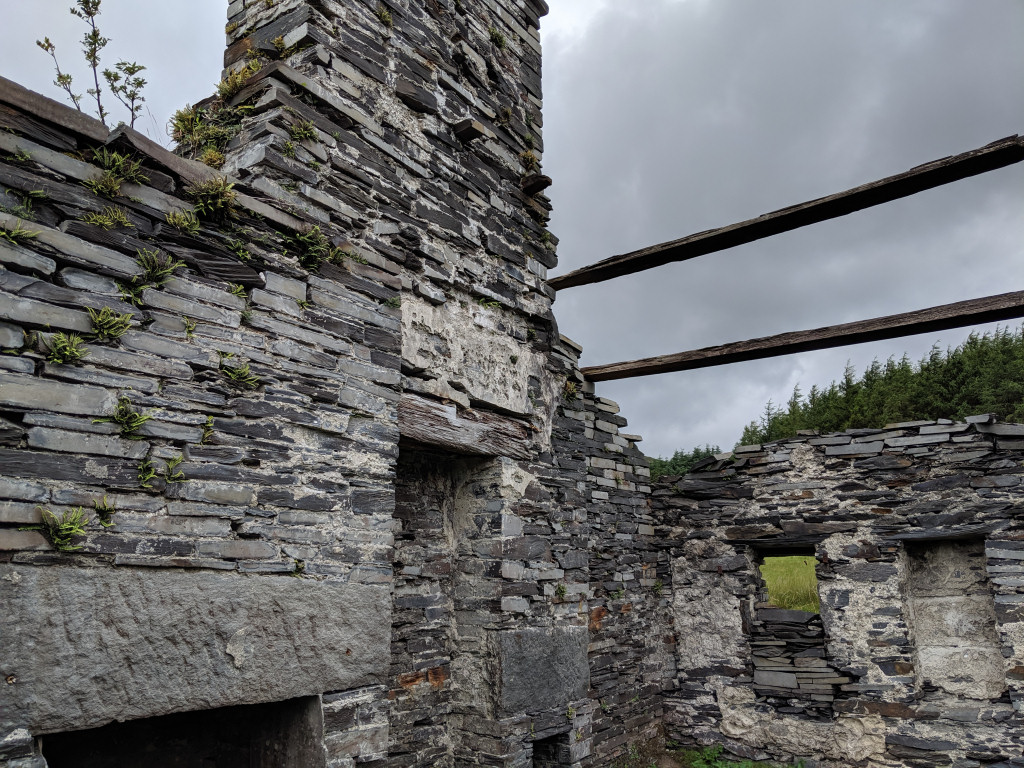
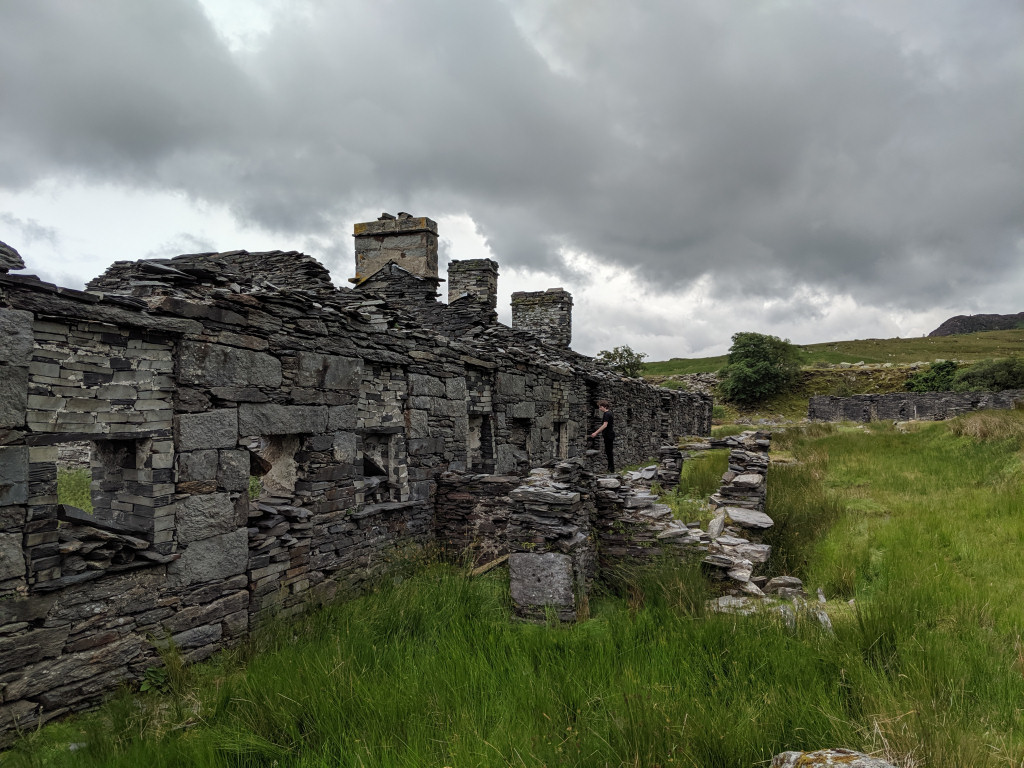
A lot of building walls survive including barracks where one dwelling has bee re-puporsed as a diesel generator house.
Product was raised to mill level using a water balance - again fed by reservoir. The reservoir was augmented by blocking drainage adits to the nearby Foel workings.
Opened in the 1850s and underwent further development in the 1870s, with extensive use of water power throughout its operation. In 1882, it produced 1,285 tons with 45 men, reaching peak production of about 1,500 tons under J. Riley in the 1930s. Early haulage of material was via a short tunnel, later converted into a cutting, leading to the nearby mill. As the quarry deepened, a 30-foot mill wheel powered a haulage system and likely a pump, supplemented by an 18-inch wheel during expansion. A drainage tunnel was later cut to facilitate water balance operation and waste removal, although plans for a lower-level mill were never completed. The water balance system was eventually abandoned, replaced by an additional 18-foot wheel powering a chain incline. In 1919, a 40-foot wheel—possibly relocated from Cyffty lead mine—was installed off the mill tailrace to power a compressor. A De Winton locomotive was used from 1898 in the mill area, replaced by a diesel engine in 1935. The quarry was connected by tramway to the Foel incline, with finished products carted from Pont Cyfyng. The quarry closed in 1952, with a greatly reduced workforce compared to pre-World War II levels.
There are several No Entry signs, which are apparantly in response to the use of the area by off-road motor-cyclists.
External Links
Publications (6)
- (1988); WMS Newsletter Issue 18 May; 12 pages
- Gwyn, David, (2015); Welsh Slate: archaeology and history of an industry; Royal Commission on the Ancient and Historical Monuments of Wales; 9781871184518
- Lindsay, Jean (1974); History of the North Wales Slate Industry; David & Charles; pp.330; ISBN 0-71536-264-X
- Richards, Alun J. (2013); Slate Quarrying in Wales; Gwasg Carreg Gwalch; ISBN 1-84527-026-6
- Richards, Alun John (1991); Gazeteer of the Welsh Slate Industry, A; Gwasg Carreg Gwalch 978-0863811968
- Richards, Alun John, (1999); The Slate Regions of North and Mid Wales and their Railways; Gwasg Carreg Gwalch; 0863815992