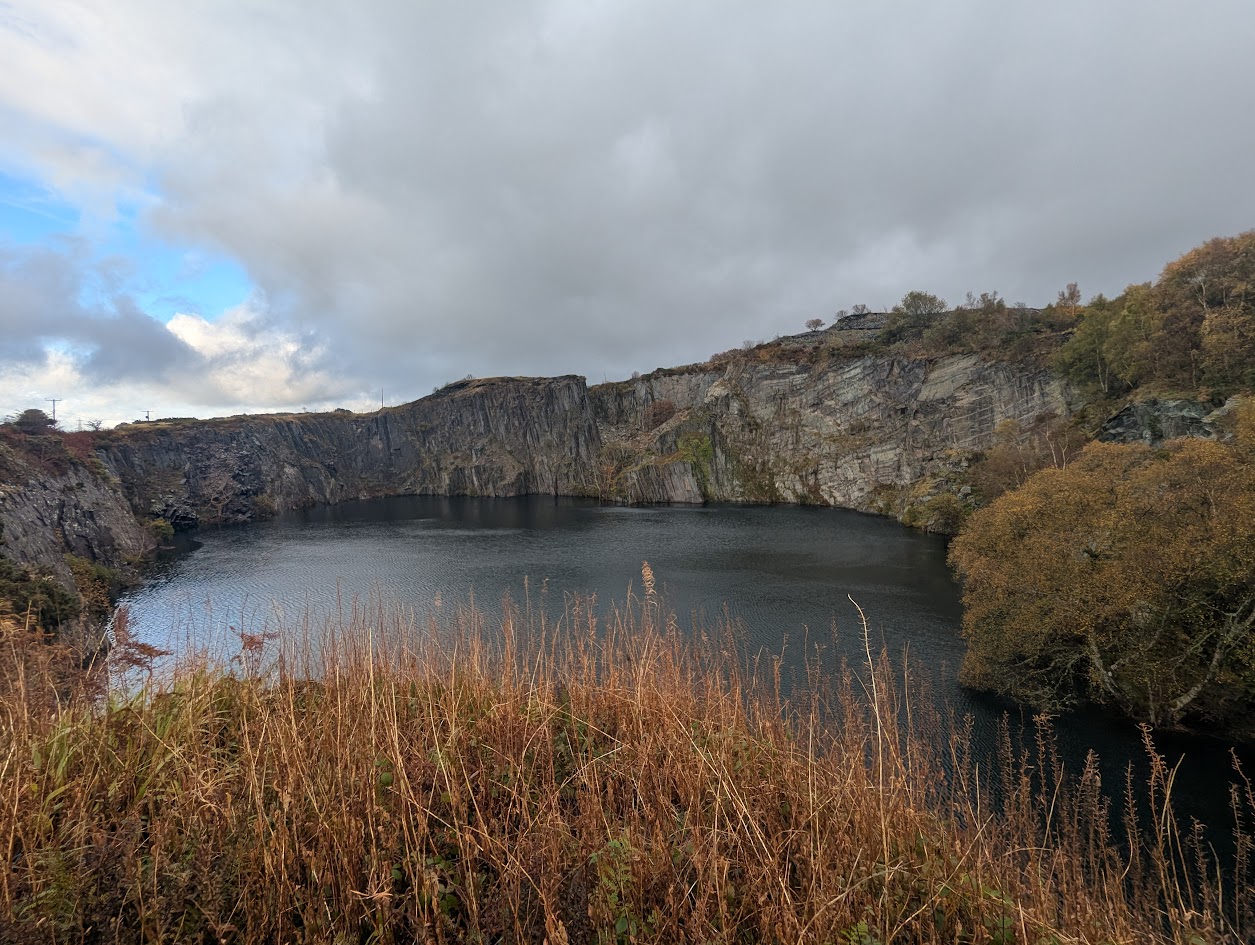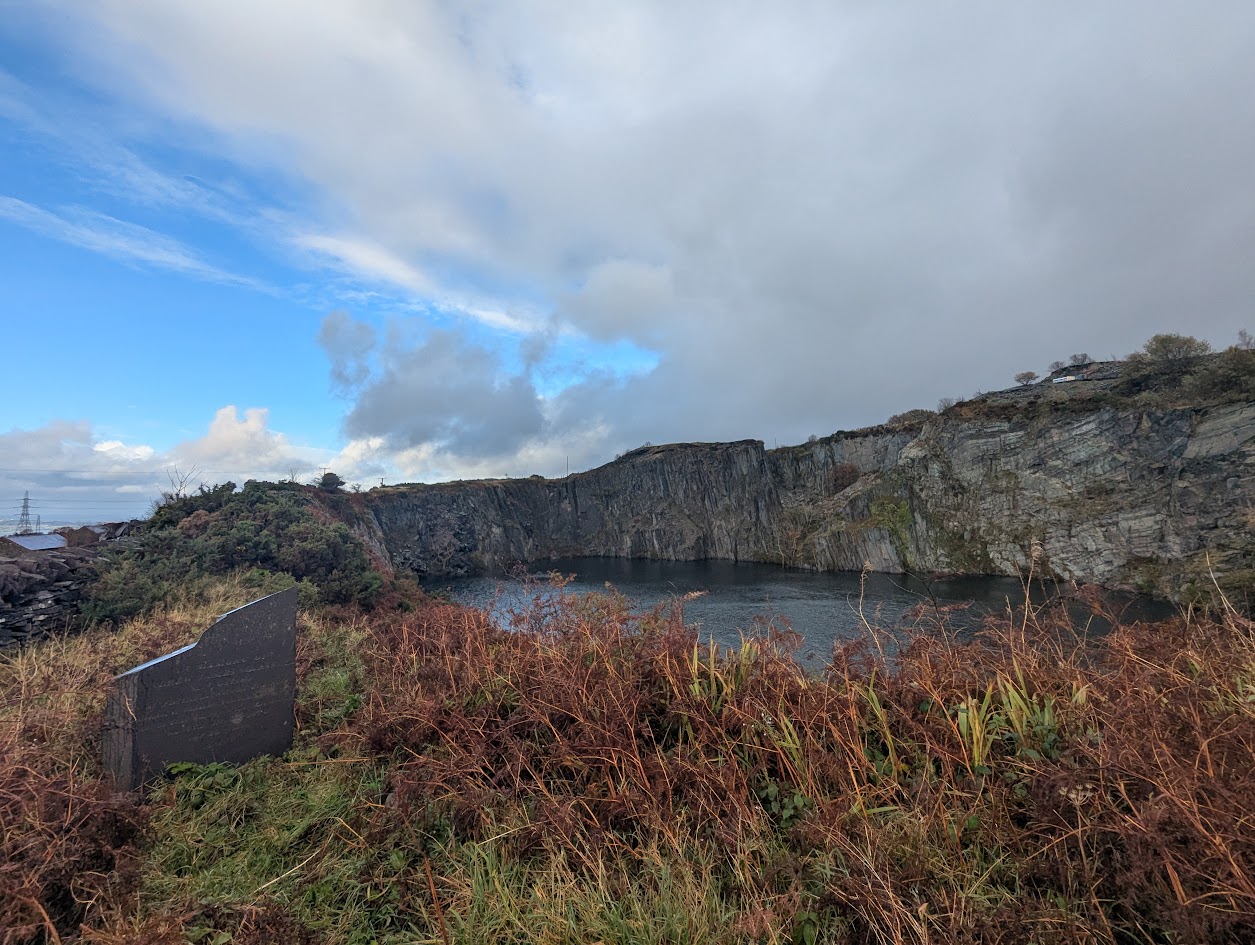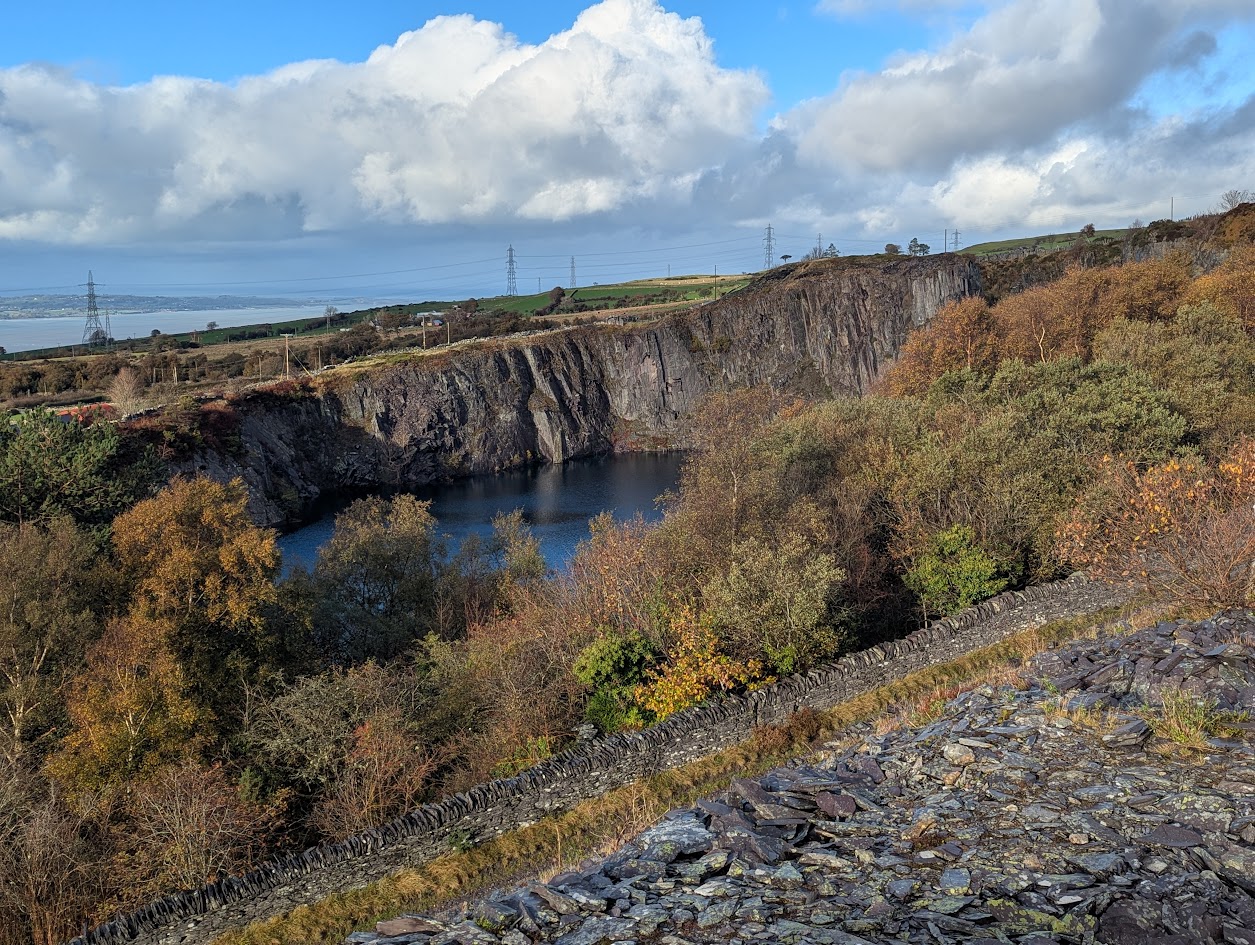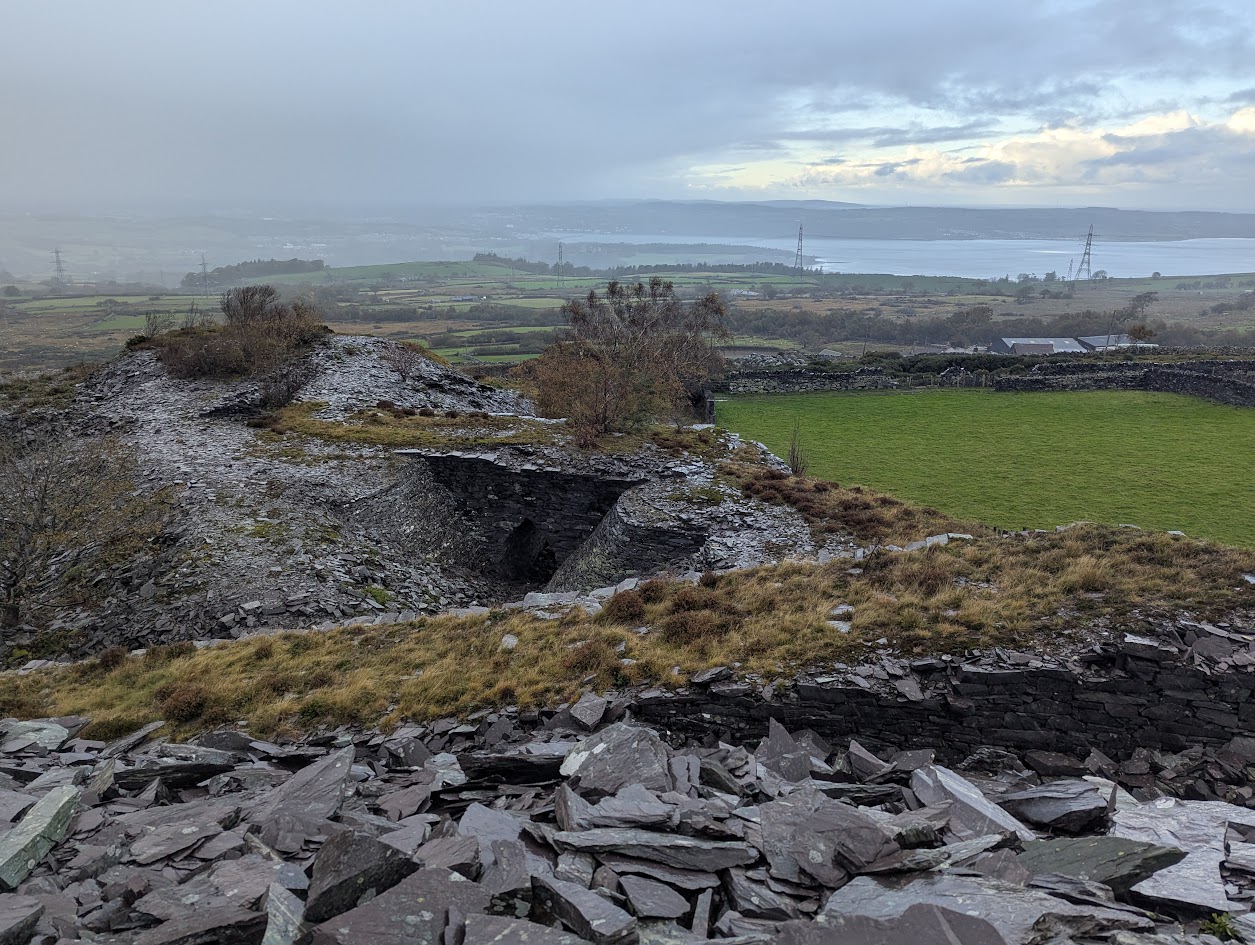



Pit.***
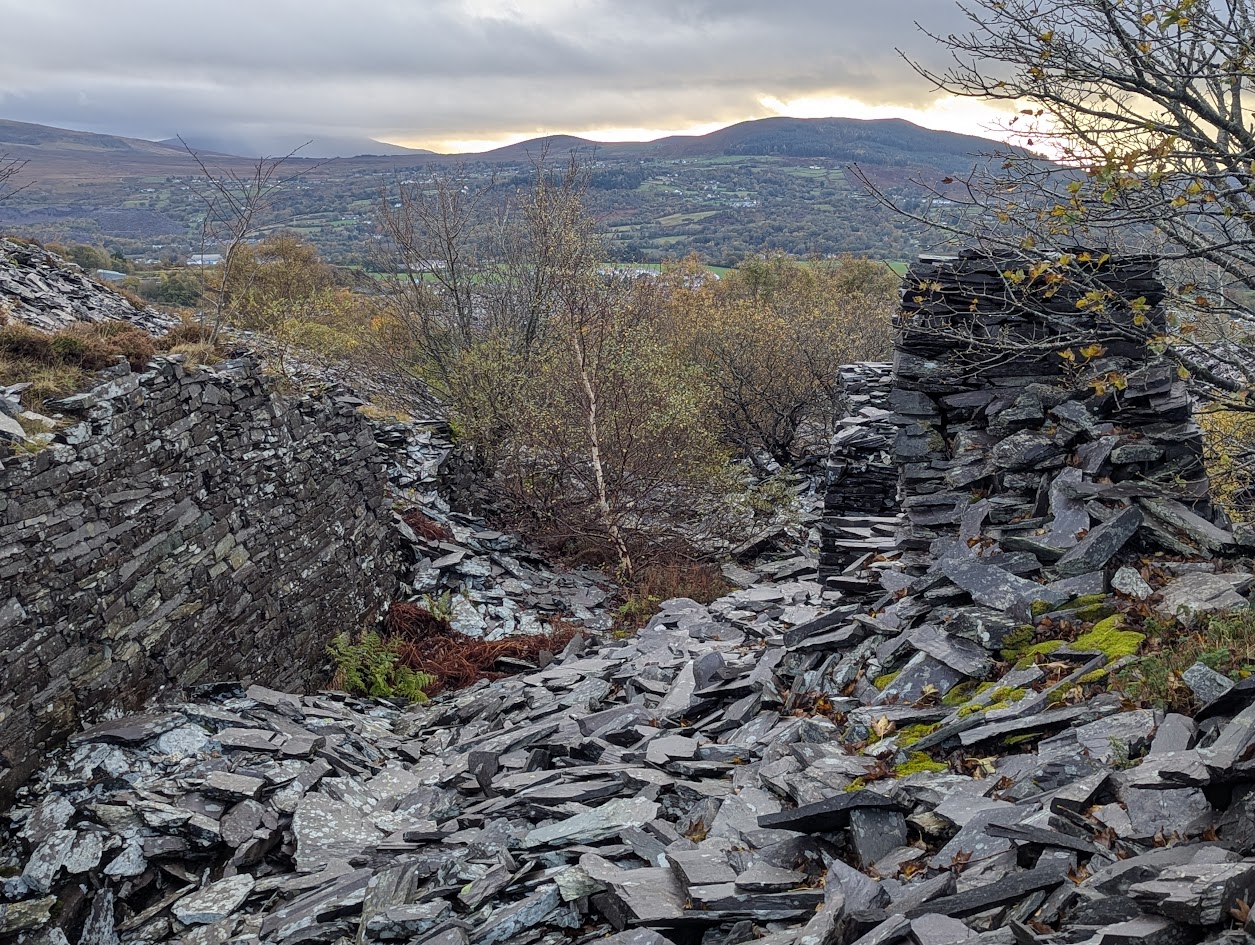
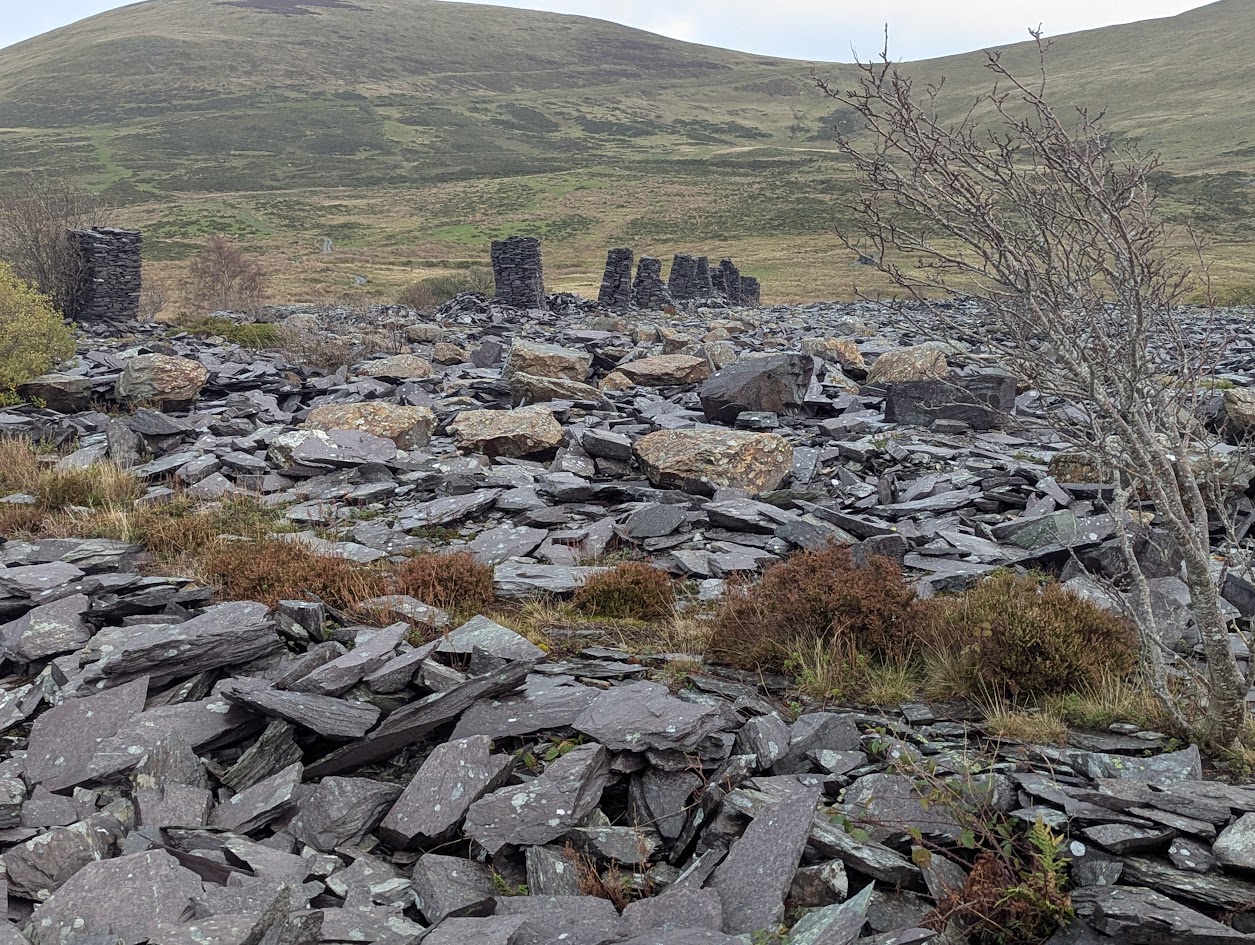
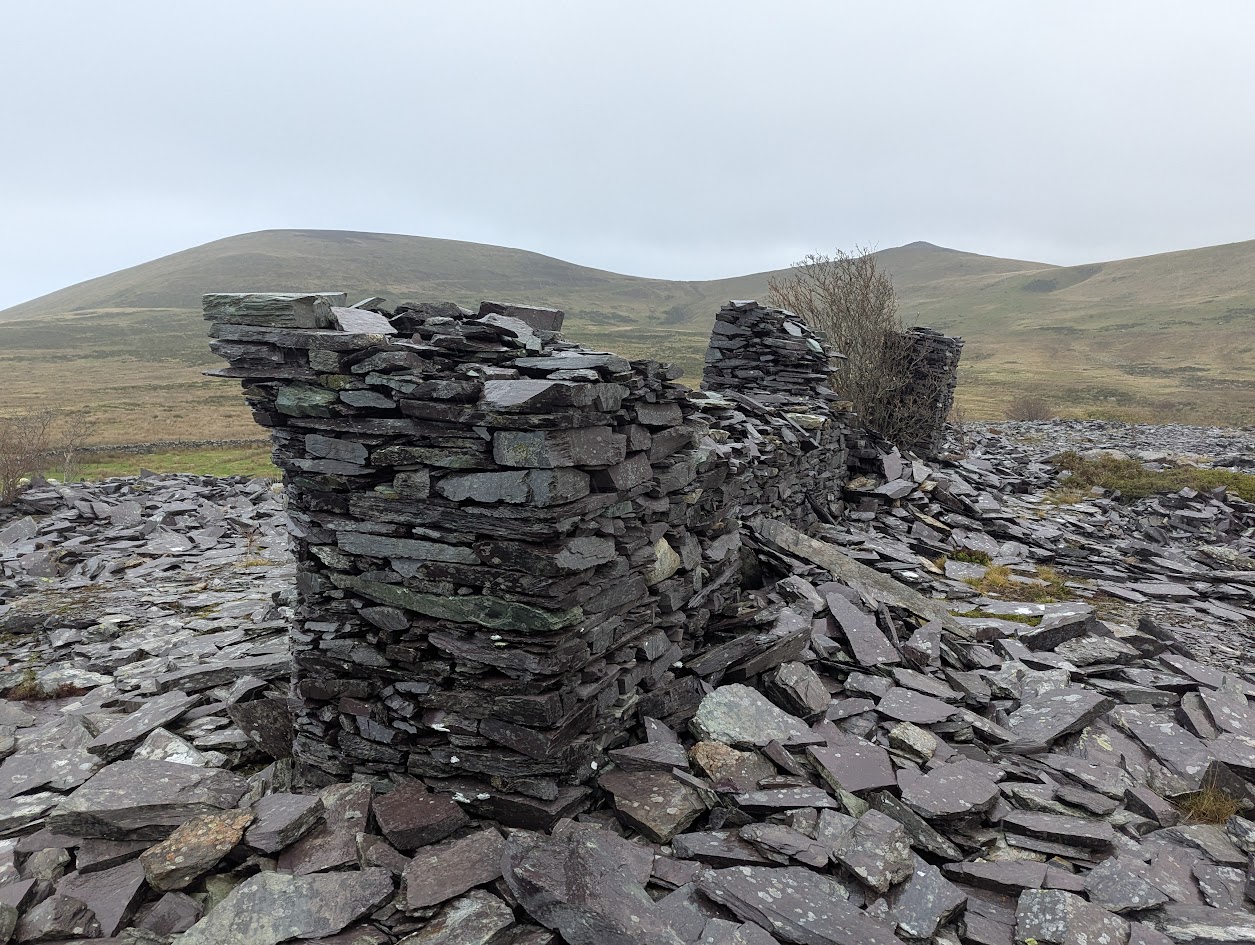
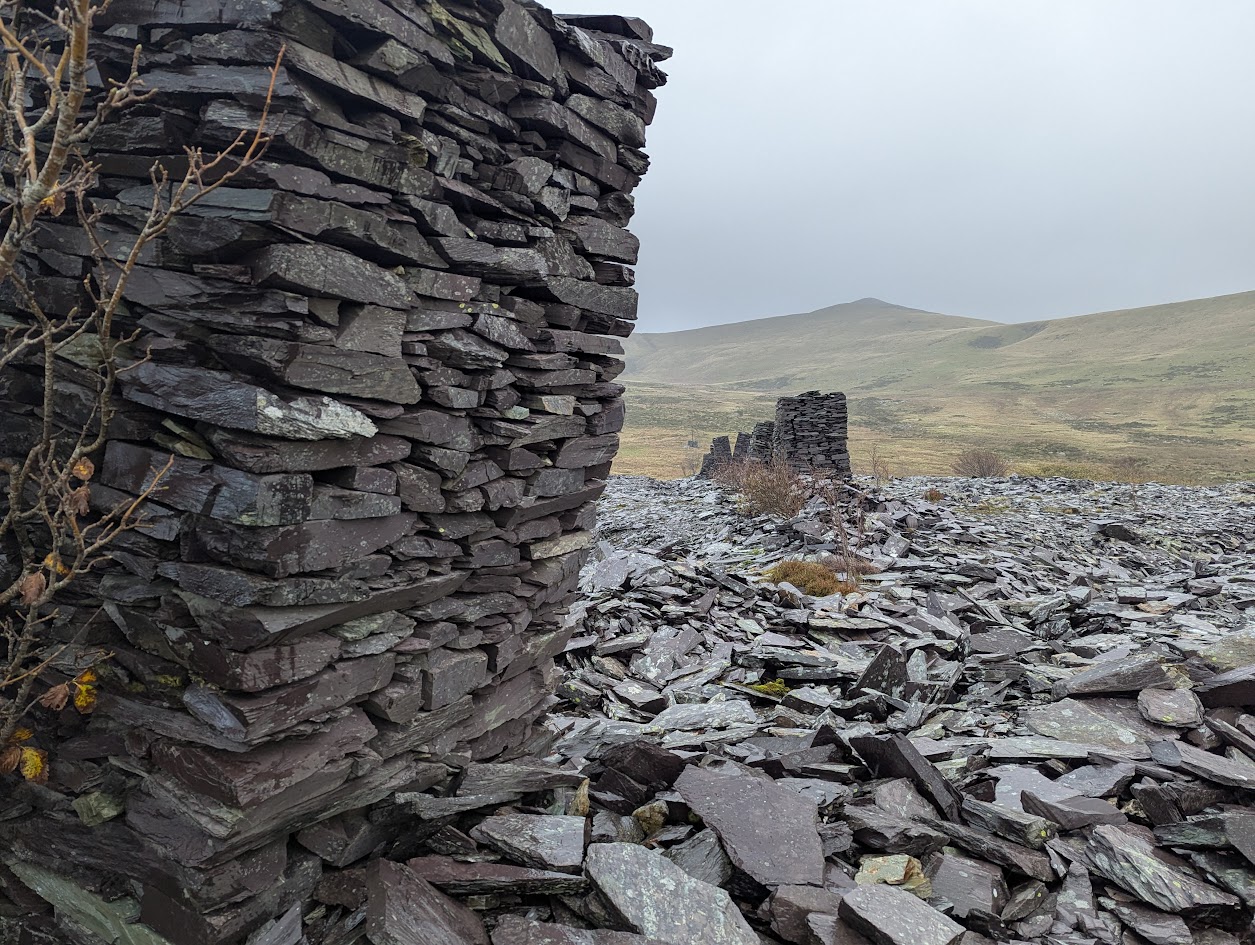
The site remains are characterized by a flooded pit and numerous ruinous buildings, though the overall landscape shows little major disturbance. The foundations, inclines, and tramway layout are clearly visible. Vestiges of the anchor for the final chain incline survive, as does evidence of a horizontal sheave on the landing platform, suggesting operational mechanics.
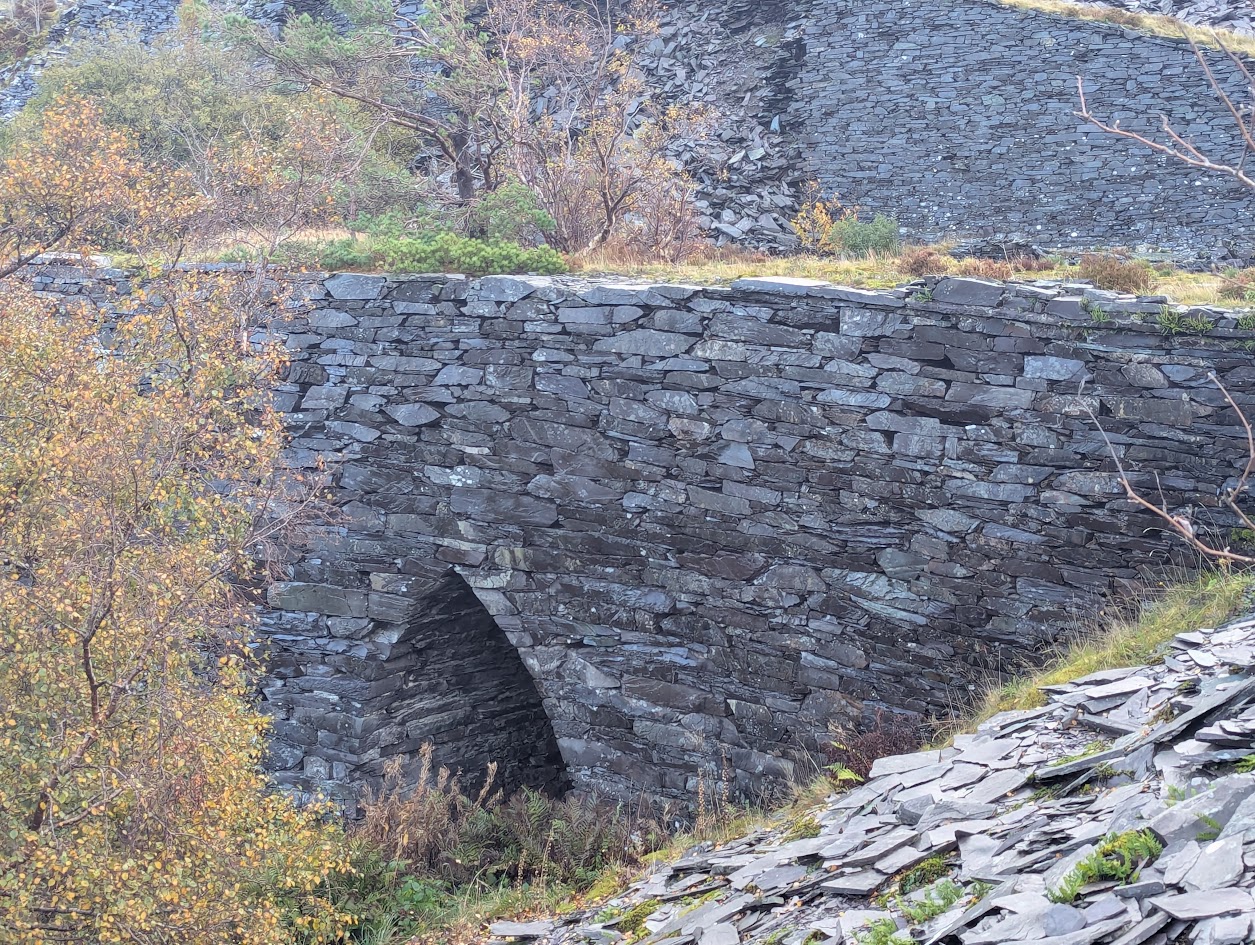
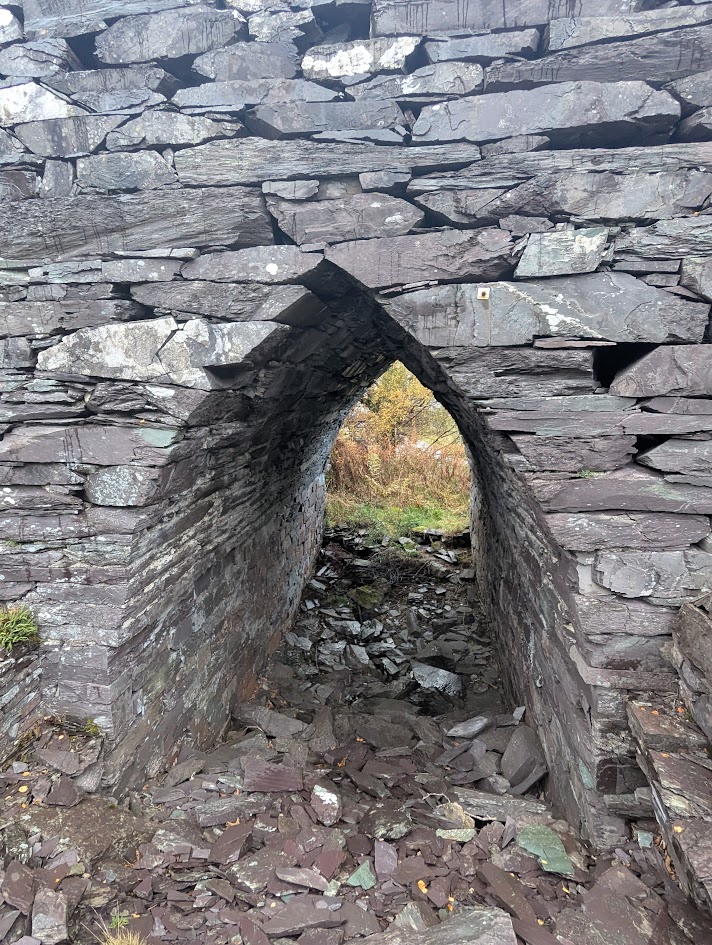
The upper mill area is accessed via a pointed arch beneath the landing platform. This upper mill may have been powered by a turbine. Physical evidence on-site includes slate pieces with circular- and sand-sawn ends surviving. Slate-way wheel marks also remain, which are noted as an indicator of financial constraints during operation. The adjacent Bryn Hall is still occupied and features a fine arched gate.
The entire leat from Llyn Caseg, including its launder pillars and a relief pipe, is traceable down to the former reservoirs.
The quarry pit was established around 1780 and was initially operated by the Pennant family. The pit was not self-draining, necessitating the uphauled removal of all slate and waste material. The quarry relied on a limited water supply imported from Llyn Caseg, which restricted the layout of the mill facilities. Due to high operational costs, the Pennants abandoned the site in 1845.
It was immediately reopened in 1845 by the Royal Bangor Slate Co., which oversaw the construction of the mills. The quarry operated until 1884, when its vital water supply was cut off, leading to closure.
Slate was raised approximately 200 ft by a water-powered incline, which may have replaced an earlier water balance system . A second incline, powered by the tailrace water from the first, was used specifically to uphaul waste material. High-quality slate was then lowered to two mills via a succession of inclines, utilizing the water source four times in total. The finished product was carted to Bangor. In 1882, the quarry employed 65 men (roughly half its earlier workforce) and produced an output of 2,198 tons.
Public road leads right up to the quarry, and a car can be parked on the bend where it splits into 2 tracks. Pit visible from this point. Upper track gives access to tips and processing area.
Publications (1)
- Richards, Alun John (1991); Gazeteer of the Welsh Slate Industry, A; Gwasg Carreg Gwalch 978-0863811968