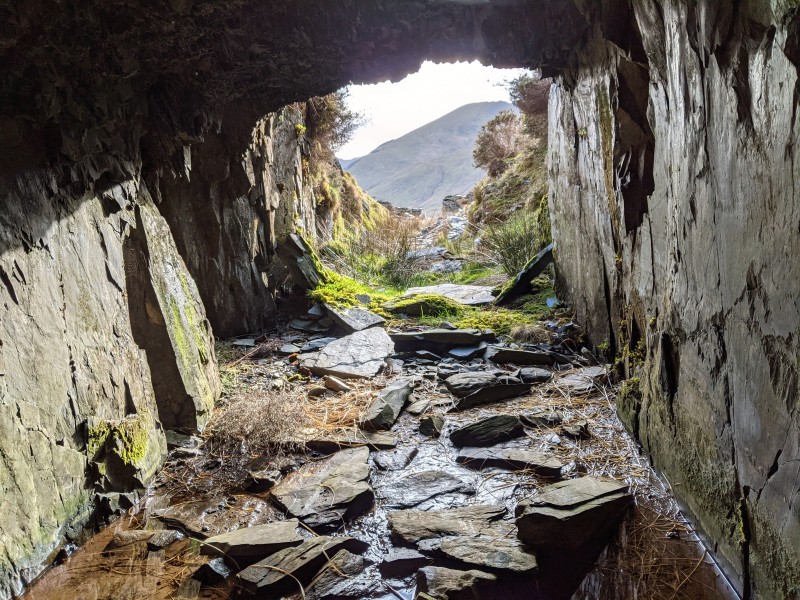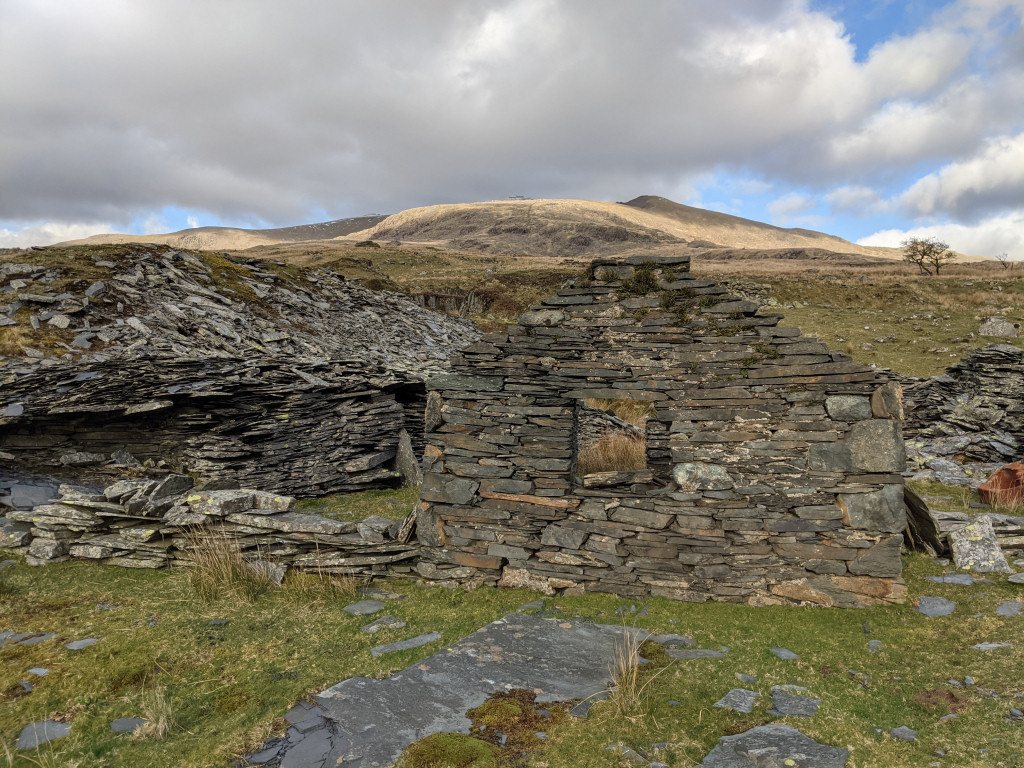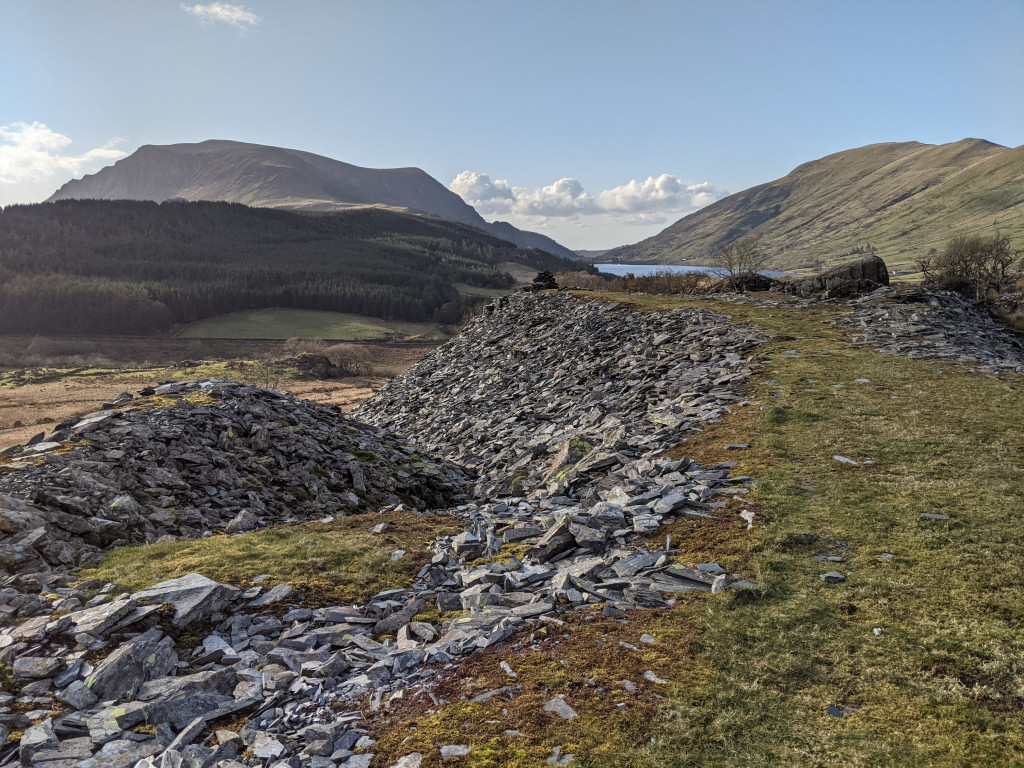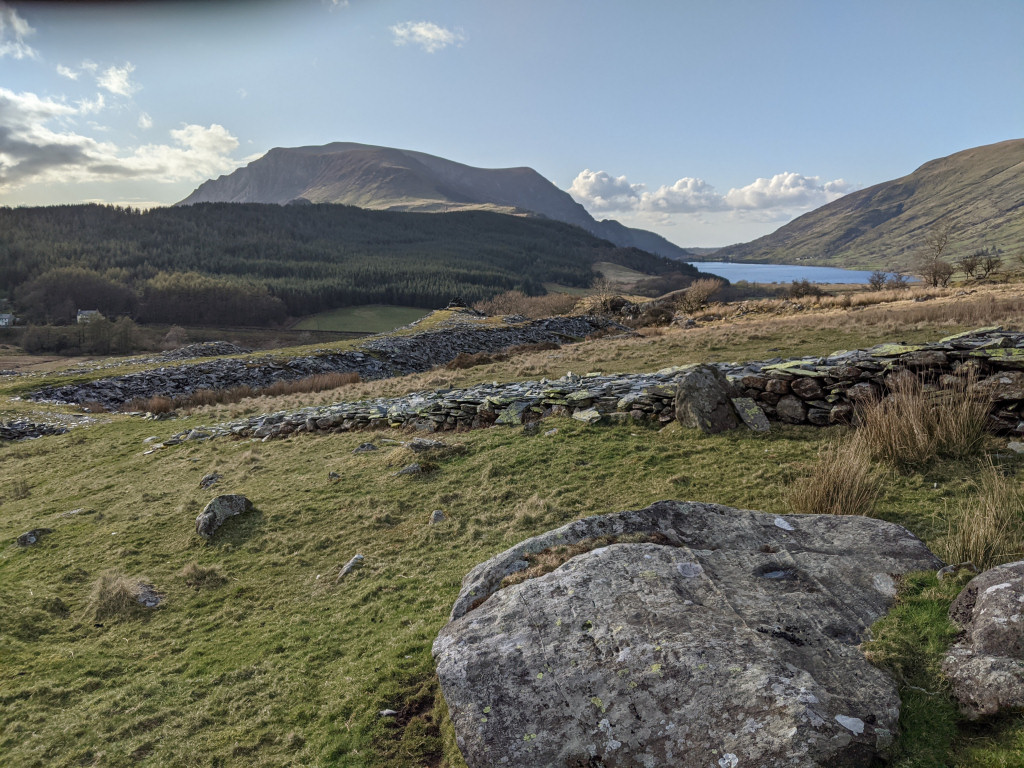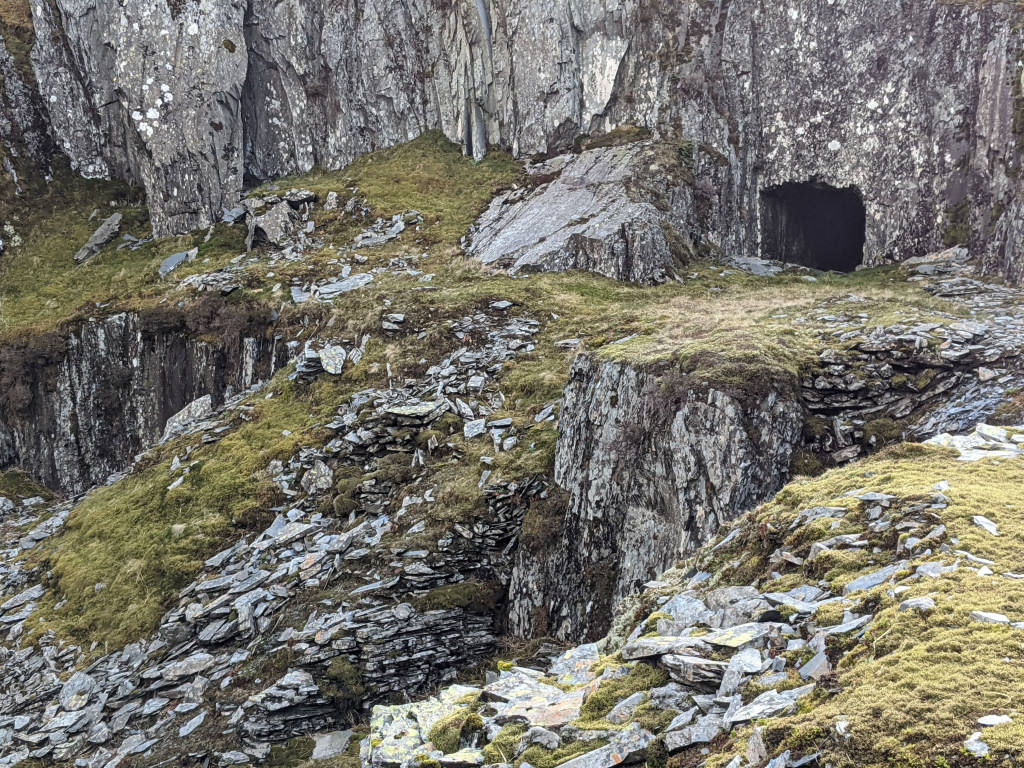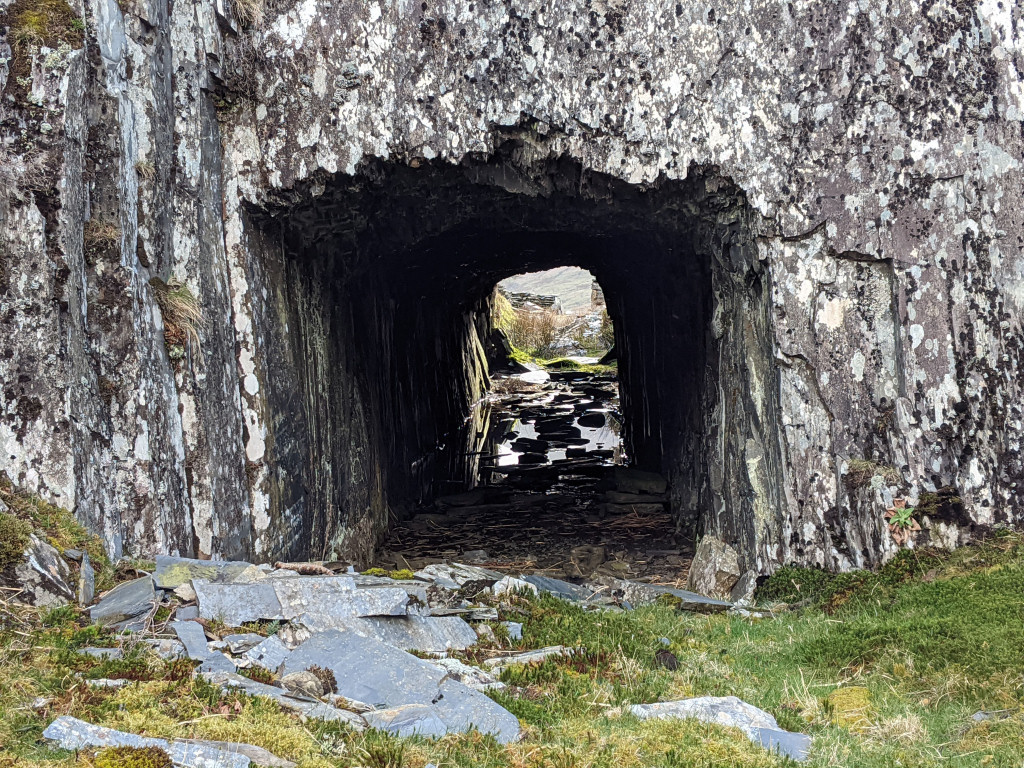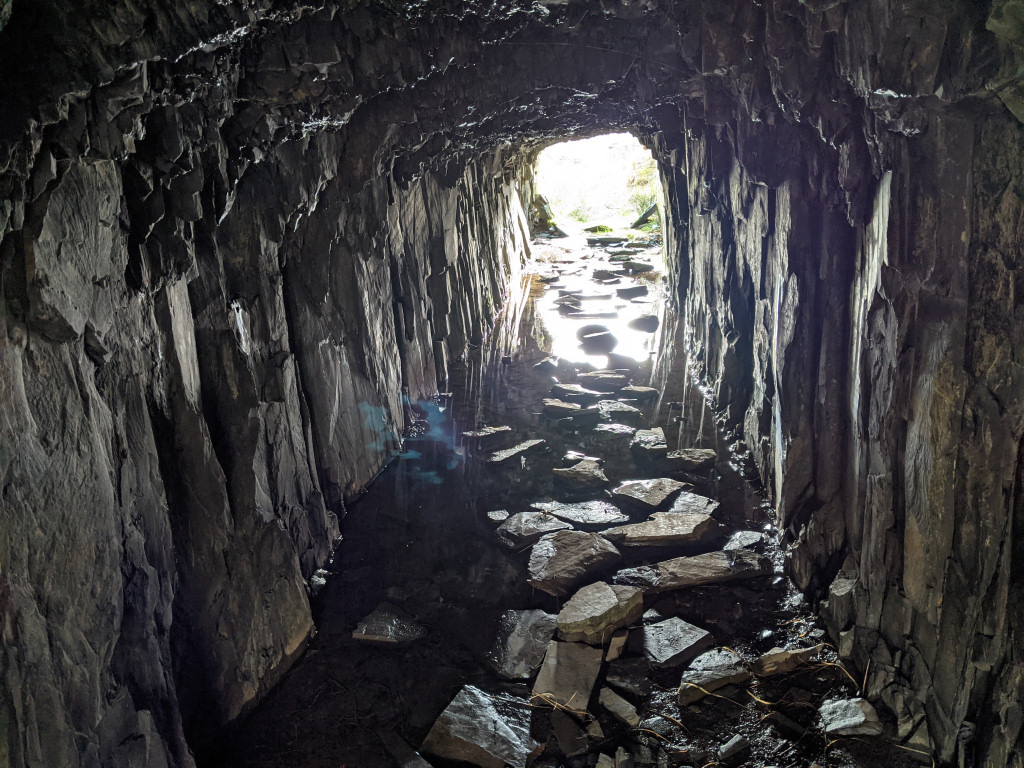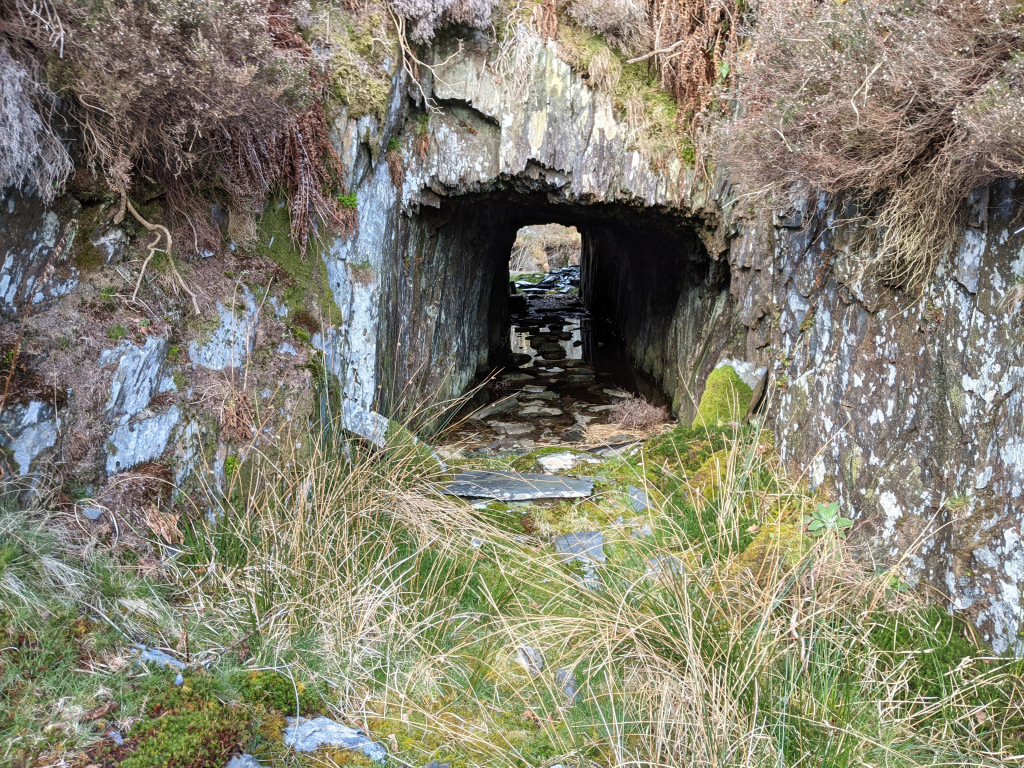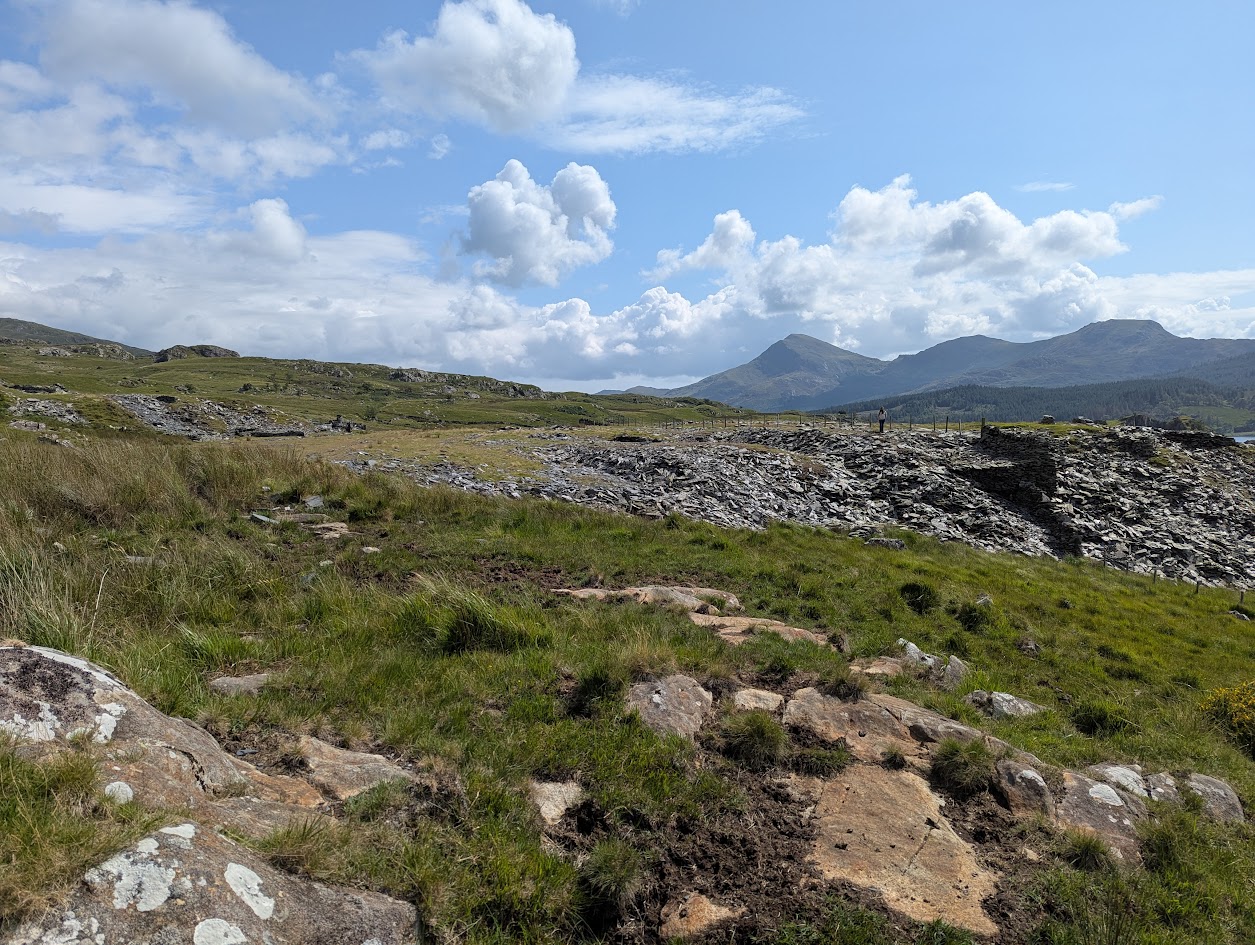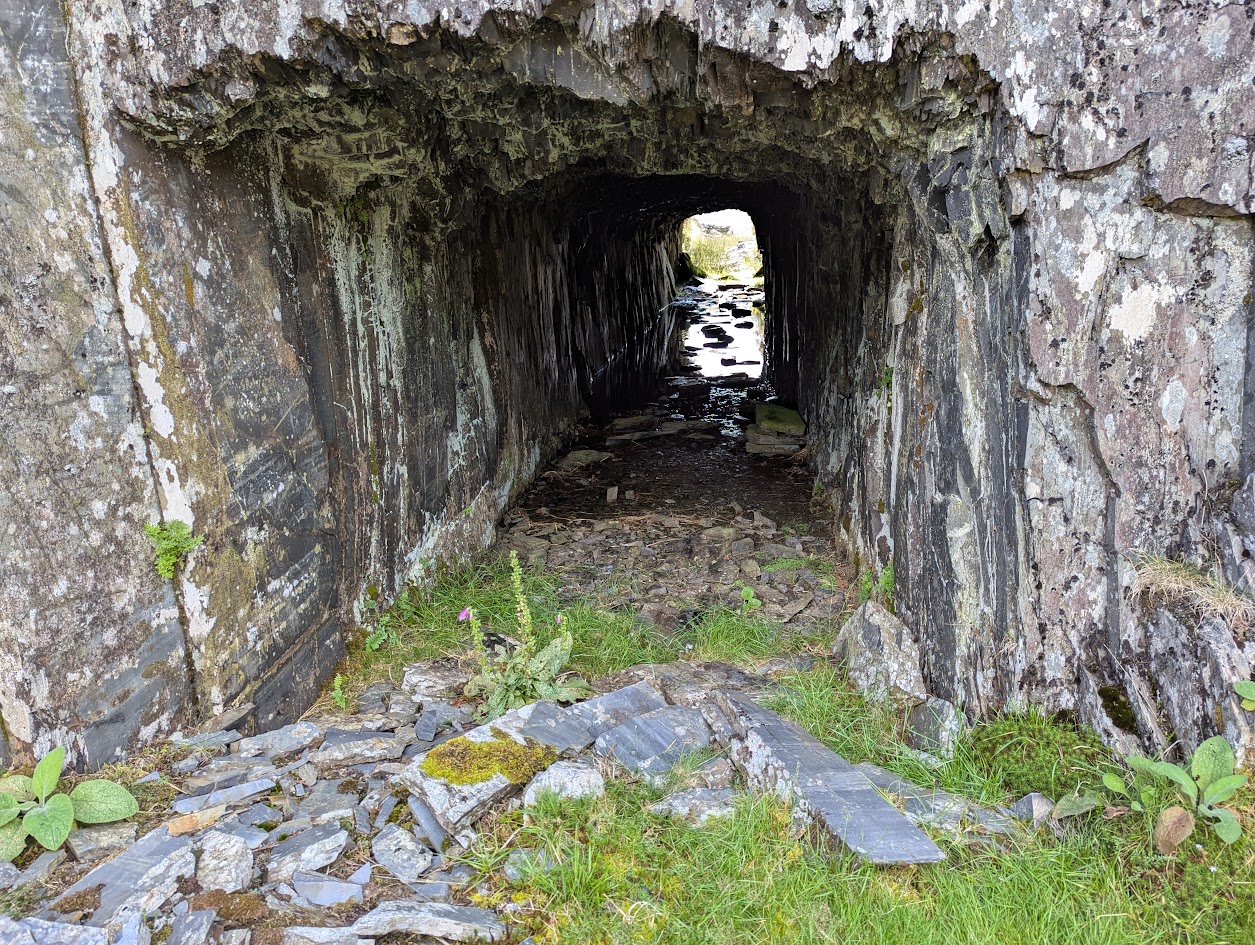



Extensive mill area. Short adit to pit with remains of dressing shed. Deep adit, which may be open to bottom of pit. (Visited Jul 2025, confirmed no sign of adit in pit)
The quarry was operated by the Clogwyn y Gwin Slate Company Ltd, which was registered in 1879 and dissolved before 1916. Main development of the workings took place during the 1880s, when the company established its primary infrastructure and extraction methods. Slate was originally taken out through a short upper tunnel to a substantial dressing and mill area where it was processed for market. The finished product was then sent down an incline to a siding on the North Wales Narrow Gauge Railway, providing the essential connection to external markets.
After a railway-level connection was established, the incline became redundant and operations were reorganized so that slate was trammed out on the level to a short incline leading directly to the siding. Following the company’s dissolution, a revival took place in the 1920s using different methods and infrastructure. During this later period, a lower tunnel known as the bottom adit was used for extraction, and slate was dressed inside the quarry itself, likely with a small or portable saw rather than in the elaborate external mill facilities used previously. Finished slate from this era was taken via the lower tunnel and then transported by a short aerial ropeway to the railway siding. Final closure occurred in the 1930s.
Take the path from Rhyd Ddu towards Glanrafon. After the path crosses the railway, a slatey path climbs up on the right towards the quarry.
The mills and dressing area has been completely cleared, with no structural remains surviving above ground level. This suggests the buildings were of timber or sheet construction rather than the more substantial stone or brick structures found at larger quarries. A possible up-haulage incline between different working levels appears incomplete or may never have been built.
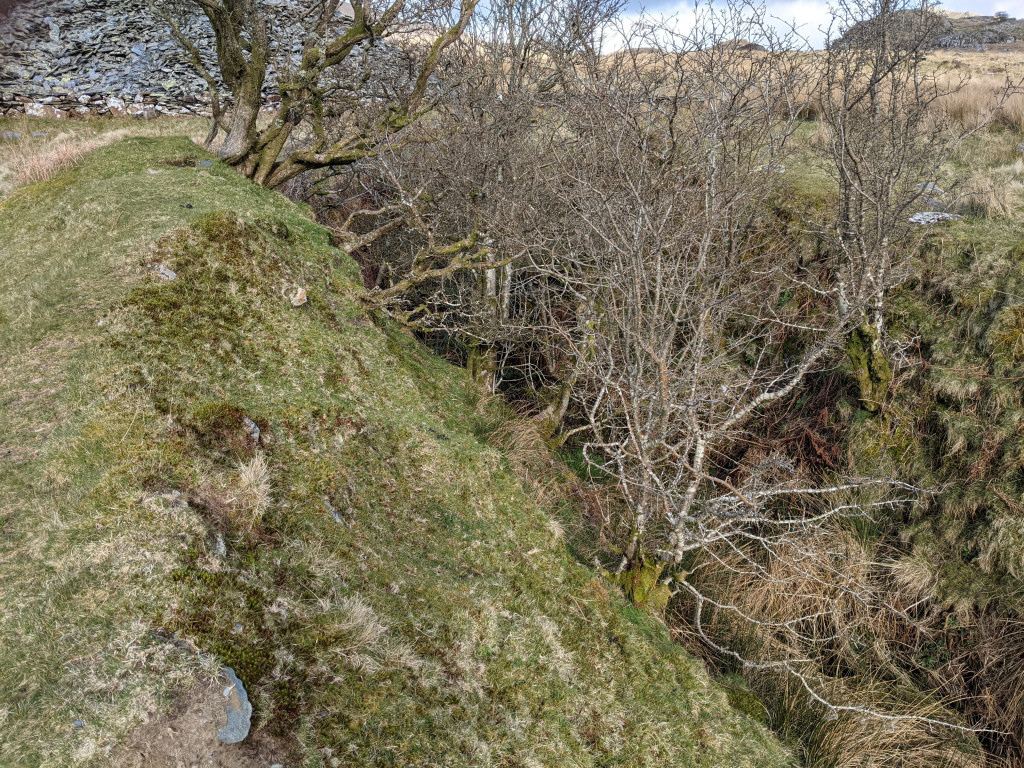
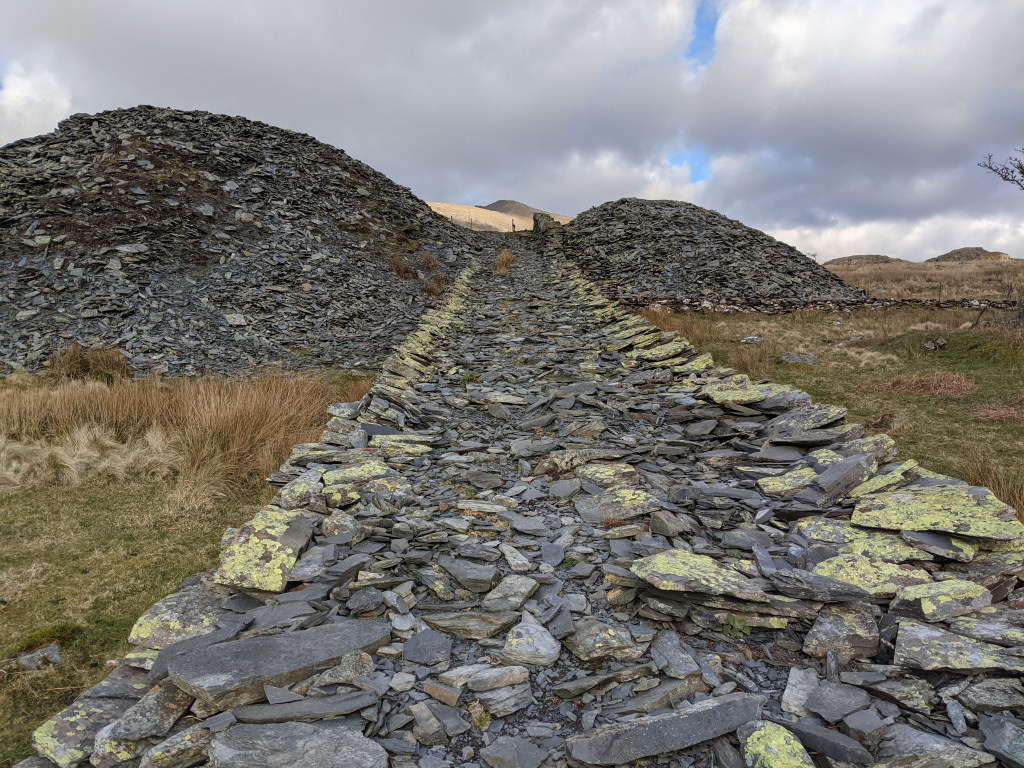
Several transport routes remain visible across the landscape, tracing the evolution of the quarry’s operations. The original exit tramway from the middle bank can still be followed, along with the old incline route that once descended to the railway below. The later tramway formation leading to the head of the small aerial ropeway is also discernible.
External Links
Publications (4)
- Jones, Gwynfor P., Richards, Alun J. (2004); Cwm Gwyrfai; pp.101-110; Gwasg Carreg Gwalch ISBN 0-86381-897-8
- Richards, Alun J. (2013); Slate Quarrying in Wales; Gwasg Carreg Gwalch; ISBN 1-84527-026-6
- Richards, Alun John (1991); Gazeteer of the Welsh Slate Industry, A; Gwasg Carreg Gwalch 978-0863811968
- Richards, Alun John, (1999); The Slate Regions of North and Mid Wales and their Railways; Gwasg Carreg Gwalch; 0863815993