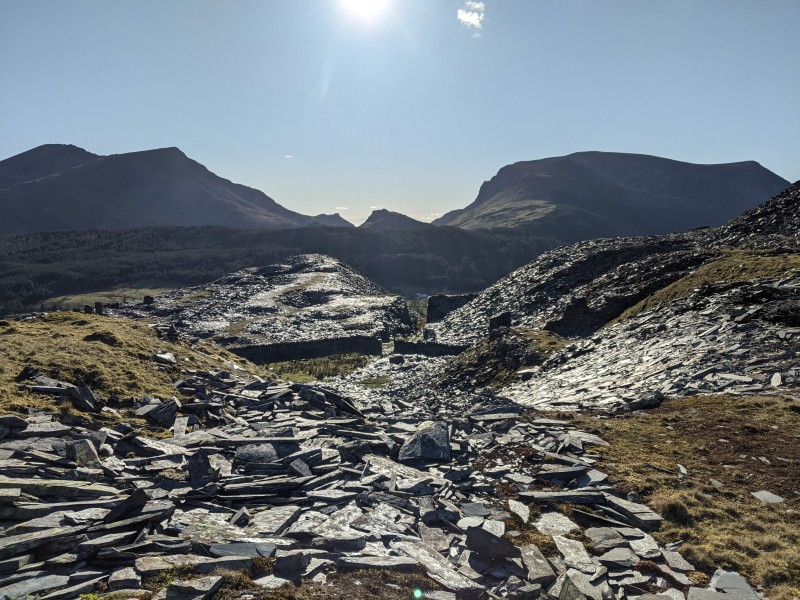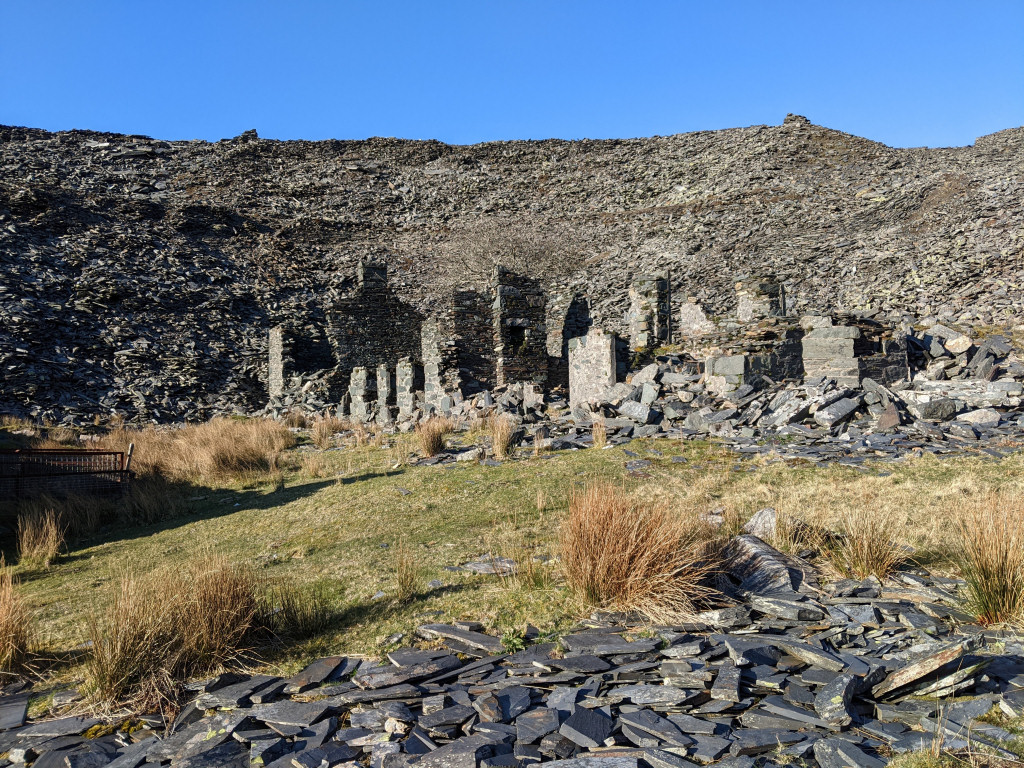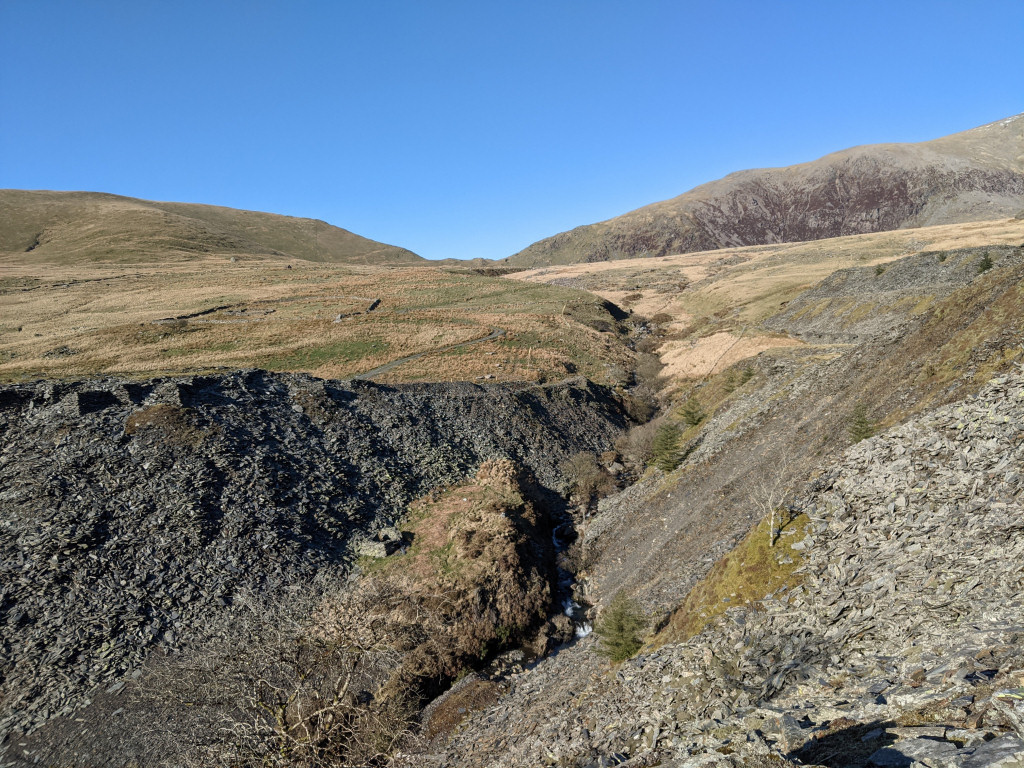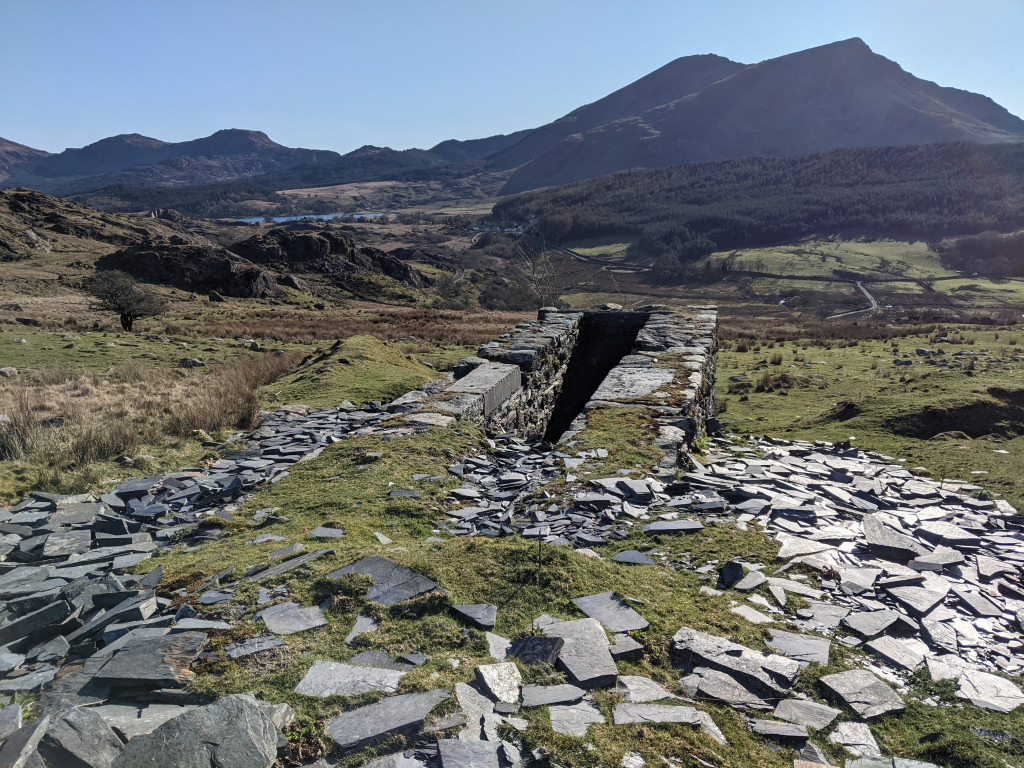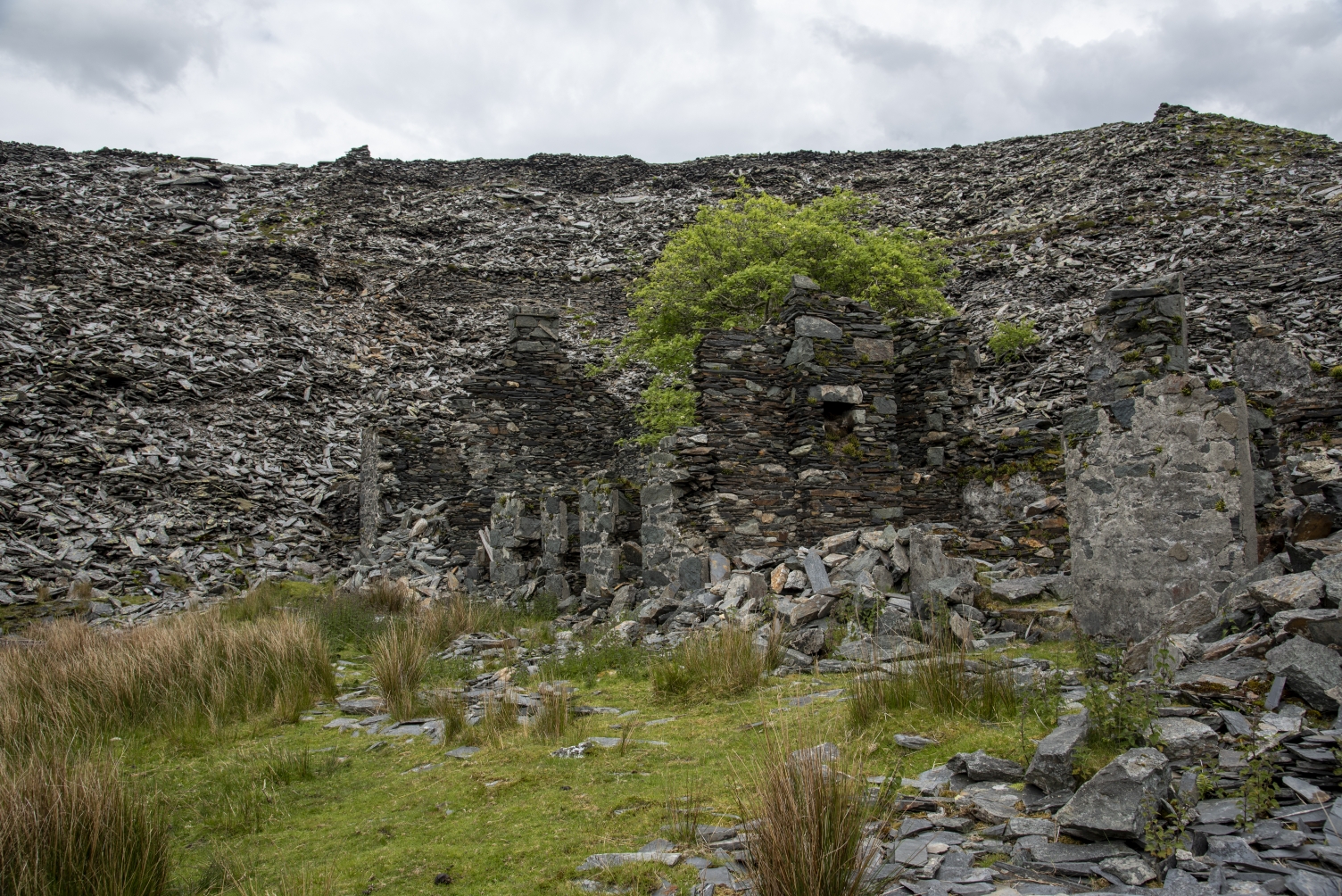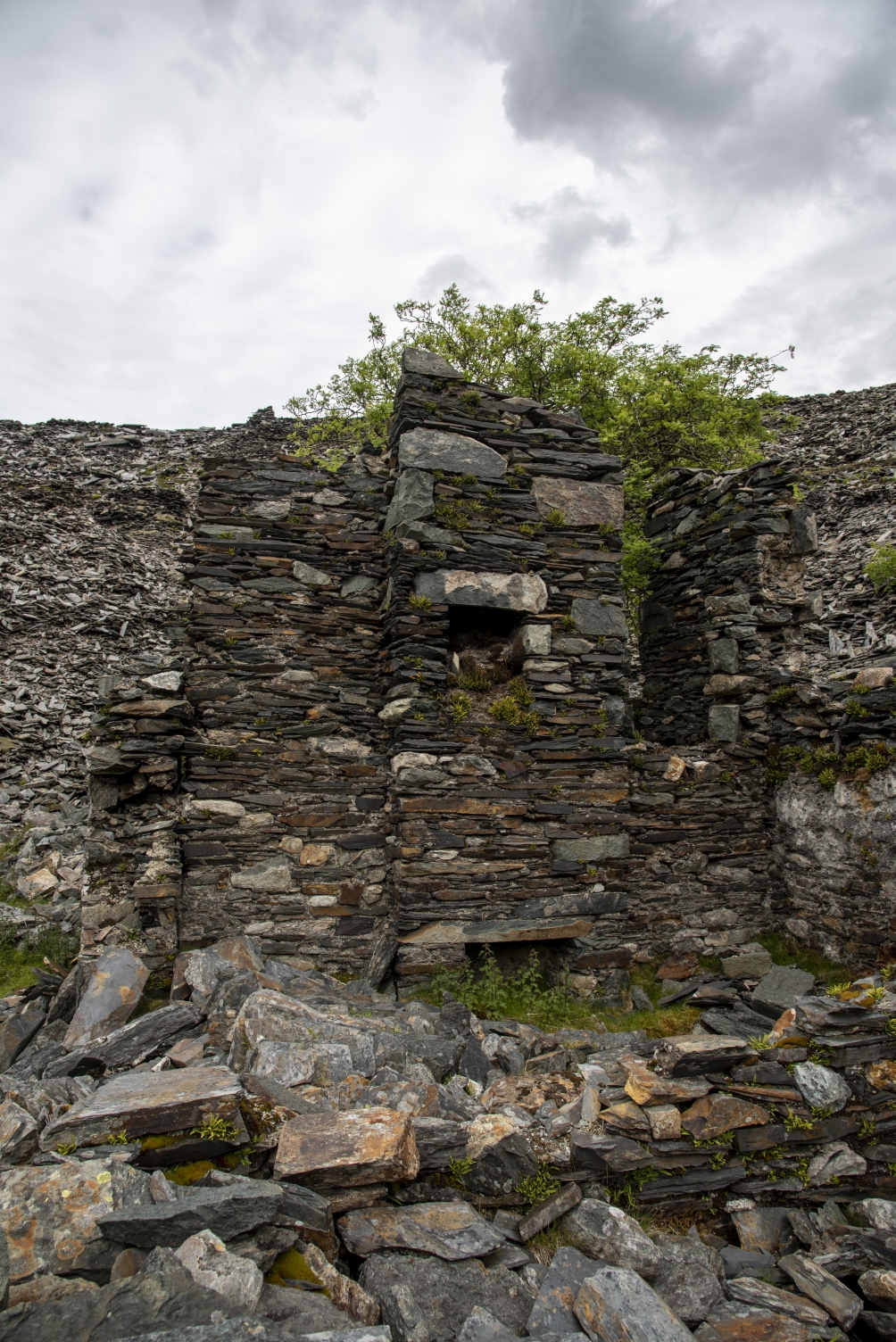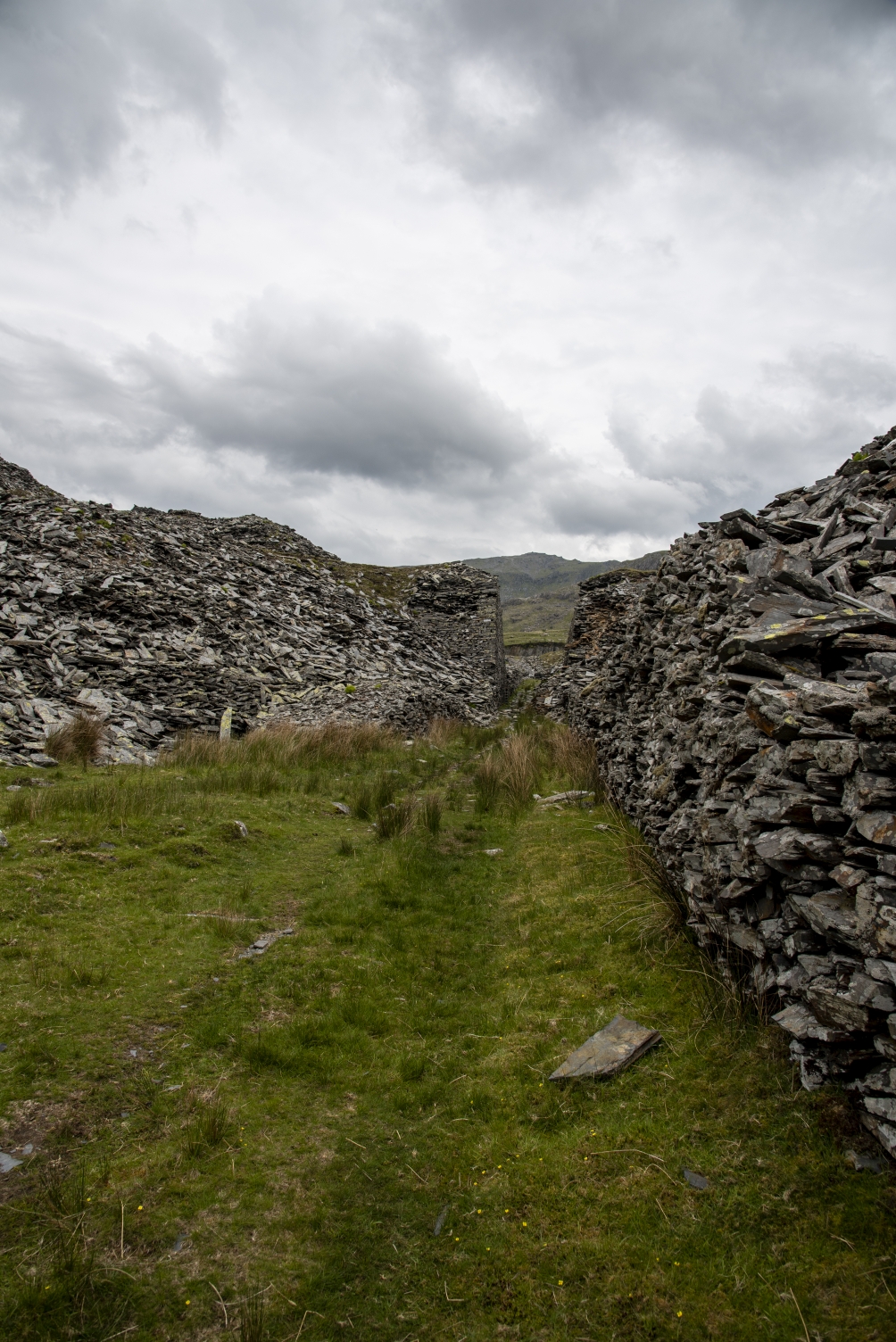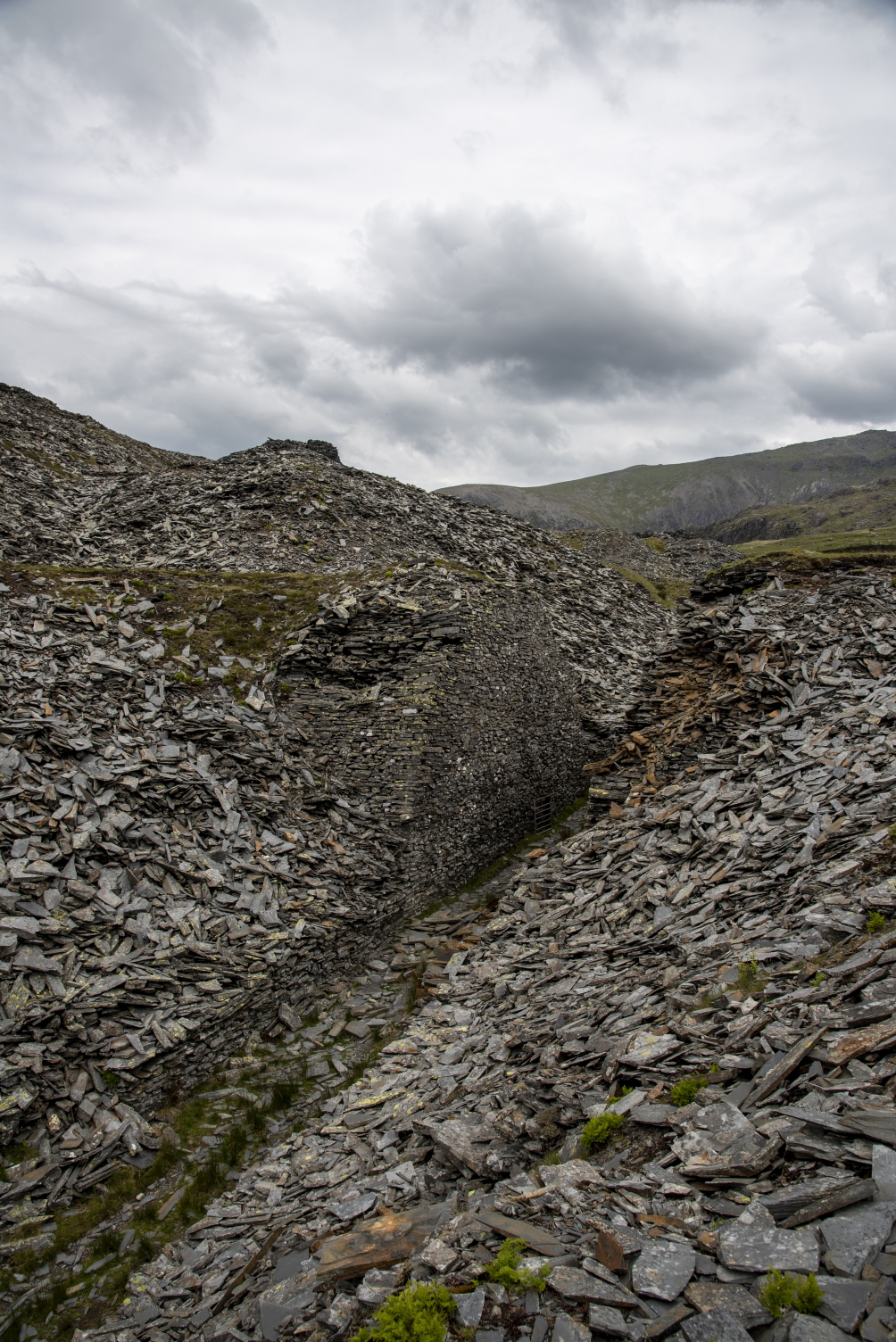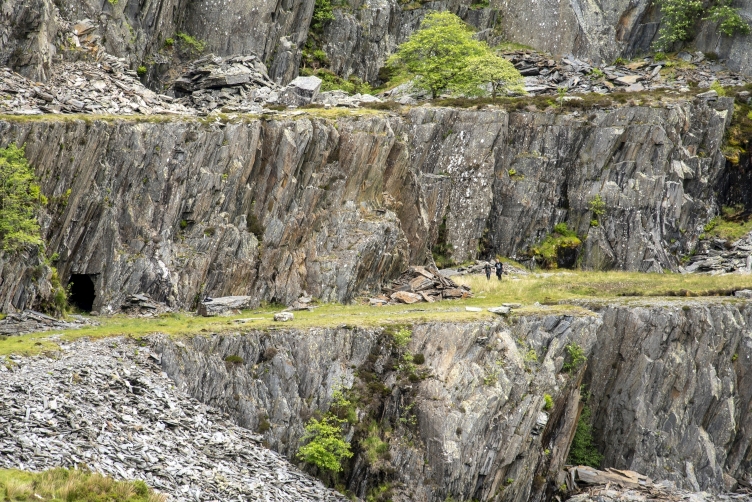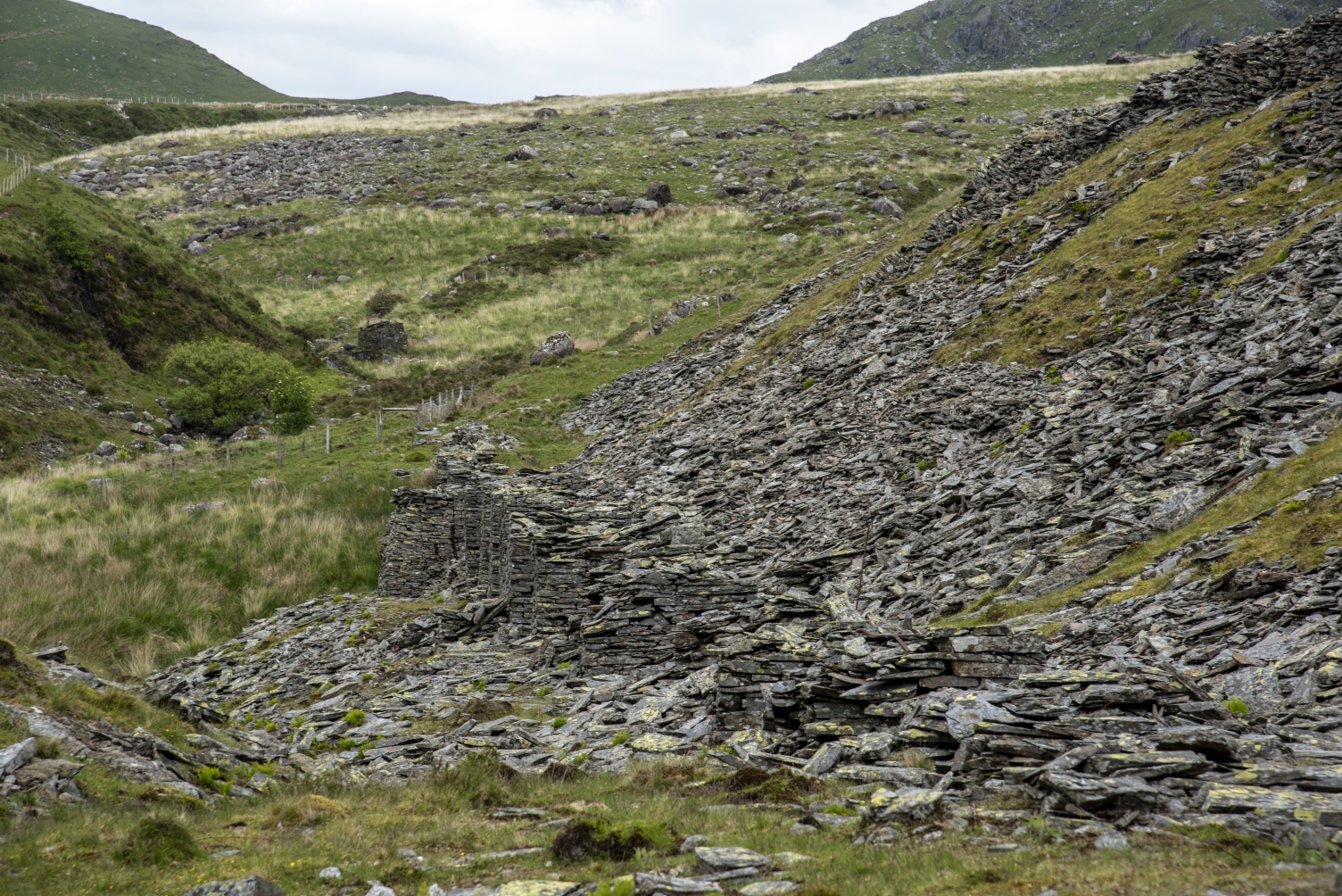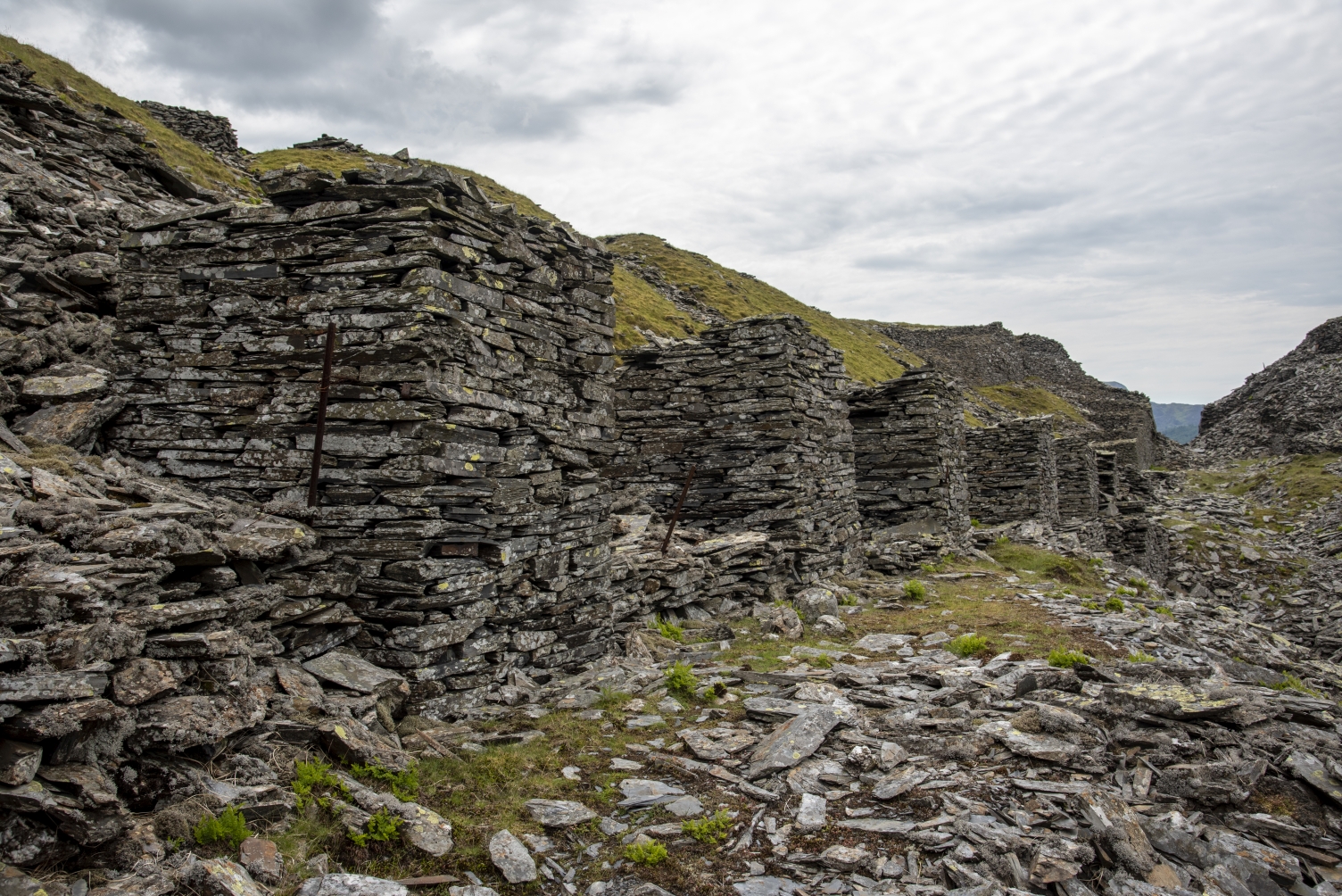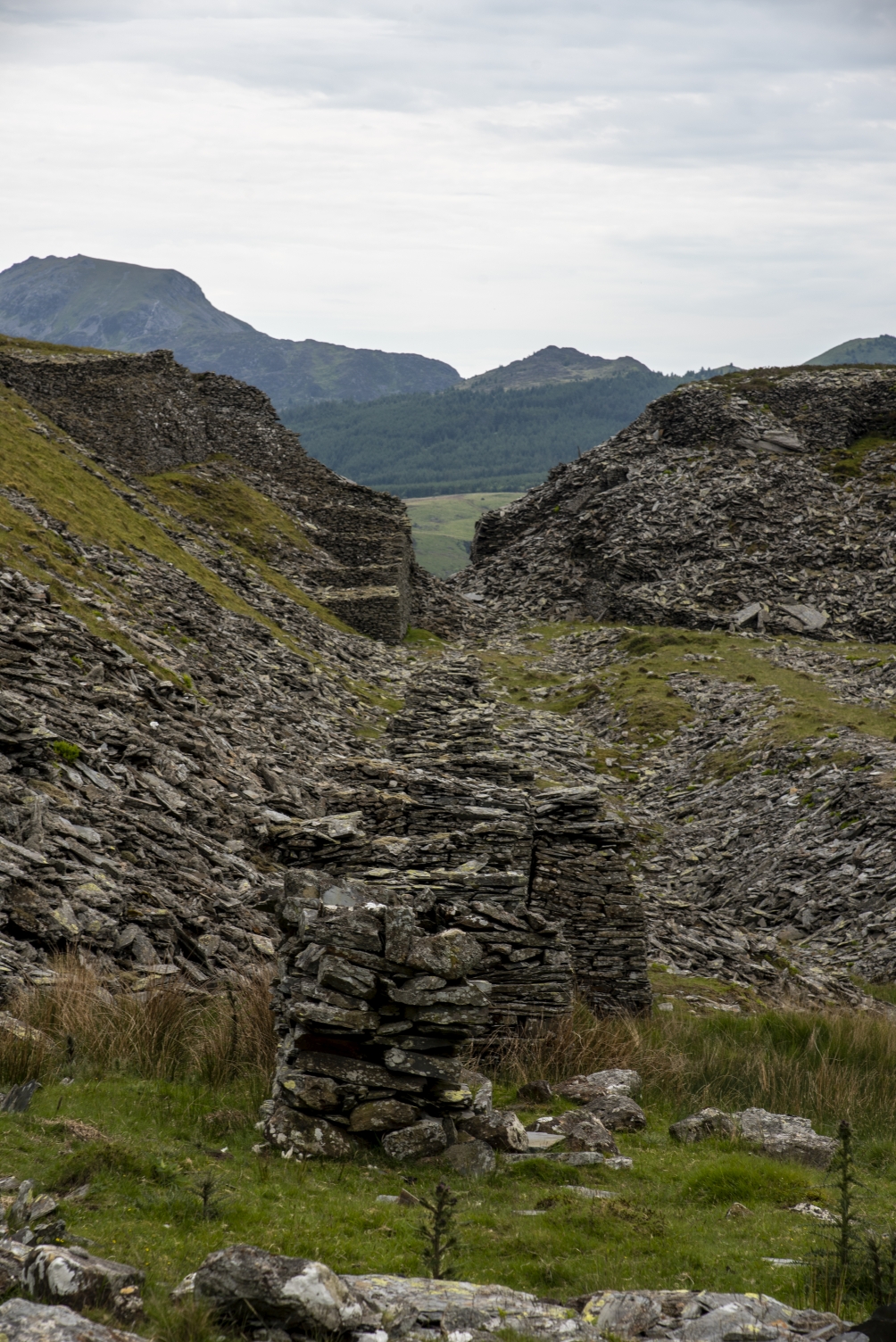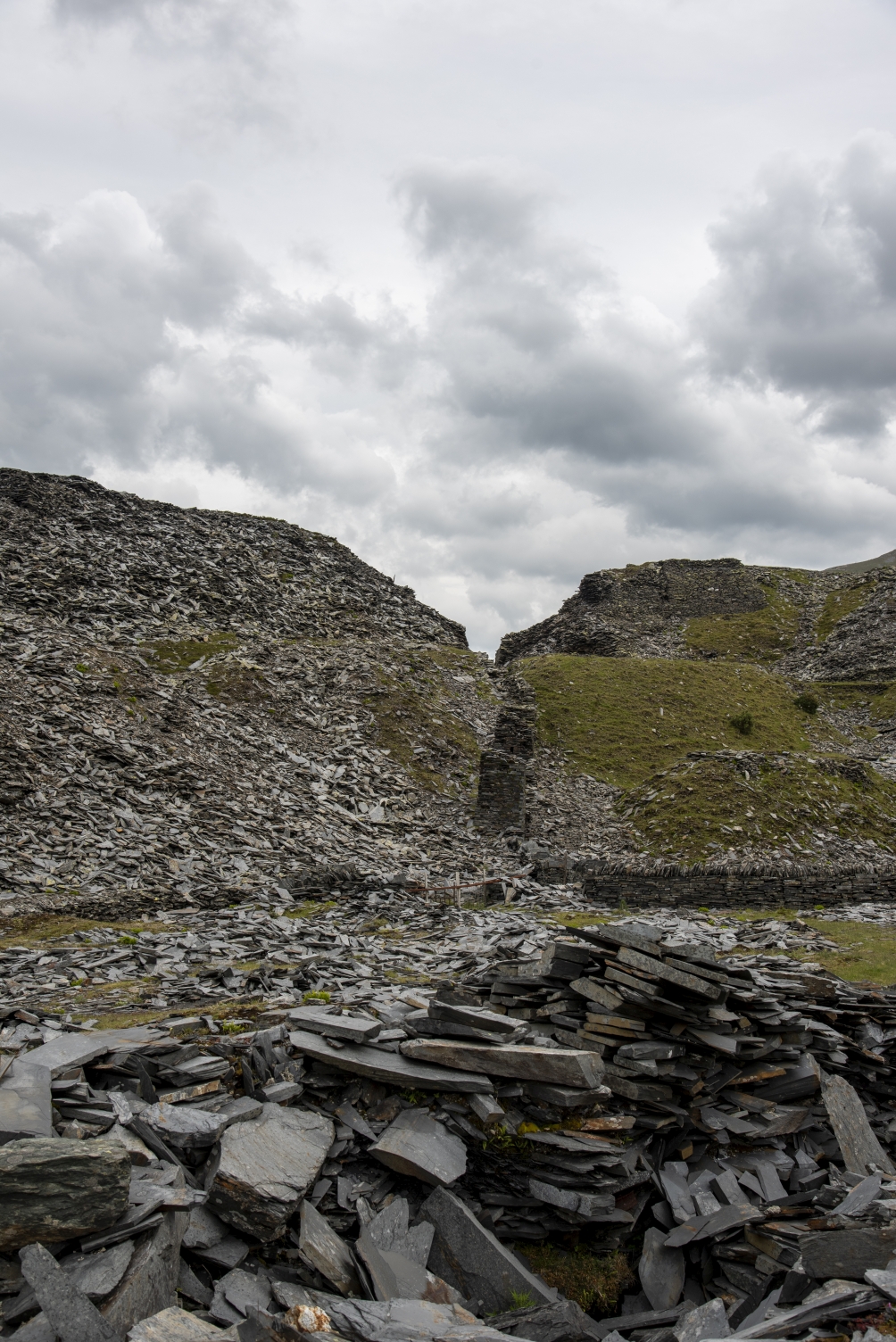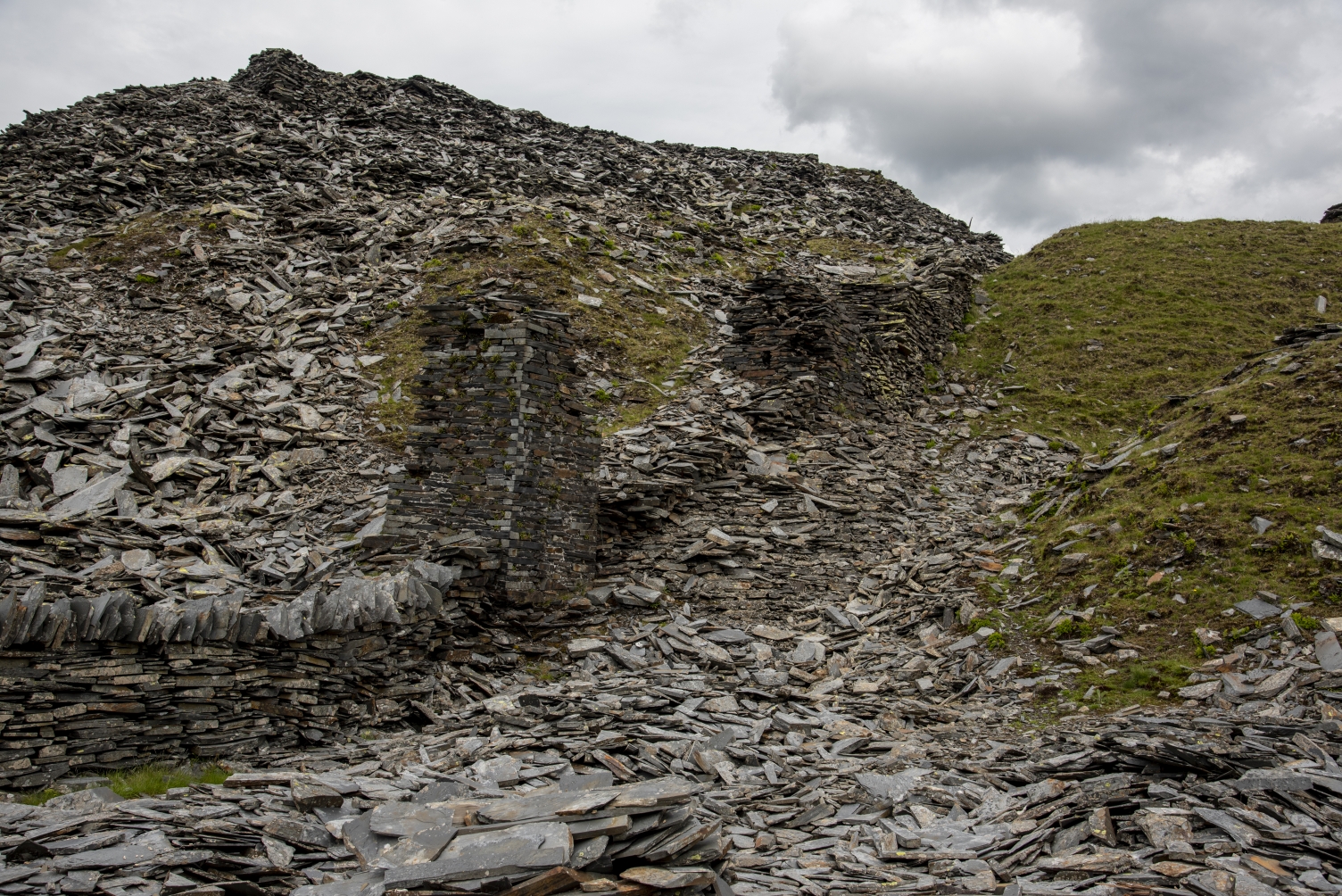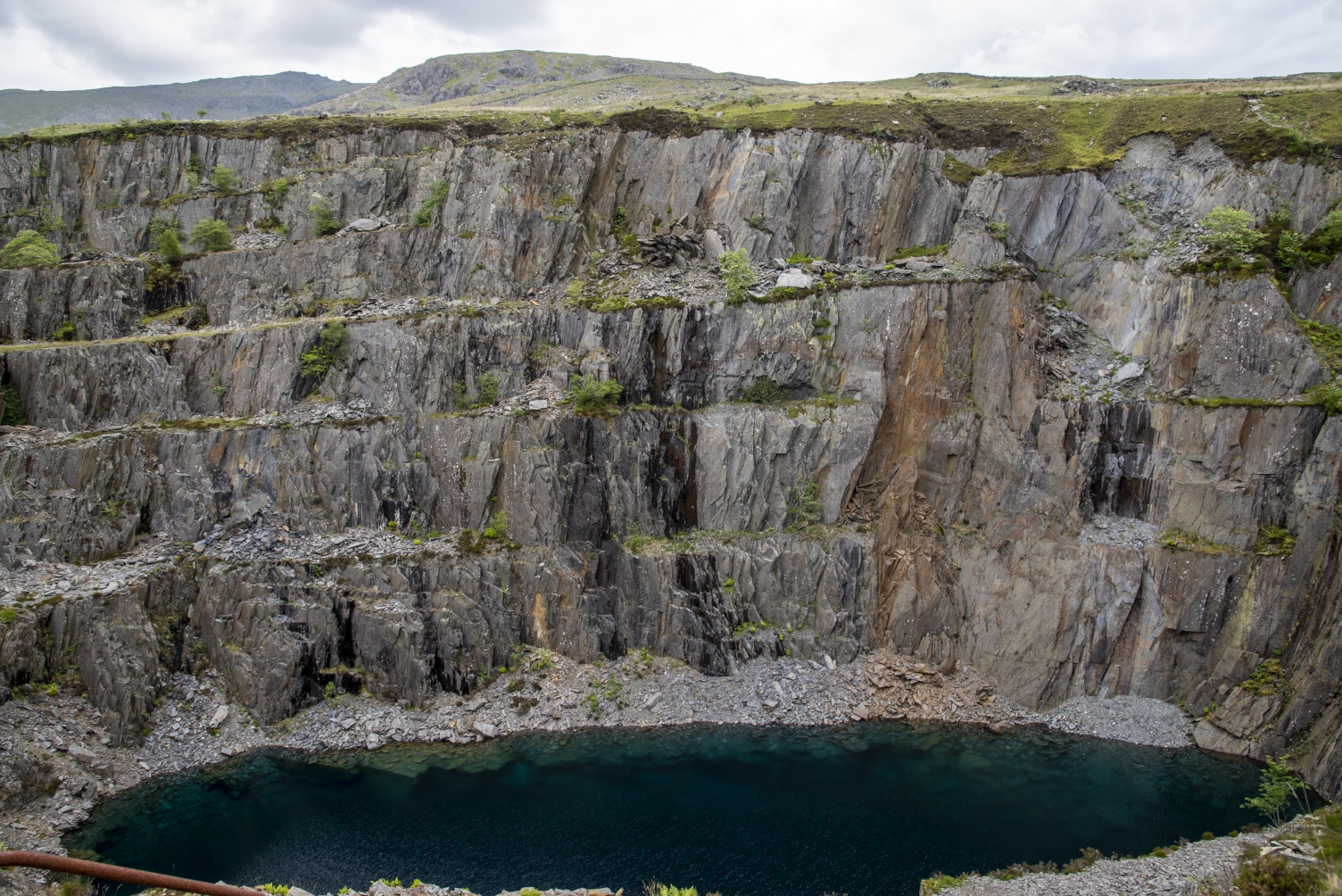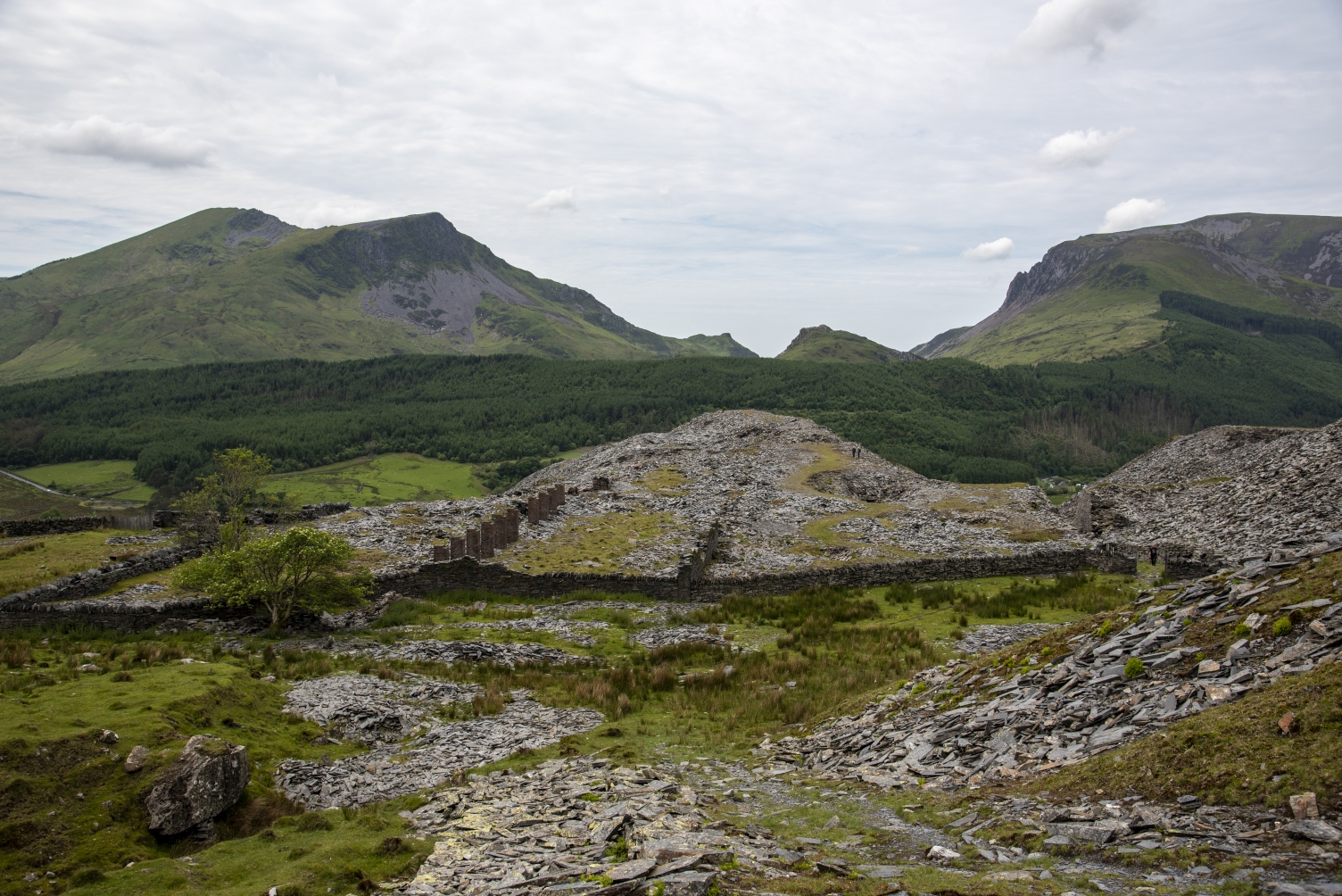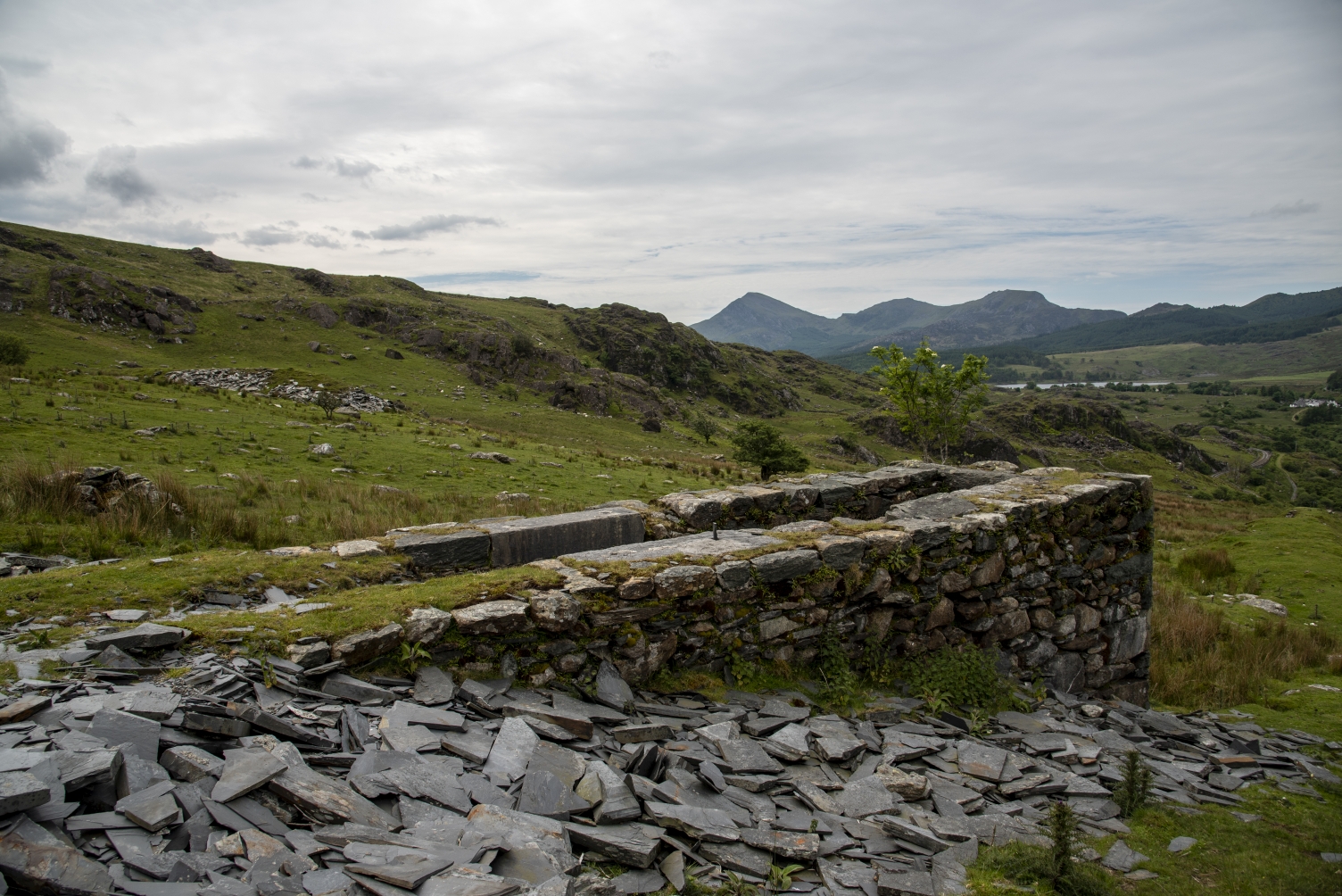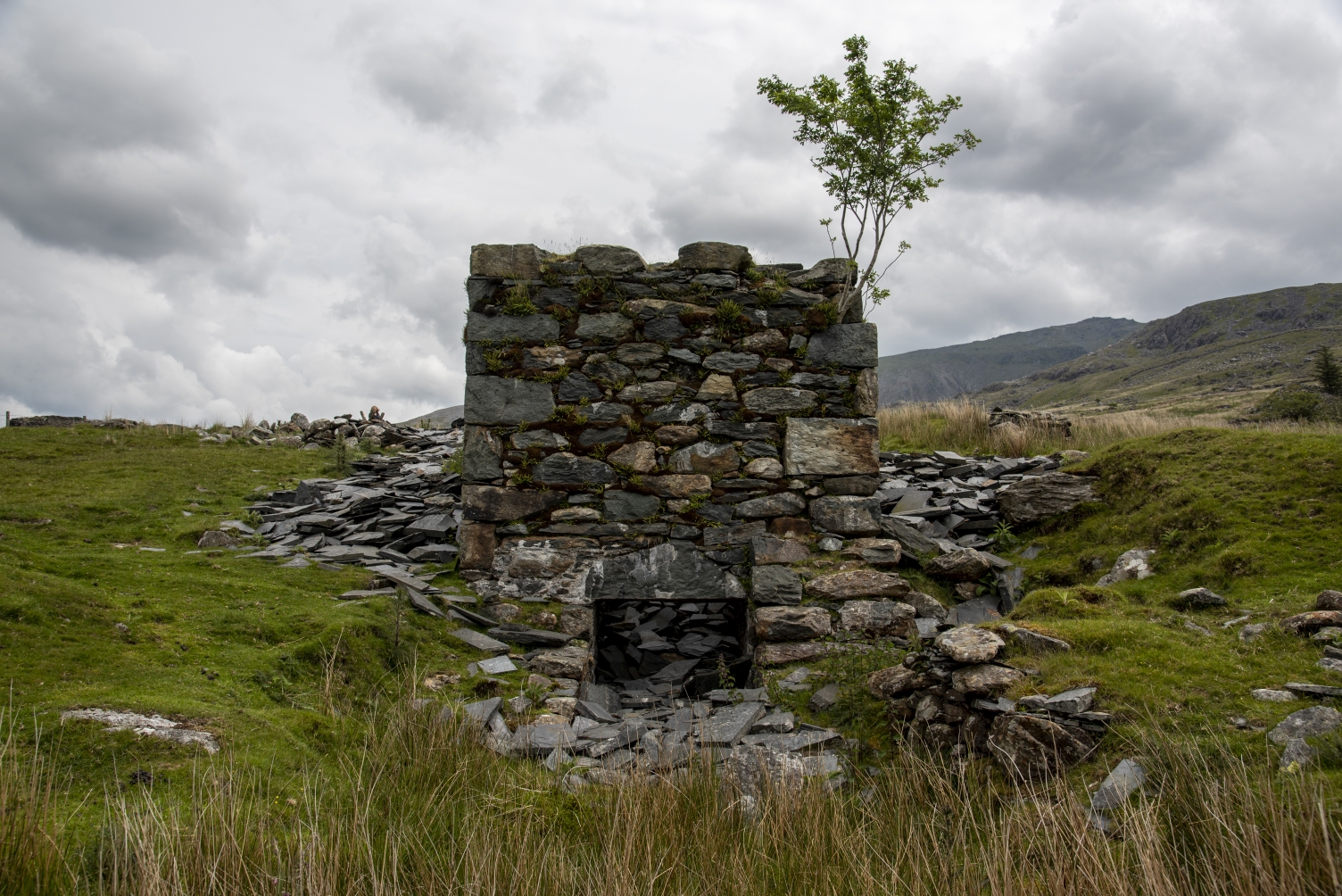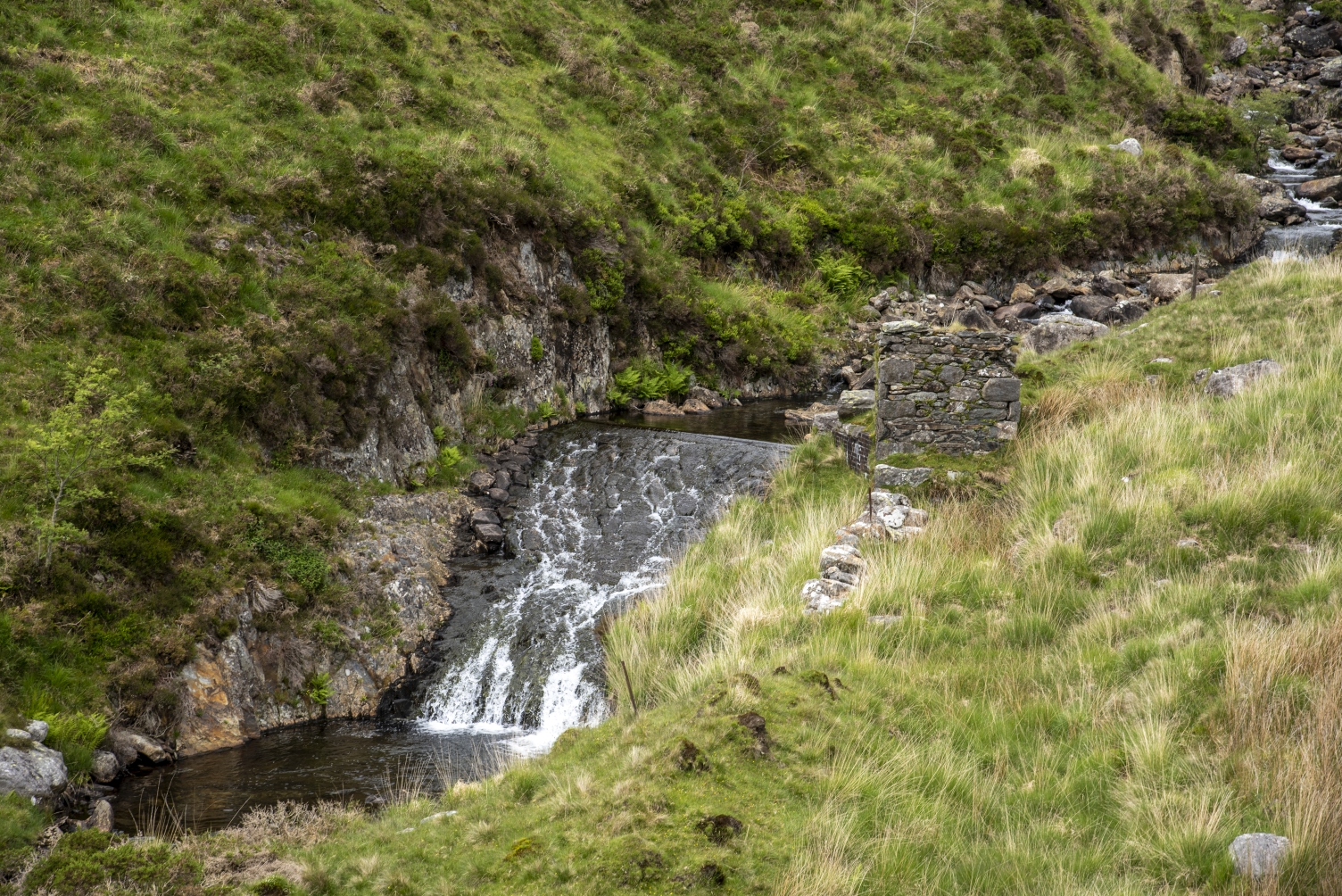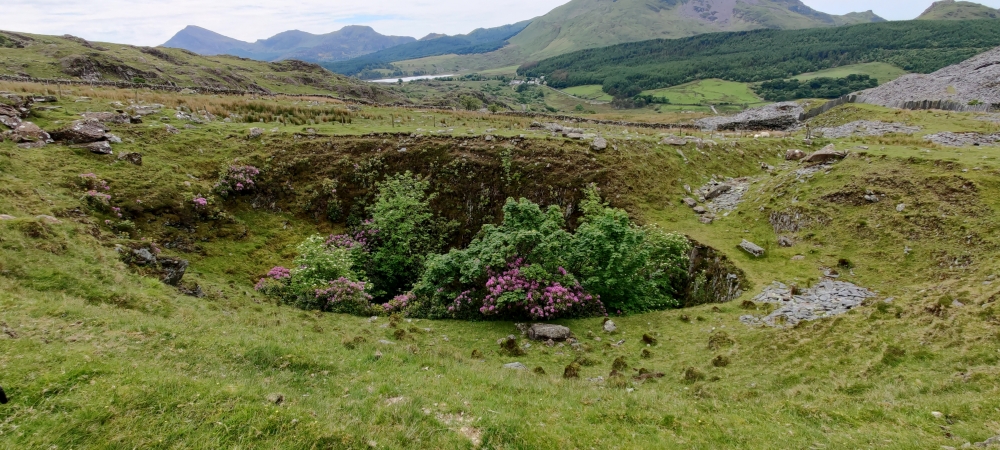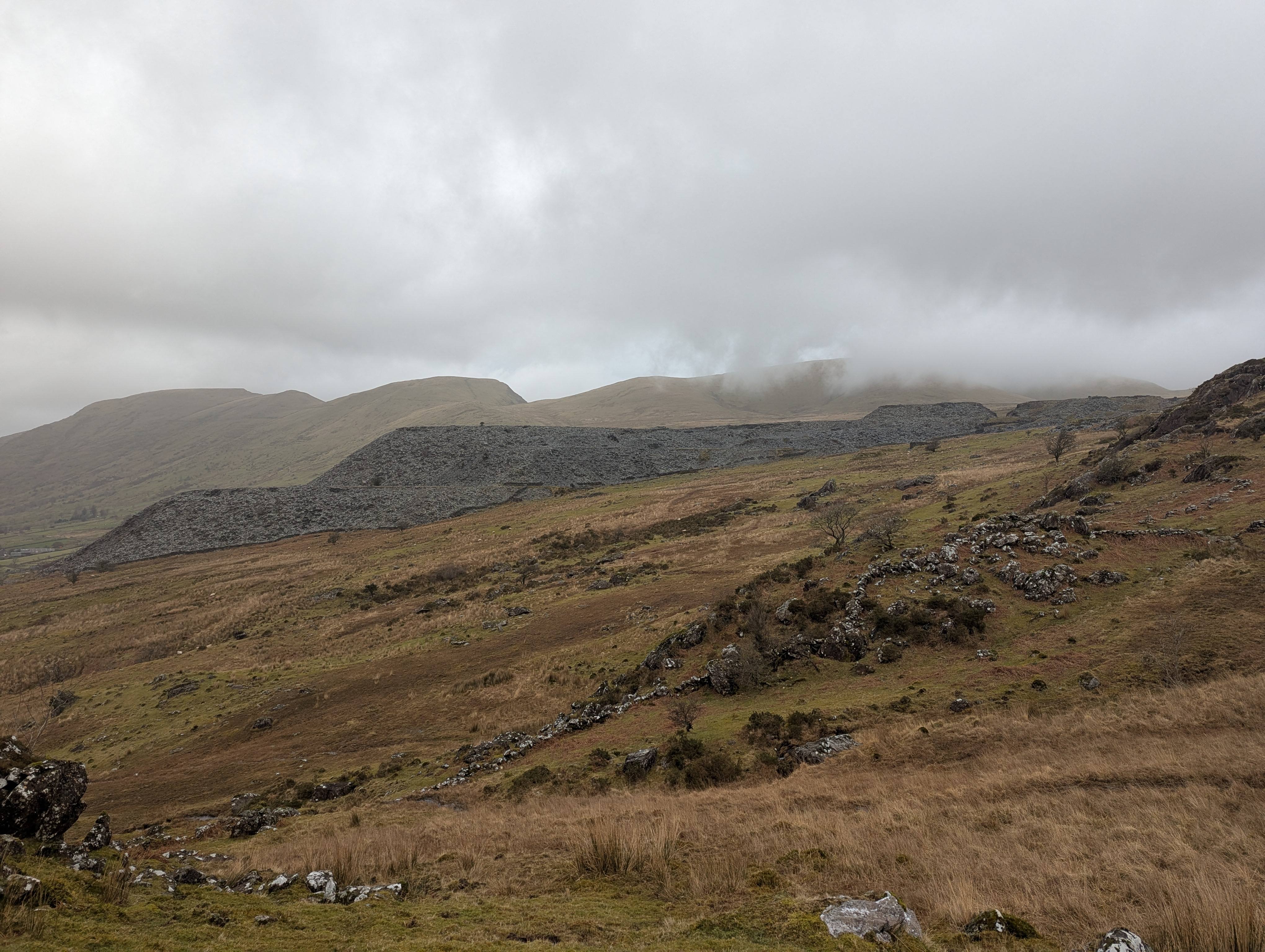



Large pit with extensive tips and remains.***
At the lower exit incline, vestiges of the office buildings remain alongside a distinctive two-tier barracks arrangement and an old dining room with a collapsed chimney. The upper barracks row was served by a tramway spur that delivered goods and coal to a storeroom, while the lower row faced outward at its own ground level, creating an unusual architectural arrangement that made efficient use of the sloping terrain. Within the lower row, the supervisor’s room can be identified by its bay window, marking it out from the ordinary workers’ accommodation. The upper incline pitch displays abutments that once supported a tip-run bridge, though the drum house has been largely cut up for slate in later years.
The office building can still be identified by its surviving red-tile floor, a touch of quality that distinguished administrative spaces from industrial areas. Other recognizable features scattered across the site include water launder pillars, a brick bypass chute, and waterwheel bearing stones that hint at the complex water-management systems once in operation. The original mill section retains brick pillar bases showing timber-mounting holes where machinery was once mounted, and an external sunken tramway that carried dressing-shop waste away from the building still traces its course across the ground. Remains of brick mill construction survive alongside an upside-down engine foundation block complete with hold-down bolts.
Nearby stands a collapsed brick smithy chimney, with traces of a two-storey workshop that housed saw-sharpening and maintenance operations essential to keeping the quarry’s equipment in working order. Two inclines east of the mill served different functions within the quarry’s transport system. One was a gravity incline that lowered slabs arriving from the steam aerial incline above, while the other appears to have been a water-balance incline raising rubble to floor 1 tips, with loco-shed foundations surviving nearby to show where the quarry’s rolling stock was maintained and housed.
Inside the pit itself, the formation of the water-balance and later turbine incline running from floor D to floor 2 can still be traced, along with vestiges of the supply pipe run that fed the system with water under pressure. Massive abutments mark where a timber bridge once carried the mill-water launder across the pit, representing a significant engineering achievement that allowed water power to be distributed across the working faces. Floor 3 preserves a weighbridge and drum-house, along with access to a supplementary pit located beyond a volcanic “post” or intrusion in the slate beds. Floor 4 contains an overburden tip with isolated remains, and similar southern tip-run traces can be found elsewhere across the higher levels.
The bed of an external steam-powered incline that ran from the mill to floors B and C remains visible across the landscape, its course marked by earthworks and occasional surviving infrastructure. Higher up the hillside stands a concrete-lined header tank that regulated water supply to the various systems below. Above that lies the site of the main reservoir, which was fed from two Snowdon lakes whose capacity had been augmented by small dams constructed specifically to supply the quarry’s water needs.
The quarry developed into the largest open working in the district, with major expansion beginning after the railway connection arrived in the late 1870s. Production figures from 1882 show an output of 1,725 tons worked by 92 men, but the operation grew rapidly through the following decade with the workforce exceeding 400 by the mid-1890s. This remarkable growth reflected both the quality of the slate deposit and the improved transport links that made large-scale commercial production viable.
The quarry consisted of one major working accompanied by several subsidiary pits that exploited different sections of the slate deposit. As the main pit deepened over time, material was raised using water-balance inclines that were later converted to turbine-driven systems, representing a significant technological advancement. Pit pumping was accomplished via flat rods powered by a remote waterwheel, demonstrating the sophisticated water-power systems employed across the site. Material was originally hauled by incline to large double mills equipped with a central wheel, though later developments saw a tramway tunnel constructed to connect the pit directly to the mills, improving efficiency and reducing handling.
Several locomotives operated across the site to move slate between different working areas, reflecting the scale of the operation. A short incline, later replaced by a longer one, descended to form a triangular junction with a North Wales Narrow Gauge Railway siding, facilitating export of the finished product to markets beyond the immediate district. Despite this substantial infrastructure and workforce, rapid decline followed the quarry’s peak years, and apart from later small-scale reworking, operations ceased in 1915.
Publications (6)
- Gwyn, David, (2015); Welsh Slate: archaeology and history of an industry; Royal Commission on the Ancient and Historical Monuments of Wales; 9781871184518
- Jones, Gwynfor P., Richards, Alun J. (2004); Cwm Gwyrfai; pp.122-149; Gwasg Carreg Gwalch ISBN 0-86381-897-8
- Lindsay, Jean (1974); History of the North Wales Slate Industry; David & Charles; pp.320; ISBN 0-71536-264-X
- Richards, Alun J. (2013); Slate Quarrying in Wales; Gwasg Carreg Gwalch; ISBN 1-84527-026-6
- Richards, Alun John (1991); Gazeteer of the Welsh Slate Industry, A; Gwasg Carreg Gwalch 978-0863811968
- Richards, Alun John, (1999); The Slate Regions of North and Mid Wales and their Railways; Gwasg Carreg Gwalch; 0863815816