



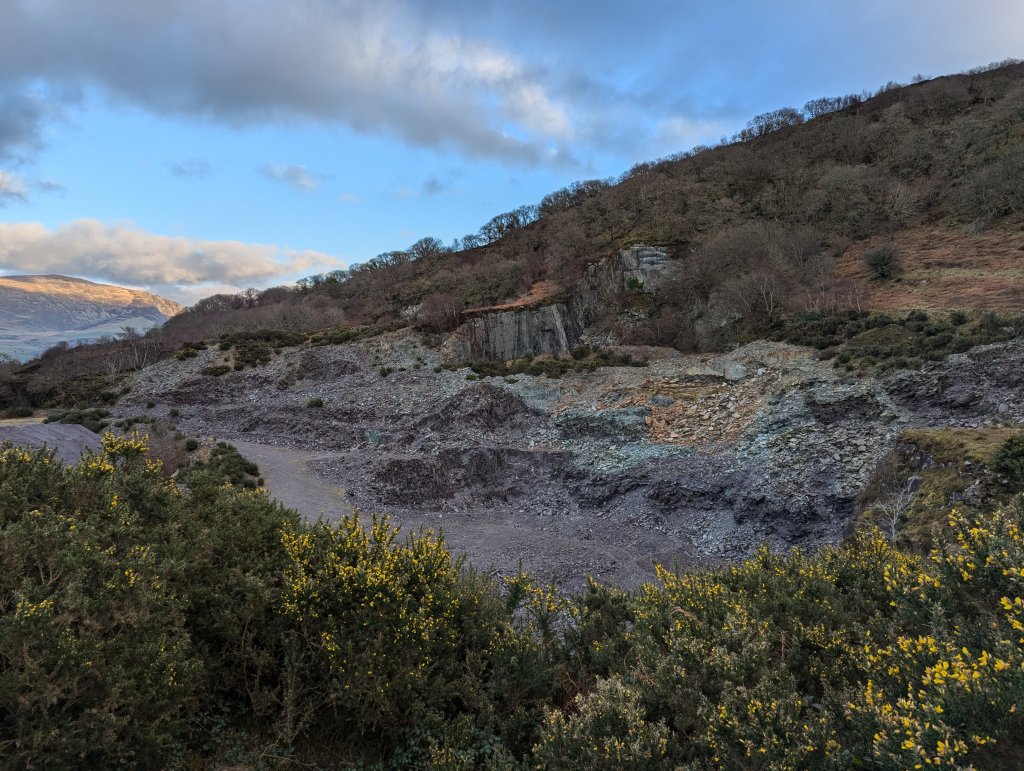
Extensive infilling with bulk material has obliterated much of the quarry’s original infrastructure, leaving only fragmentary evidence of the buildings that once stood here. A few concrete foundation blocks can still be found, alongside a house that clearly existed before quarrying began. The wheel pits and remnants of the haulage incline system remain visible, though both have deteriorated significantly and are now in an advanced state of collapse.
Much reworking of slate waste as aggregate. The entire area between here and Gwernor is rather confused by modern usage.
From the early nineteenth century, this pit and hillside operation extracted both green and red slate from the site. Initially, the quarry’s mill—located northwest of the main pit—ran on water power, though this was progressively replaced by steam, then gas, and eventually oil engines. Workers transported slate to the main road using an incline system. Employment at the quarry reached nearly forty men in the years immediately preceding the Second World War. What appears to be a tramway leading toward Nant y Fron is in fact a road built shortly before operations ceased in 1953.
Publications (4)
- Gwyn, David, (2015); Welsh Slate: archaeology and history of an industry; Royal Commission on the Ancient and Historical Monuments of Wales; 9781871184518
- Lindsay, Jean (1974); History of the North Wales Slate Industry; David & Charles; pp.332; ISBN 0-71536-264-X
- Richards, Alun J. (2013); Slate Quarrying in Wales; Gwasg Carreg Gwalch; ISBN 1-84527-026-6
- Richards, Alun John (1991); Gazeteer of the Welsh Slate Industry, A; Gwasg Carreg Gwalch 978-0863811968

