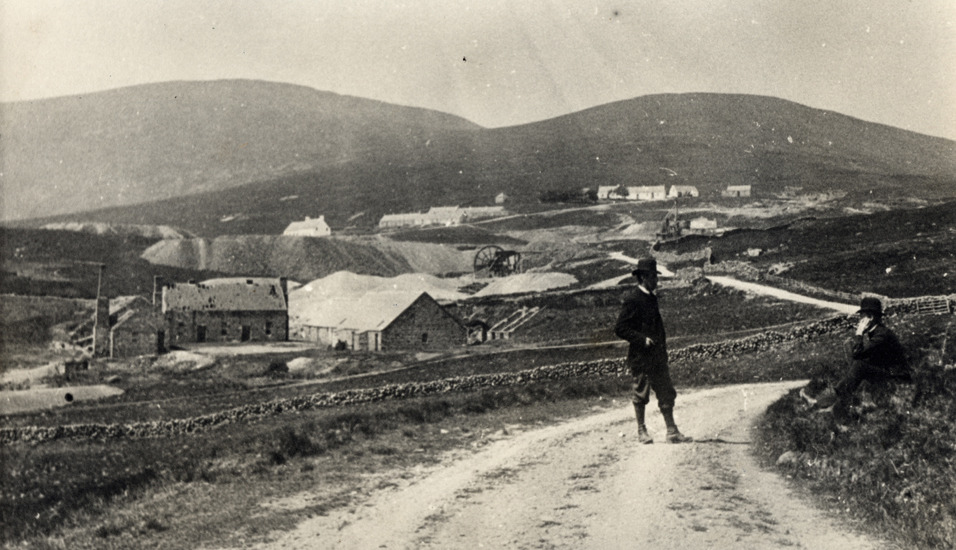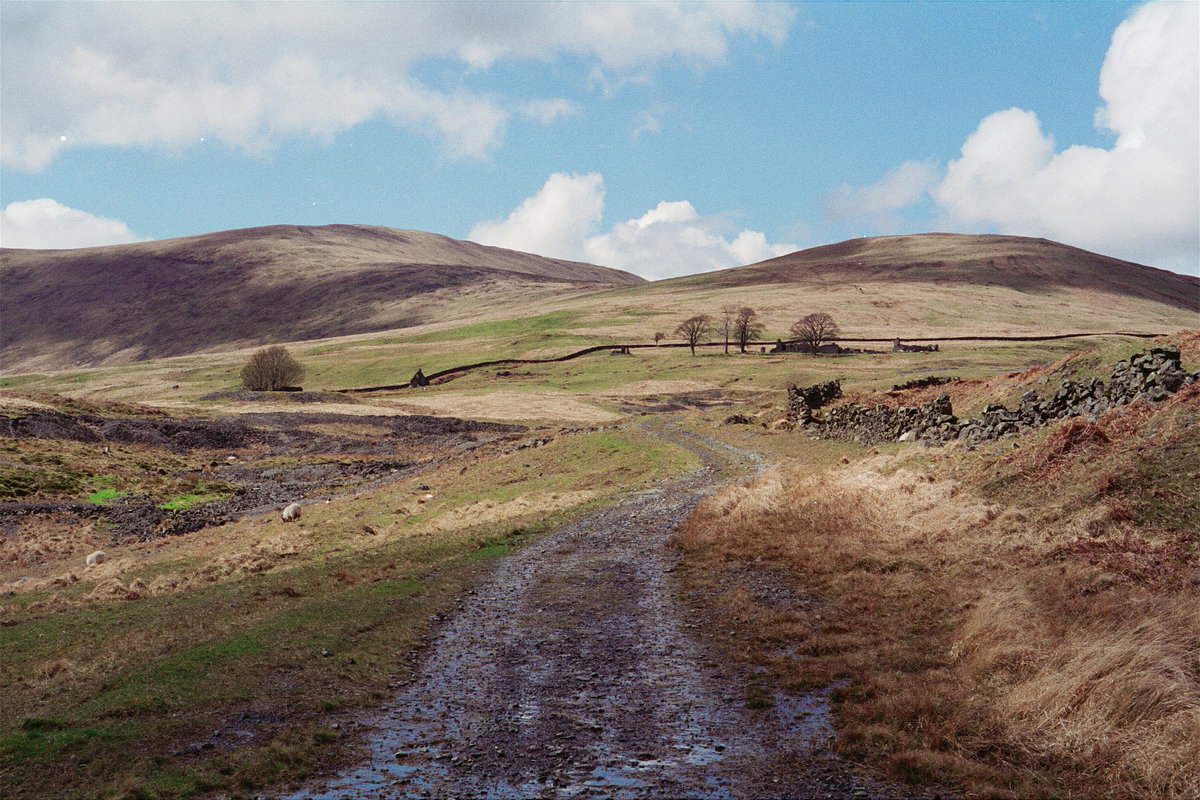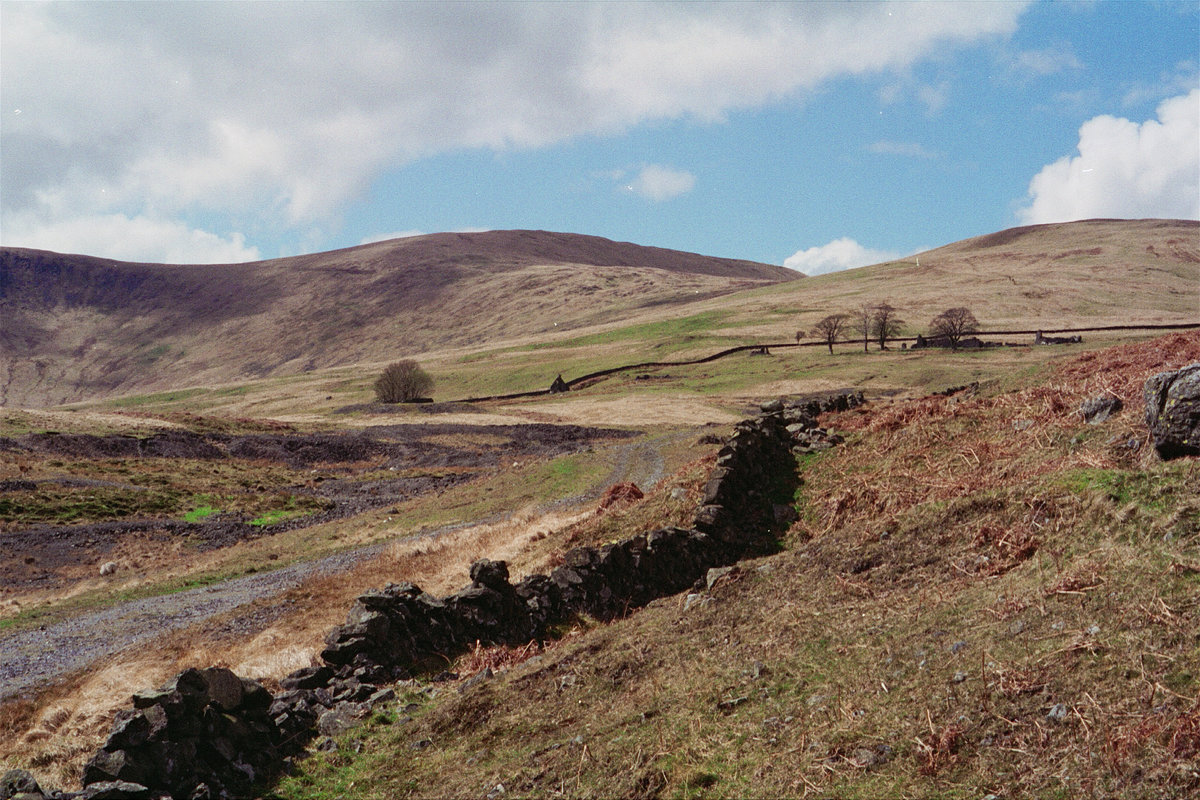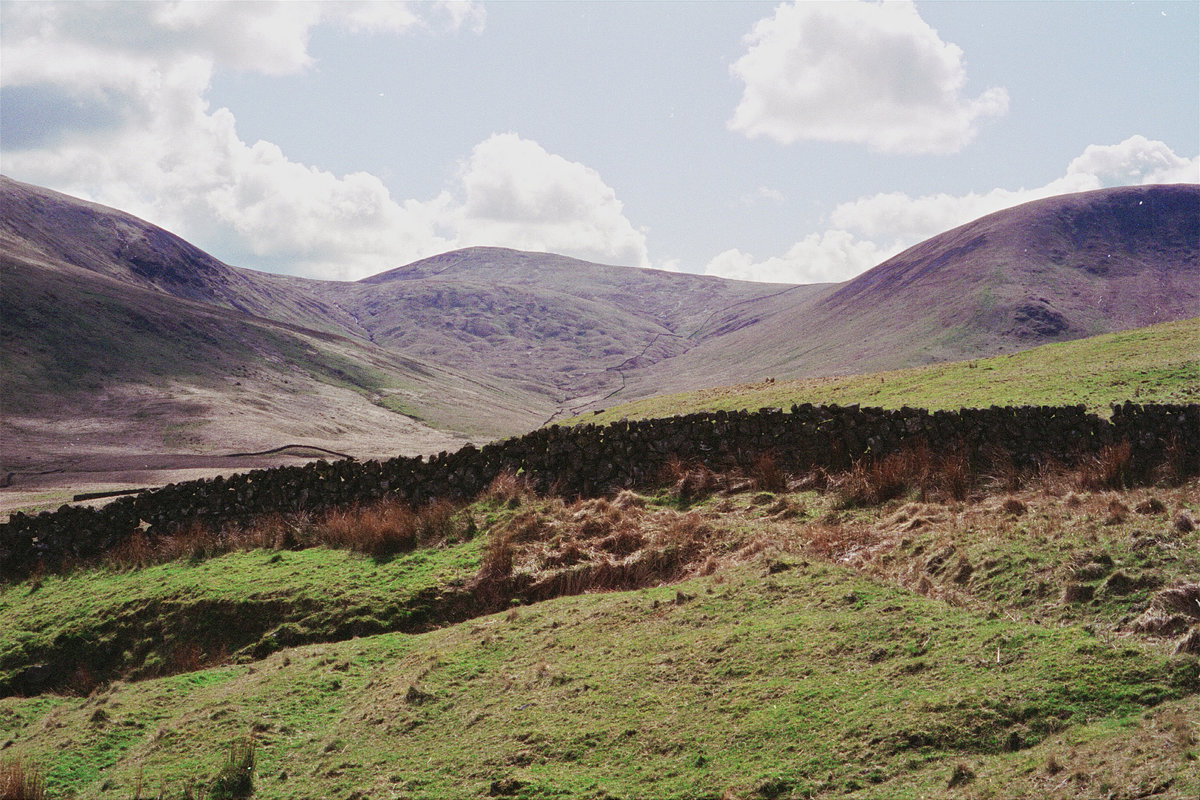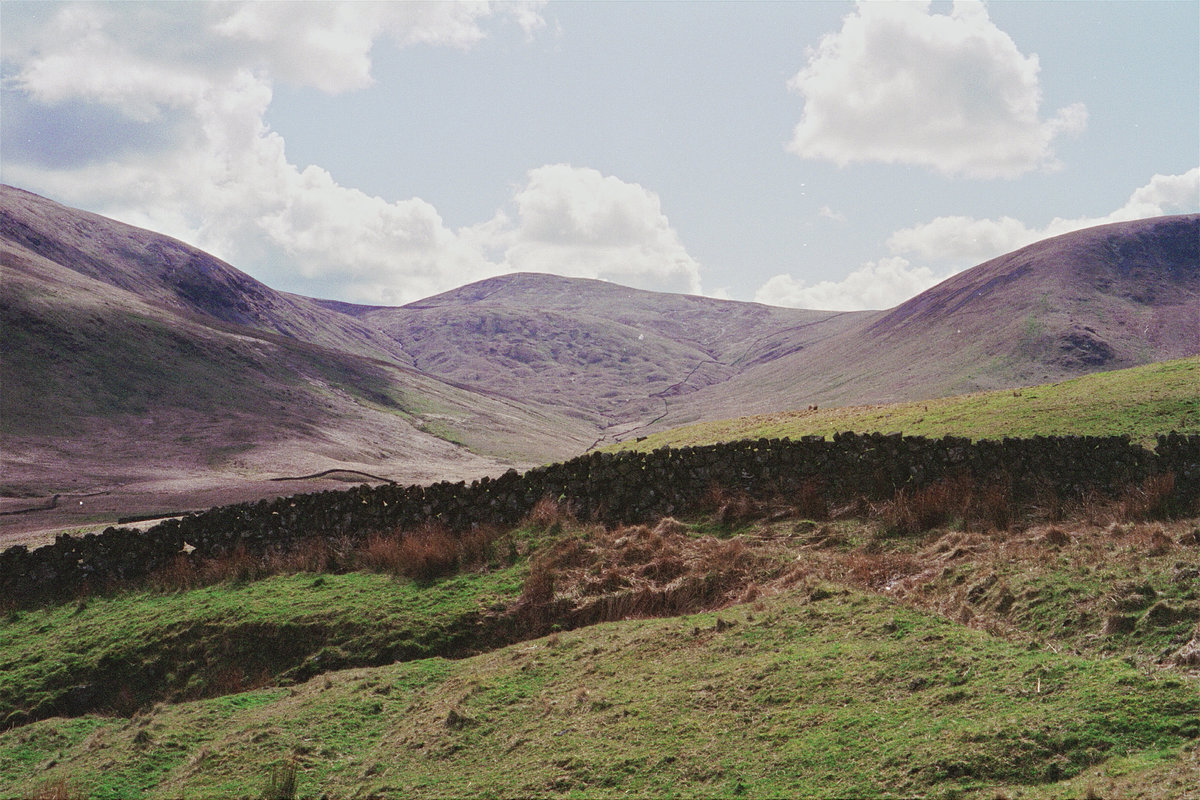



The Woodhead and Garryhorn veins, located on the eastern slopes of Knockower Hill, strike approximately 20° north of west and are hosted in Ordovician greywackes. The Woodhead vein lies about 300 feet northeast of the Garryhorn vein. Mineralisation includes galena (lead ore), sphalerite (zinc ore), and chalcopyrite (copper ore), within a gangue of quartz, calcite, and dolomite.
Assays of the ore returned impressive results:
- Galena: 85.65% lead and 3 oz 10 dwt of silver per long ton
- Blende (sphalerite): 61.4% zinc
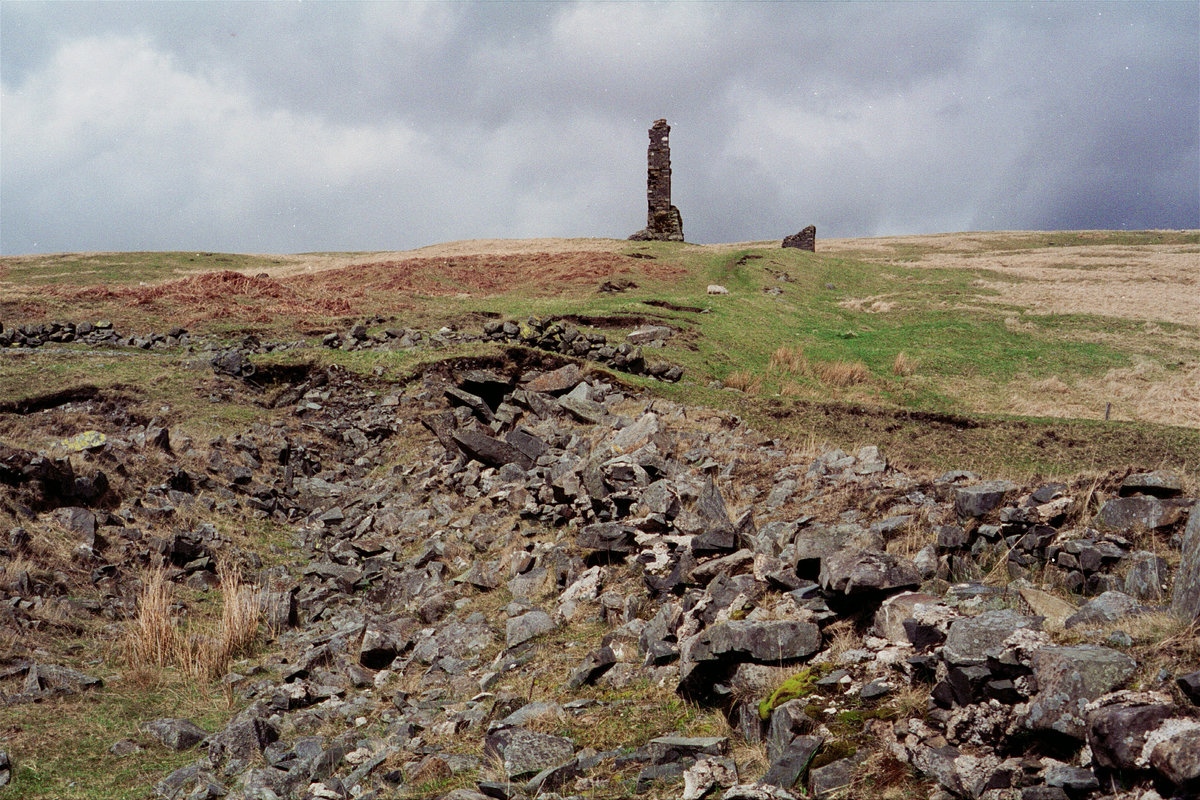
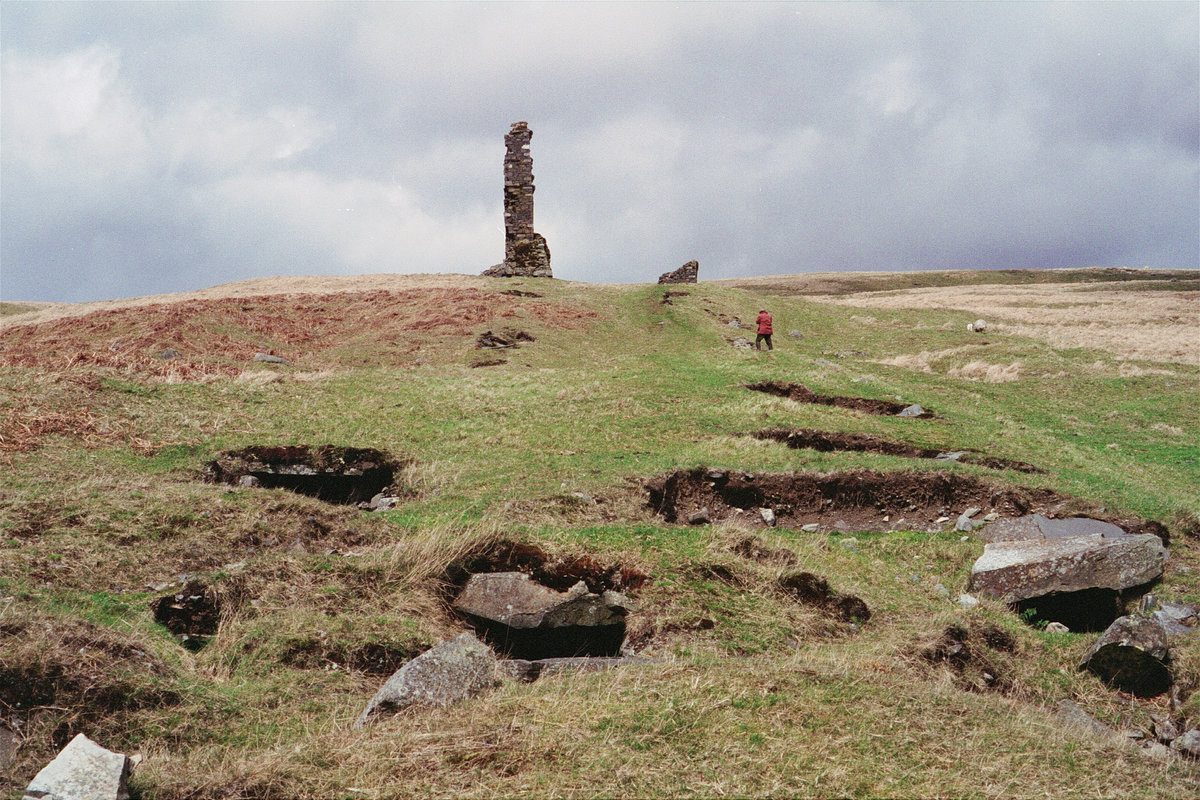
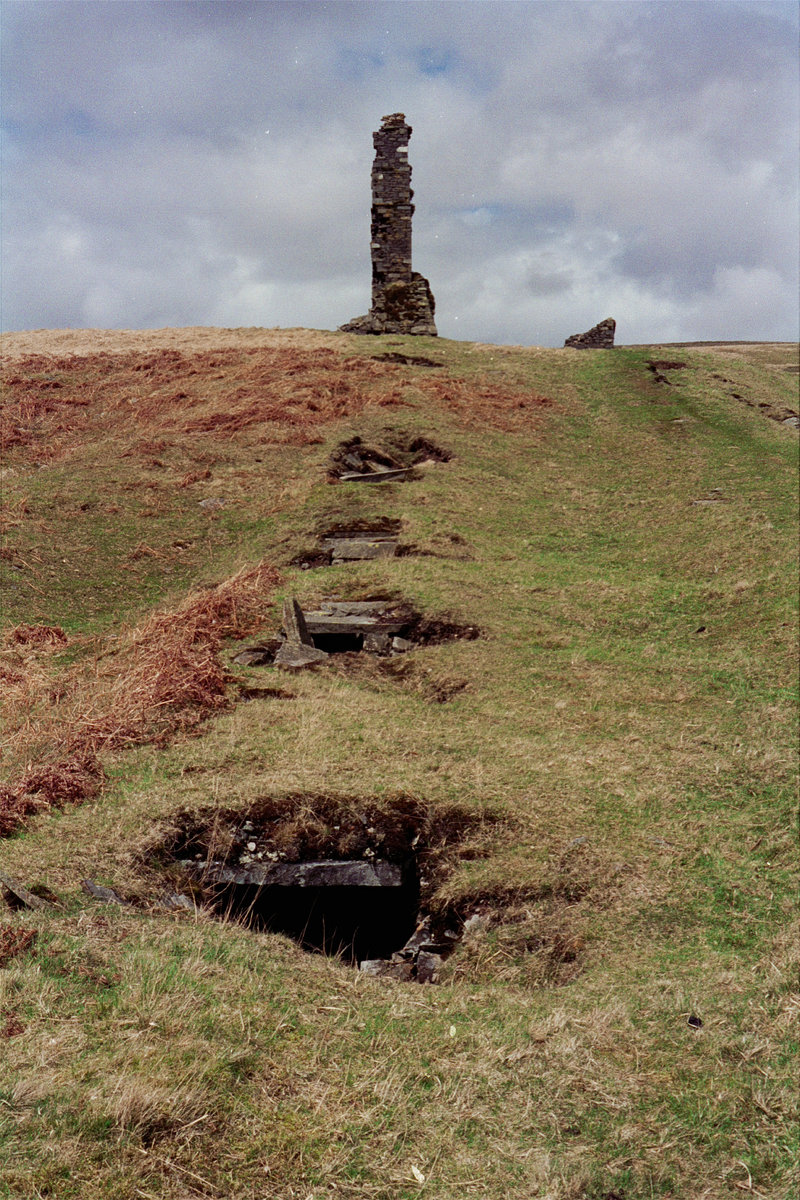
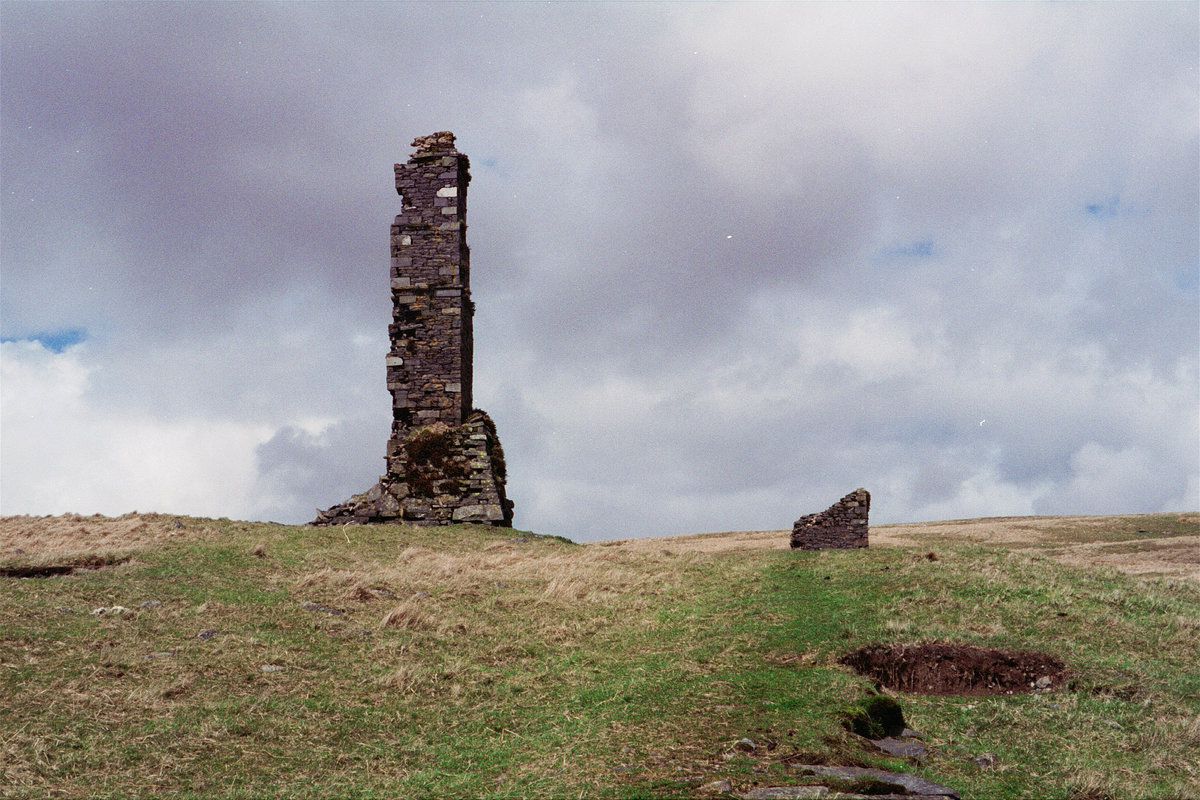
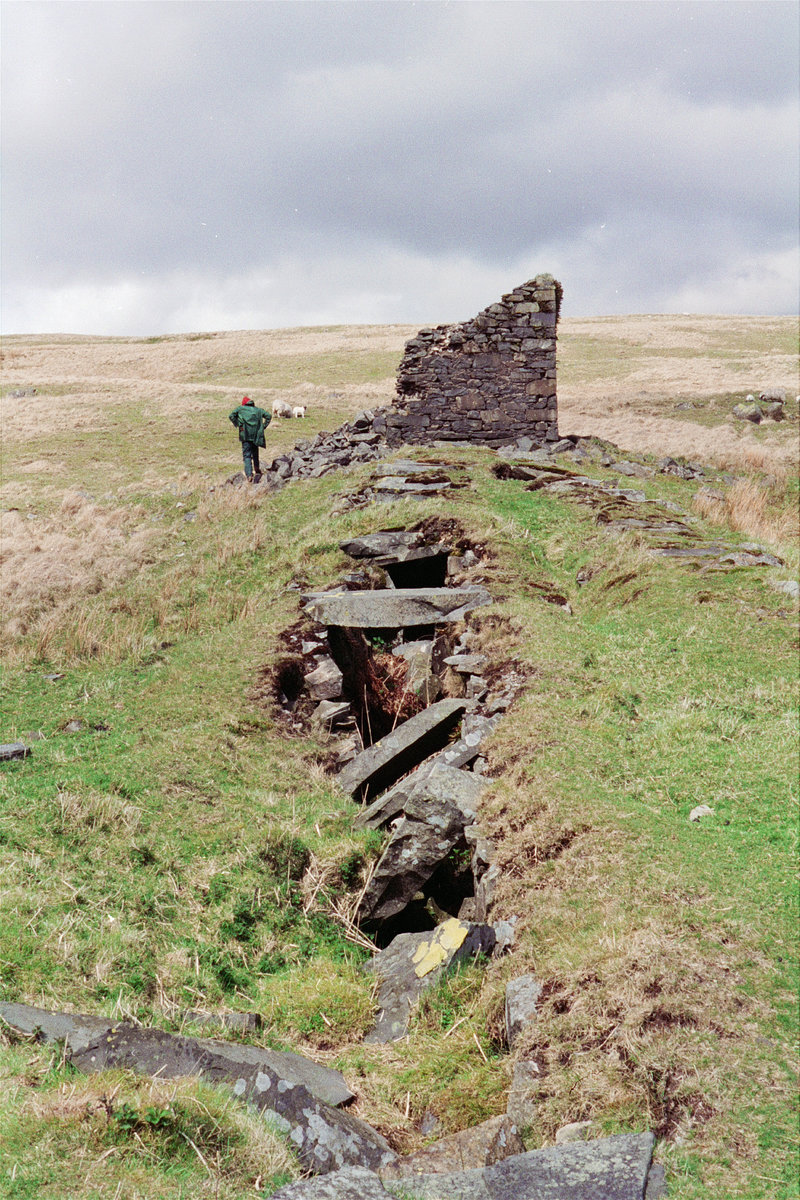
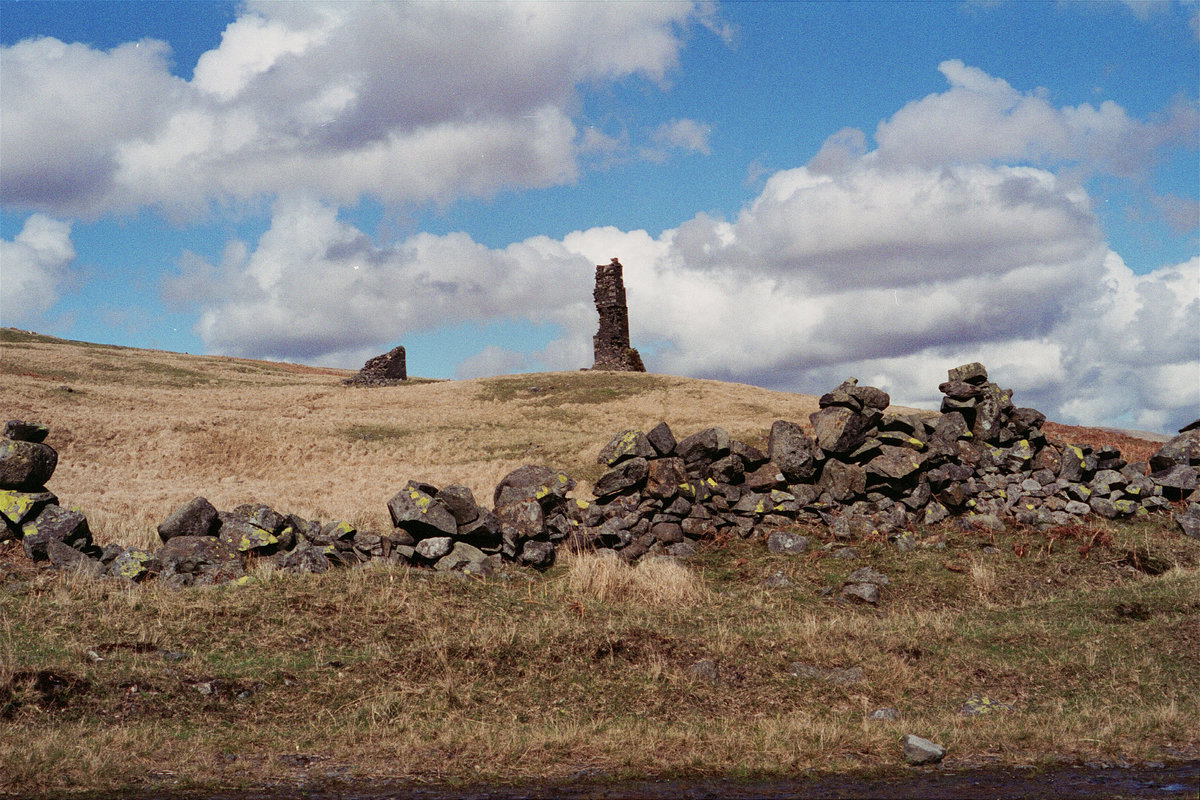
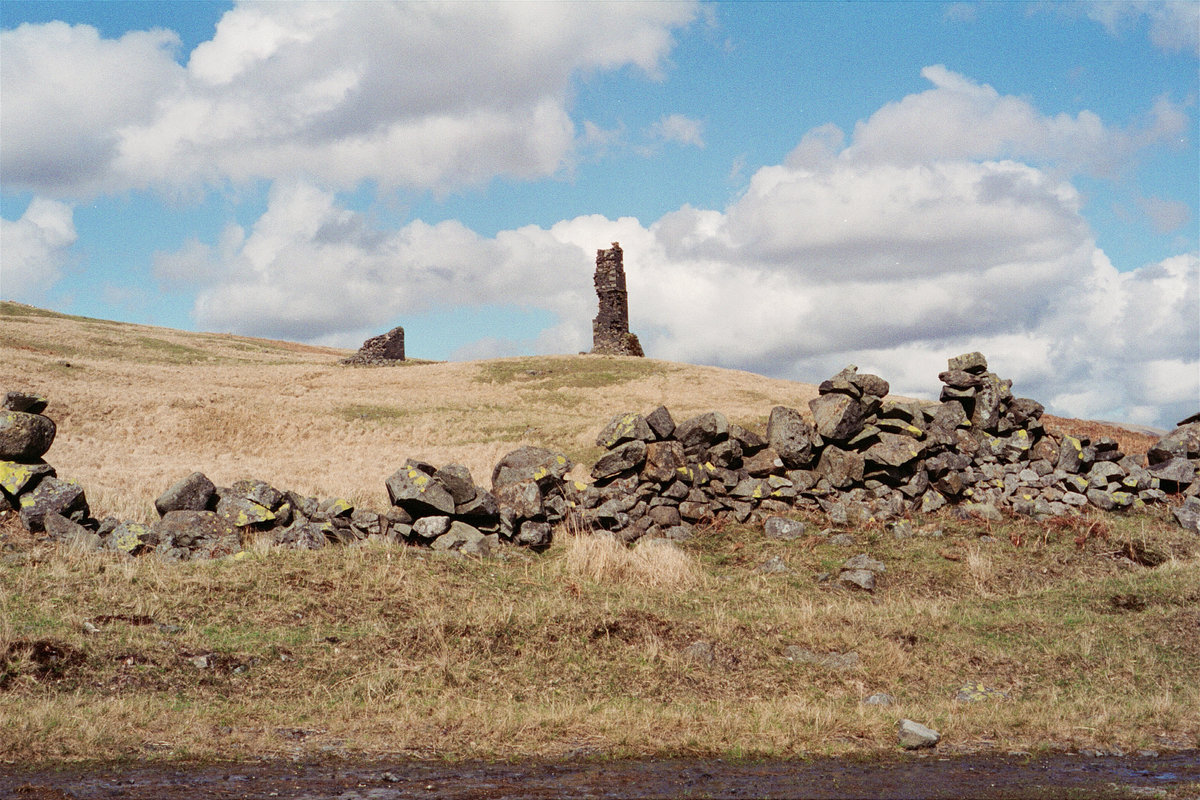
Mining infrastructure was extensive. There were at least four adits from the surface, three deeper levels, and at least nine shafts. The deepest workings reached 150 feet below the 25-fathom level (itself 336 feet below the surface). A smelting house and ore-washing and refining facilities were located near the burn, with flues carrying smoke up the hillside to two chimneys—one with a flue for an updraft fire to help disperse fumes. Water for the waterwheel came from a network of leets (man-made channels).
Some ore was never smelted—about 200 tons of haematite were raised but left untreated. Much of the spoil was later removed for road-building. Several of the shafts eventually collapsed or were repurposed as rubbish pits.
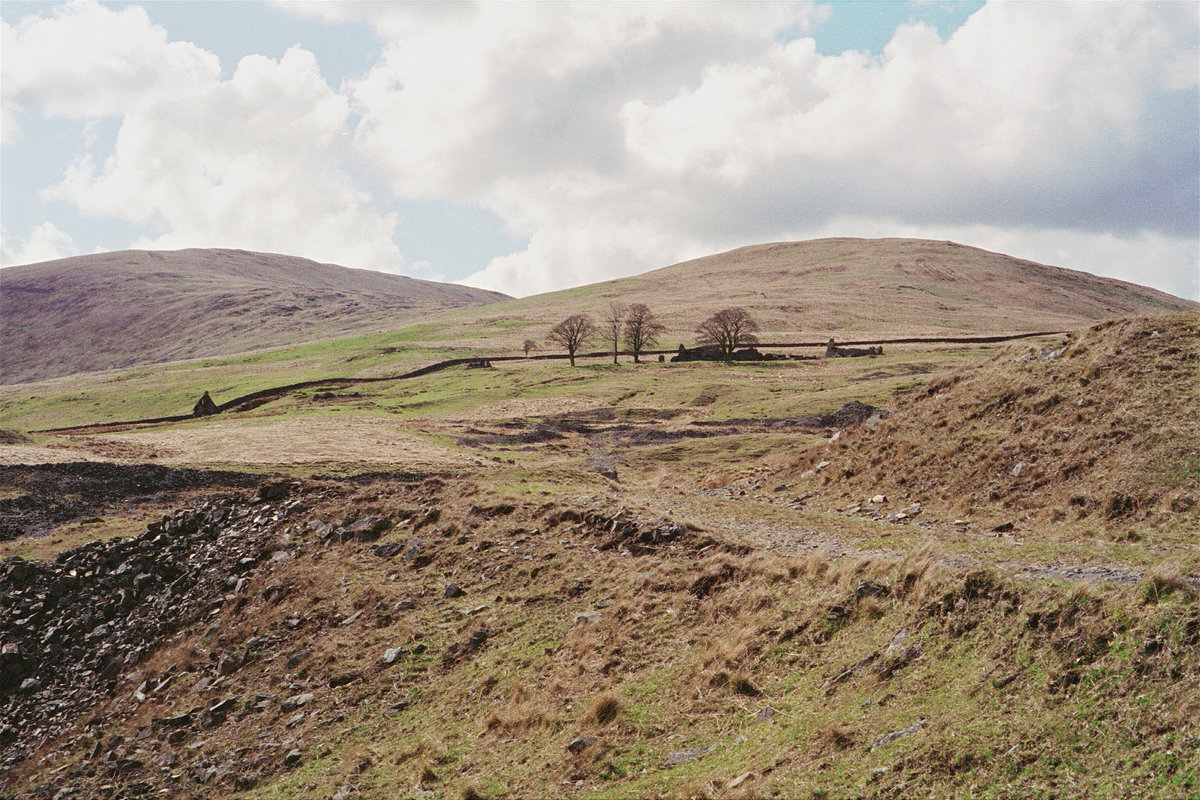
Remaining structures include the mine manager’s house (the last to be abandoned), three rows of miners’ cottages (upper, middle, and lower), the former school, and various outbuildings such as a pigsty and a standalone powder house. Architectural features—like two-storey homes with large front windows and built-in ovens—can still be observed among the ruins.
First worked in 1838, initially through opencast methods. Underground development began around 1840 under the direction of Colonel McAdam Cathcart, a landowner known for managing the mine himself rather than leasing it out—a rare approach at the time. He oversaw operations until the mine’s closure in 1873.
Colonel Cathcart combined enterprise with philanthropy, investing heavily in infrastructure before mining even began. He built a model village for the workers, complete with a school, library, and smelting facilities. The library, started in 1840, eventually grew to over 800 volumes. By 1841, there were 22 houses and 200 residents; this grew to 50 houses and 301 people by 1851. At its peak in 1842, the mine produced over 900 tons of lead annually. However, by the 1850s, yields had dropped to around 80 tons per year. The final tally between 1840 and 1873 was 6,722 tons of lead ore.
Mining was supported by modern equipment for the time, including a 30-foot waterwheel to power a crusher, and on-site smelting furnaces using coal carted from Dalmellington. Carts returned with refined bar lead, some of which was re-smelted to extract silver—up to 7/8 ounces per ton of lead—not for profit, but to improve the lead’s purity. Finished metal was transported to Dalmellington, then to Ayr, and onwards by ship to Liverpool or London.
The mine briefly reopened for exploration from 1917 to about 1920 by Ore Supply Ltd, but little production resulted. A final examination was carried out in 1966. Over time, the village was abandoned—by 1954 no one lived there. Some buildings were reused (e.g., kennels and a shooting lodge), while others were stripped for materials during World War II. The land returned to sheep farming.
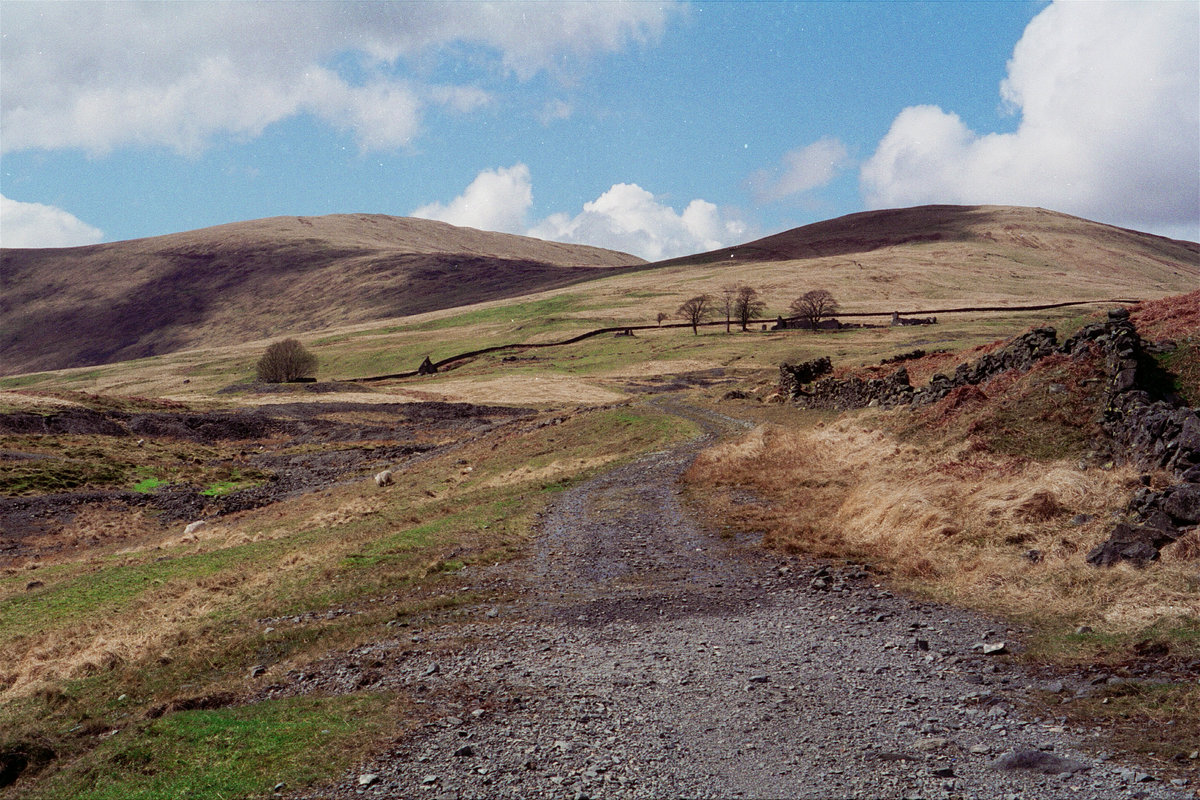
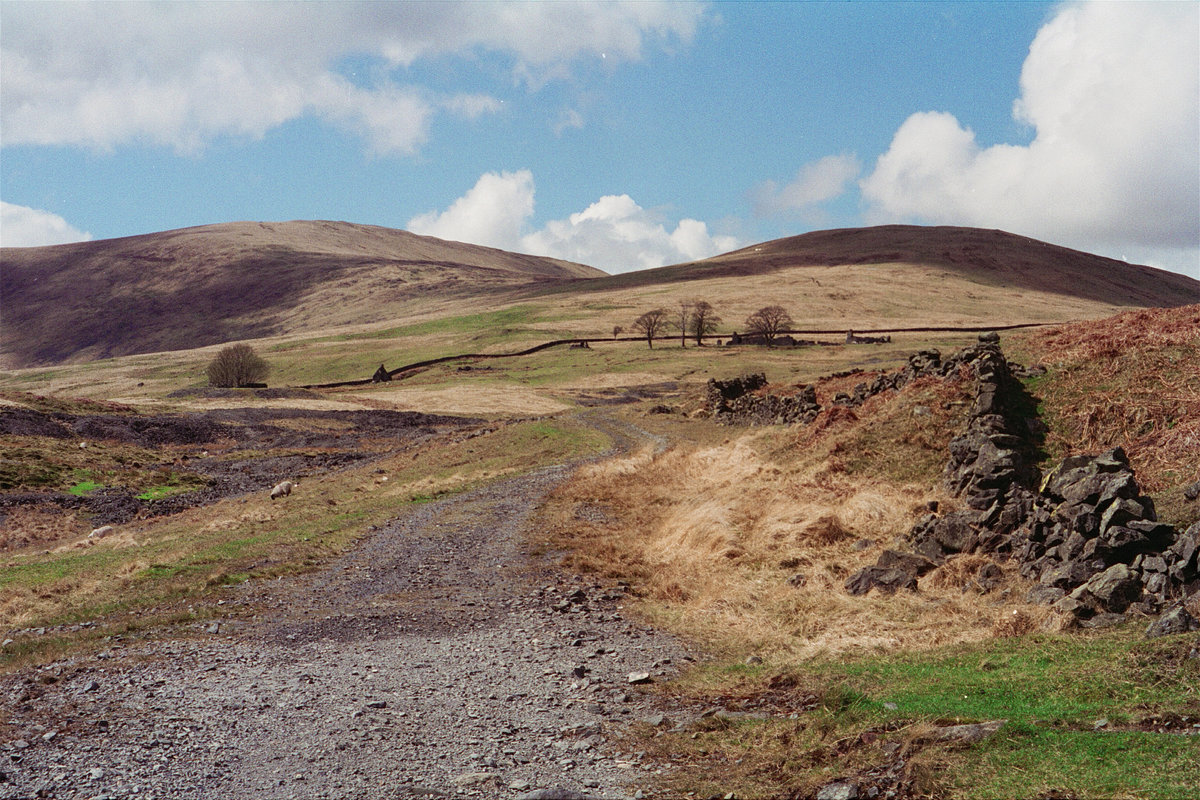
Lies about two miles west of Carsphairn, on the eastern slopes of Knockower Hill. Access is via a rough track, with permission required from Garryhorn Farm. As the surrounding area is active sheep country, dogs are not permitted. The remains of the mining village and workings can still be seen scattered across the moorland landscape, now largely reclaimed by nature.
External Links
Publications (6)
- Campbell, Anna 1994 The Woodhead Lead Mine. Scottish Local History Vol 31 June.
- Cressey, M. and Pickin J. and Hicks, K. (2004); PDMHS (Peak District Mines Historical Society) 15-6 Win - Silver Rig, Pibble and Woodhead Mines, Galloway, Scotland, The; 14 pages (49-62)
- Foster-Smith, James R, 1967 The Non-Ferrous Metal Mines of South-west Scotland. NC&MRS Individual Survey Series Publication No 2; pp14
- Landless, Jeremy G. (2014); Gazetteer of Metal Mines in Scotland, A; pp. 65
- Oldham, Tony (2005); Mines of SW Scotland; 43 pages
- Wilson G.V. (1921); BGS - Mineral Resources of GB (c1920s) Vol XVII - Lead, Zinc, Copper and Nickel of Scotland; 180 pages