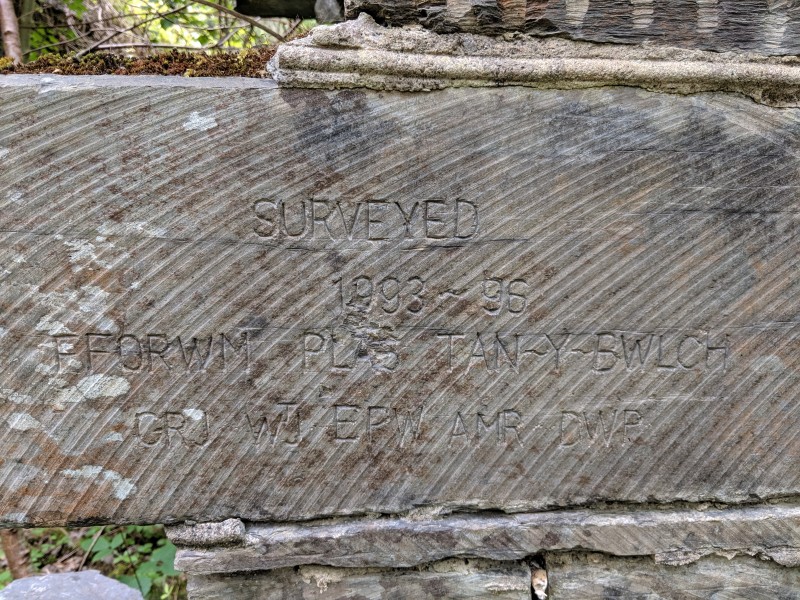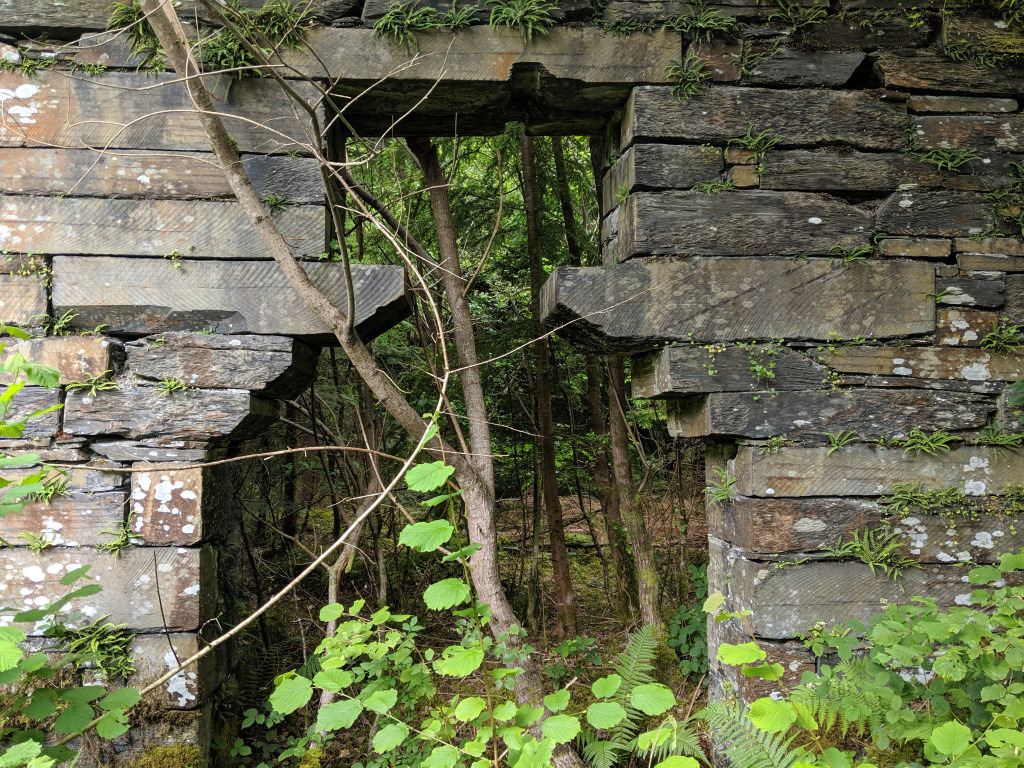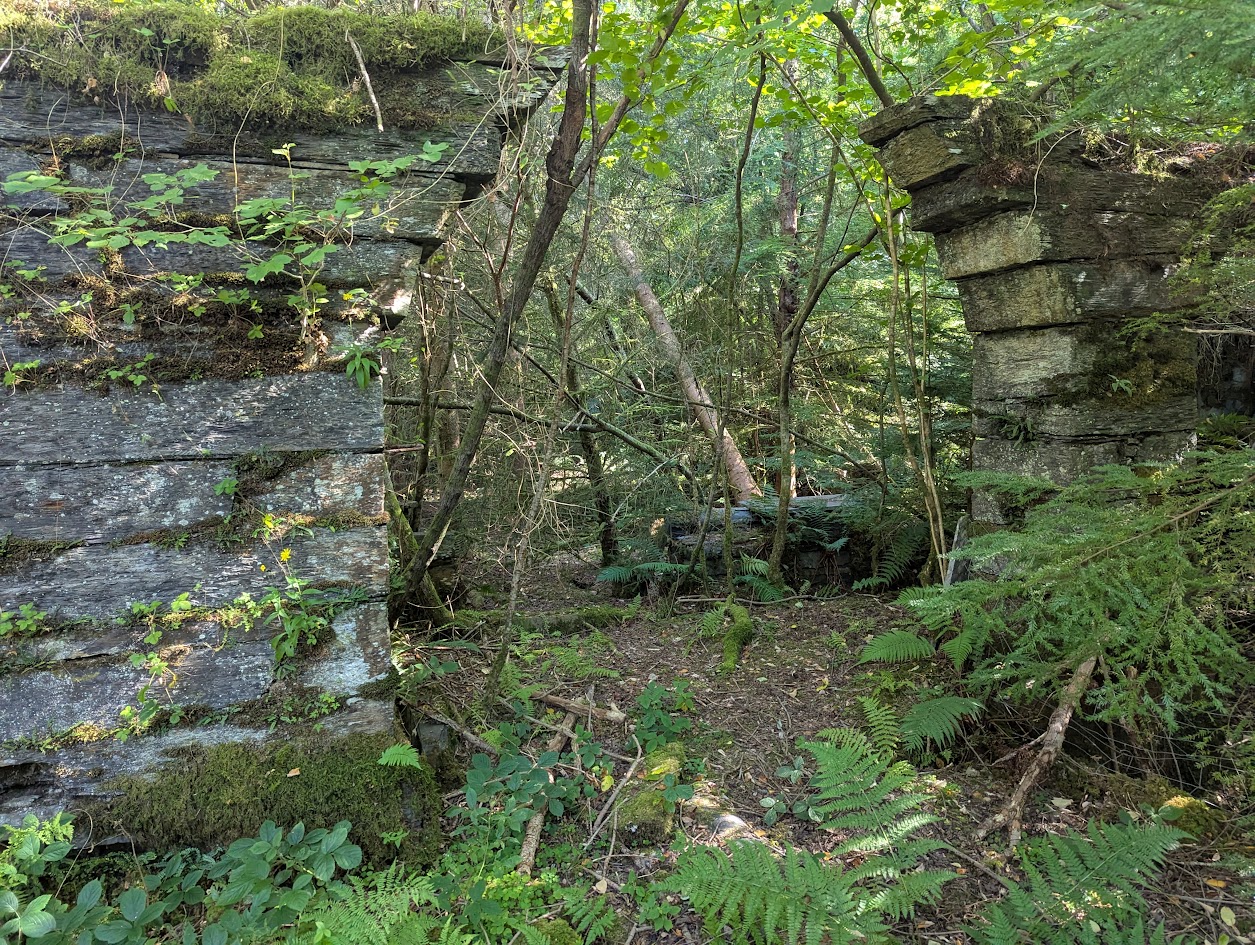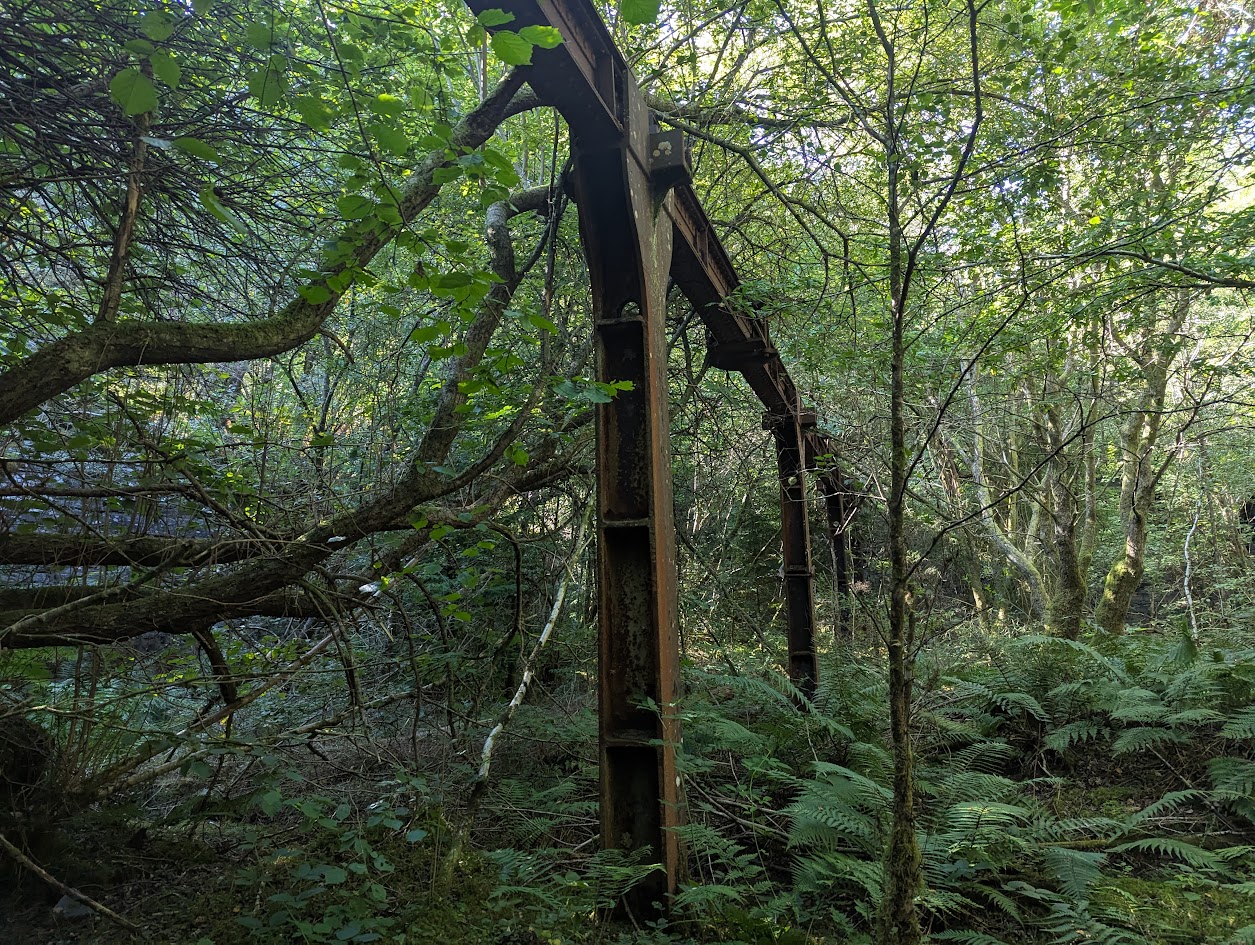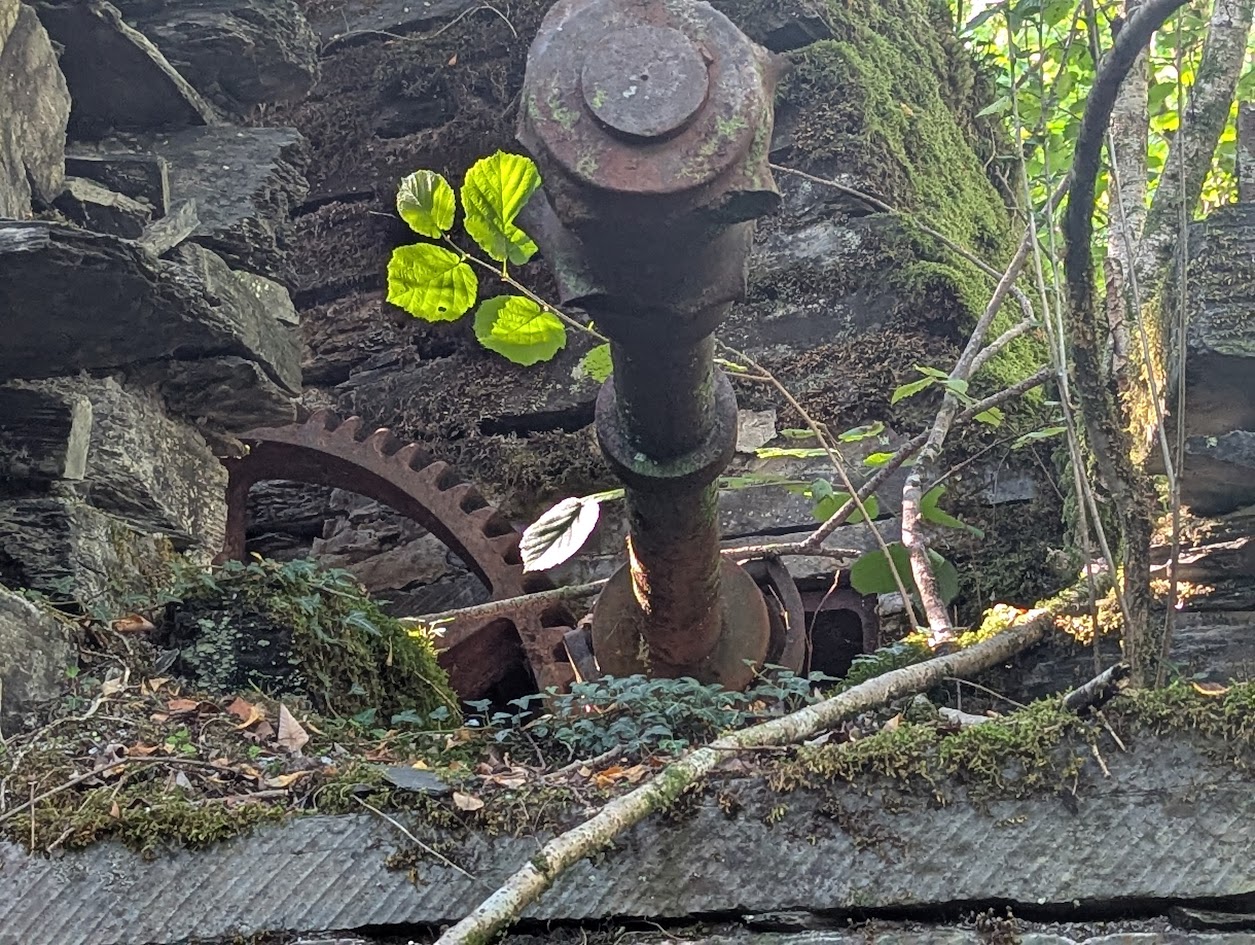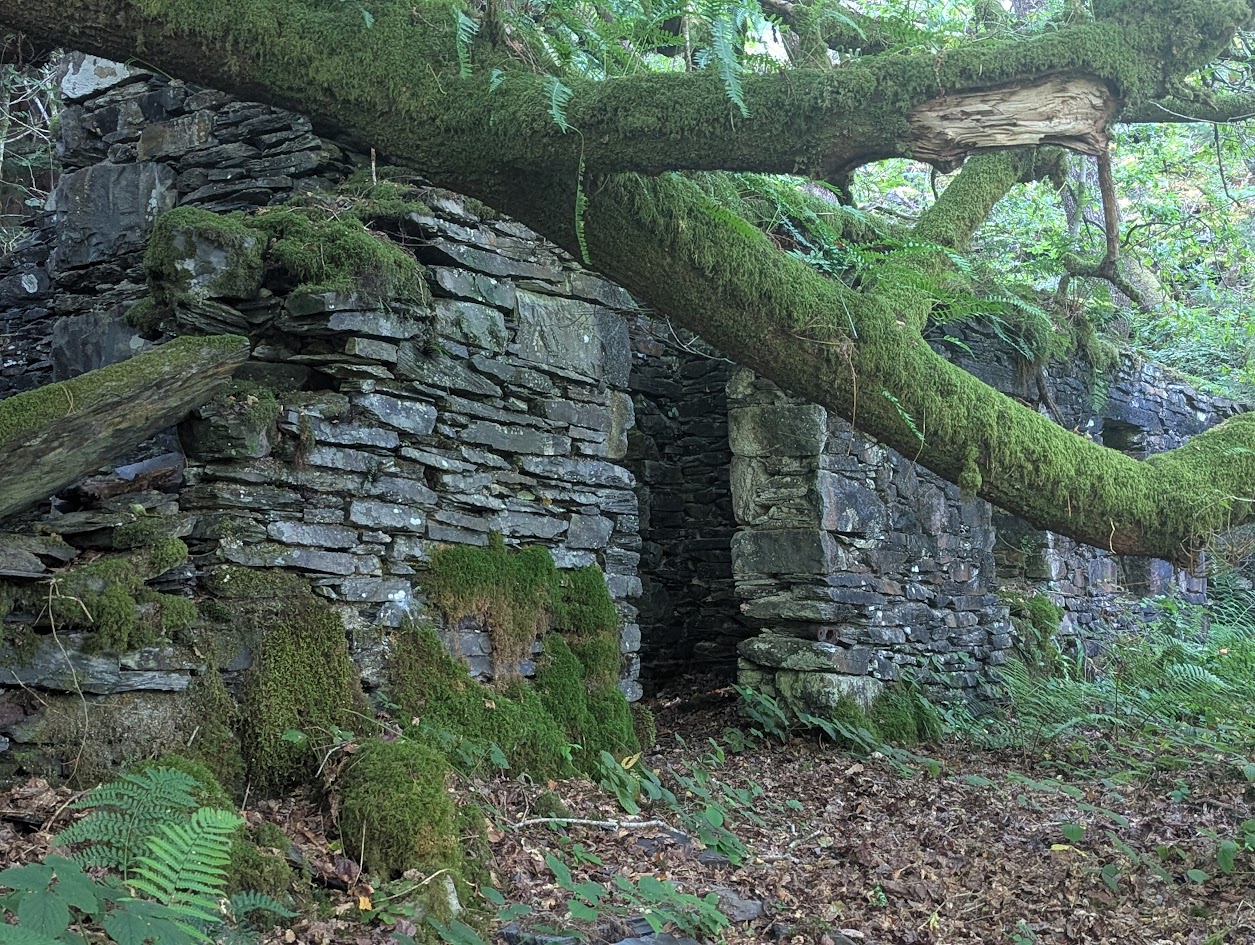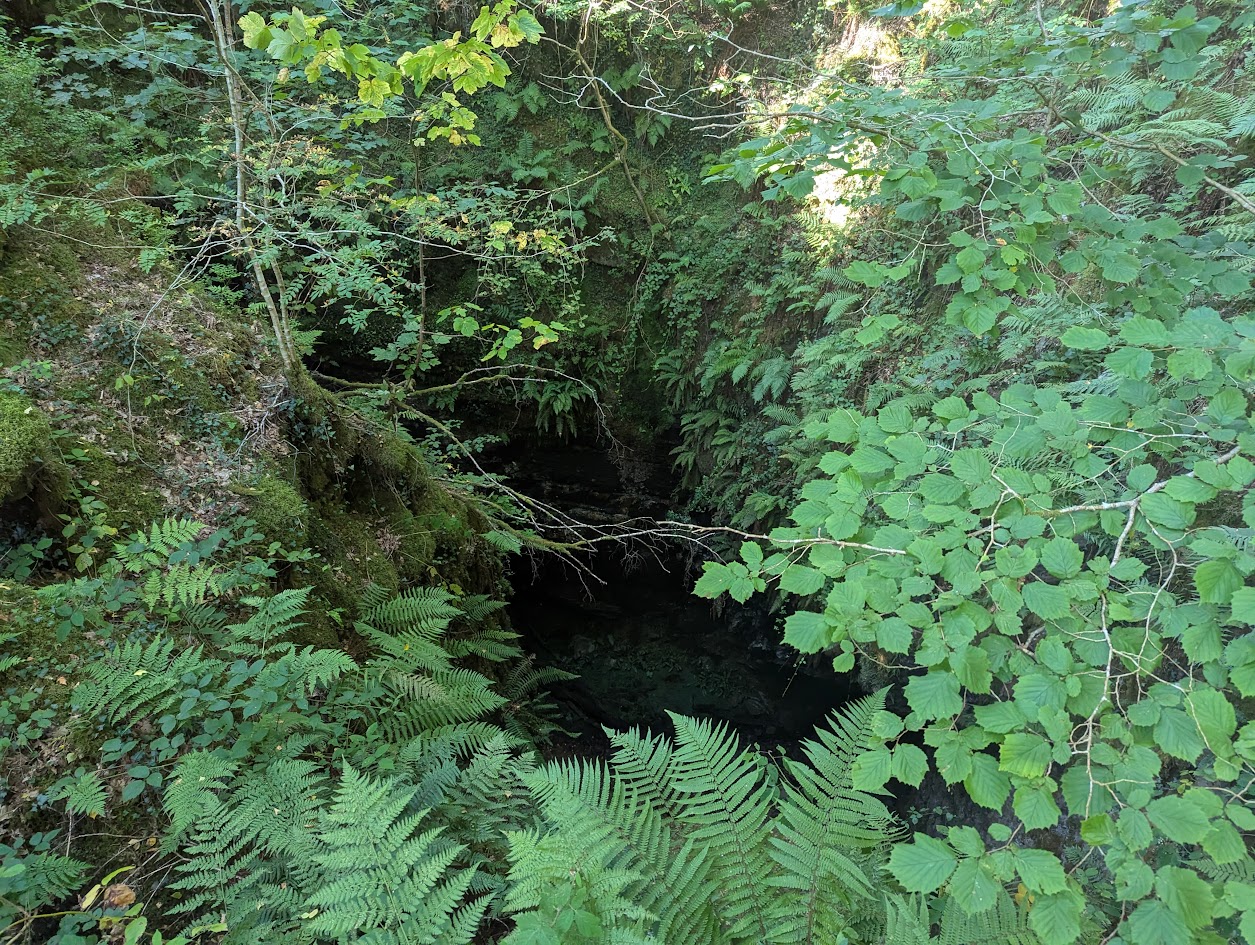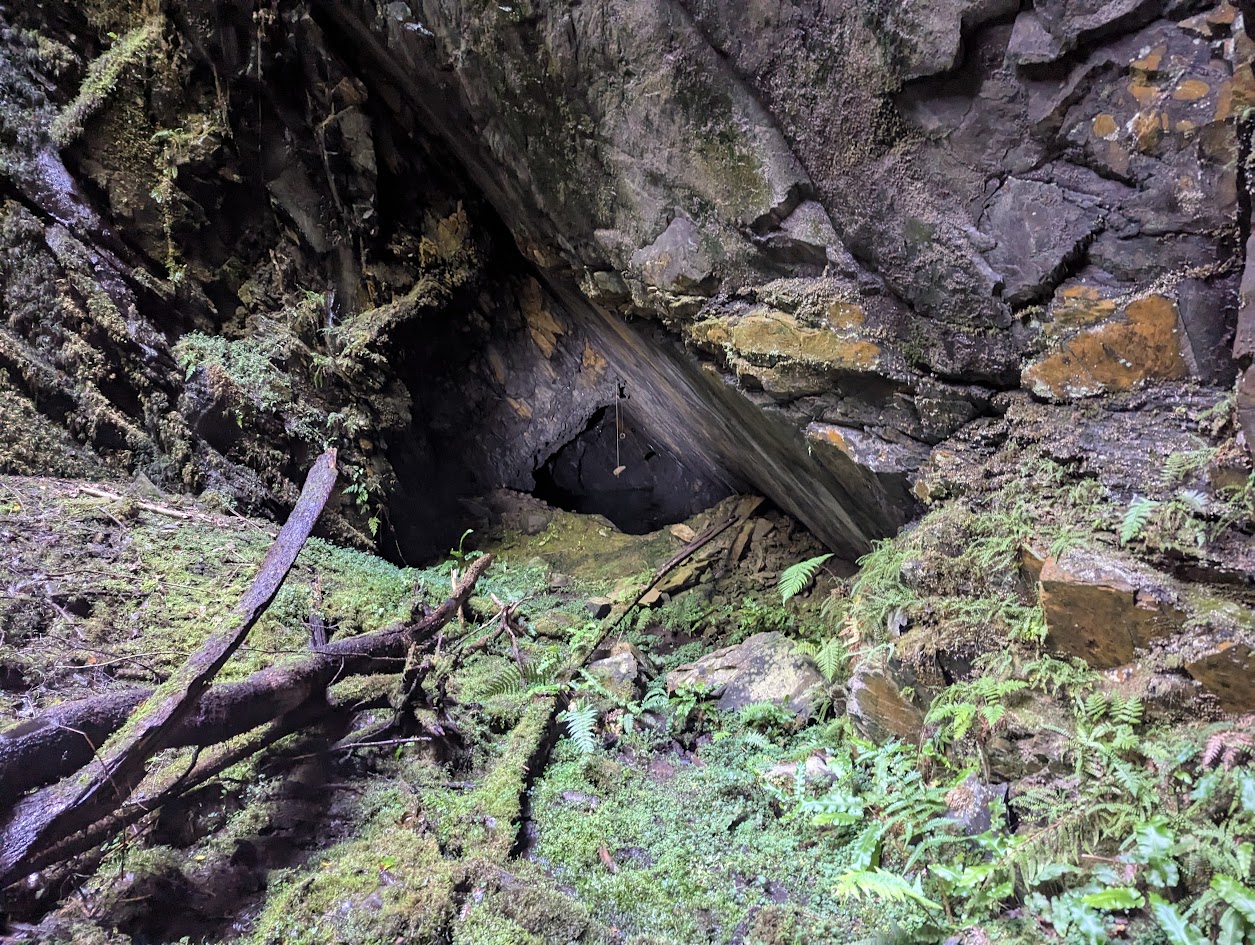



Well developed quarry. Remains of ‘London Mill’ still visible.***
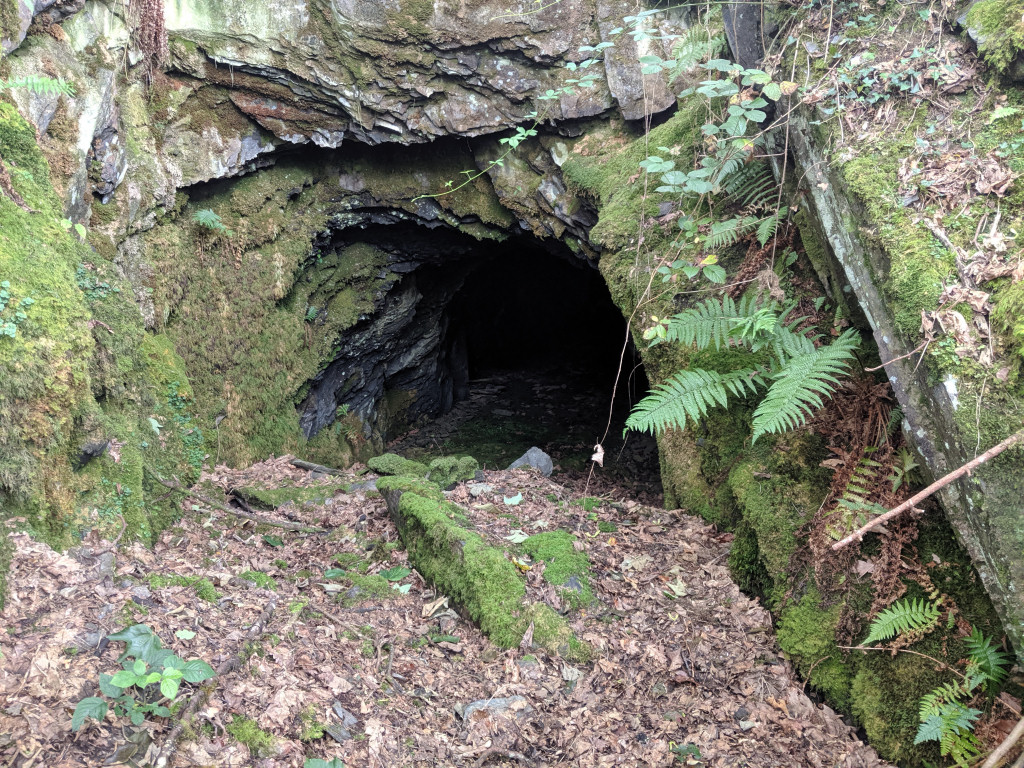
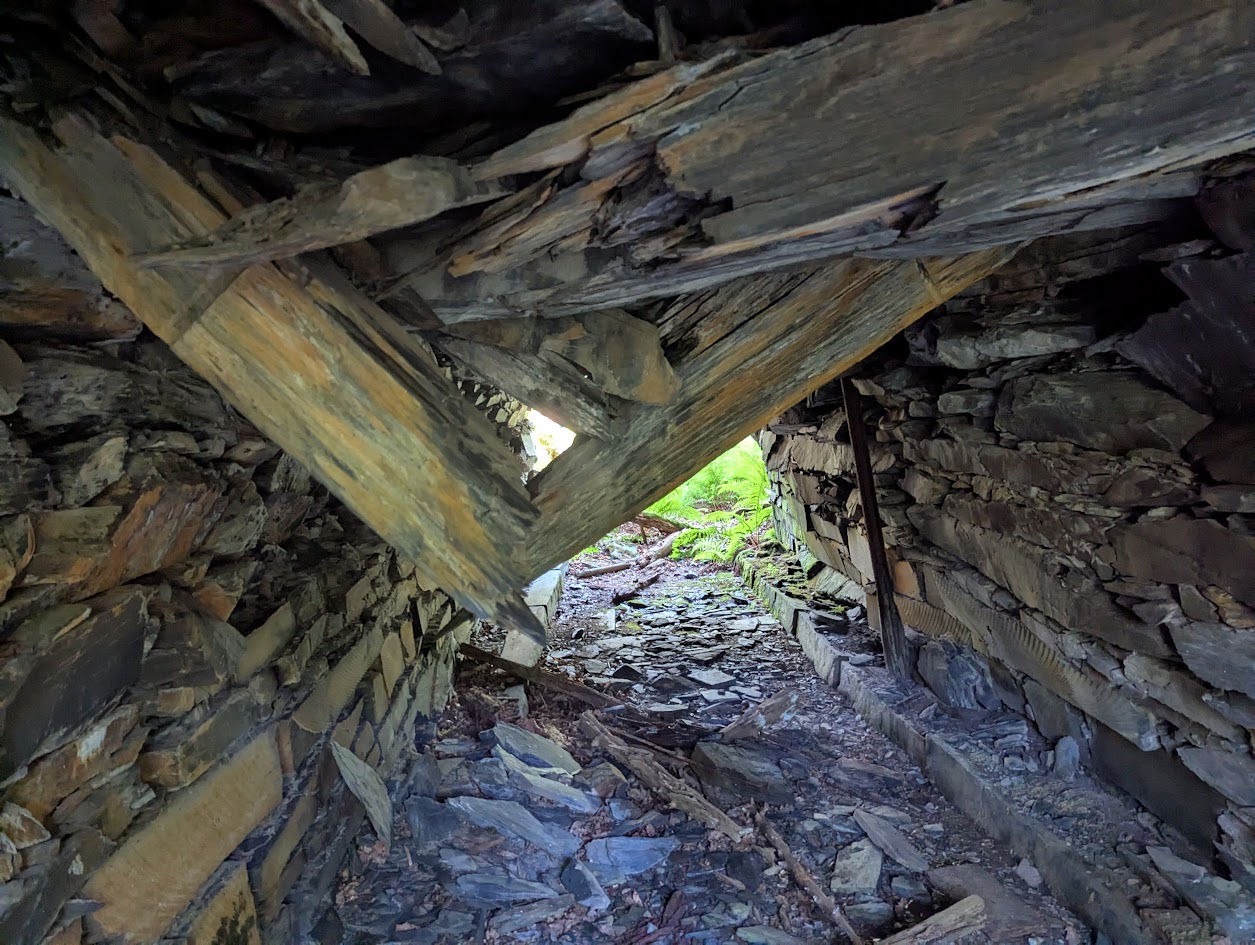
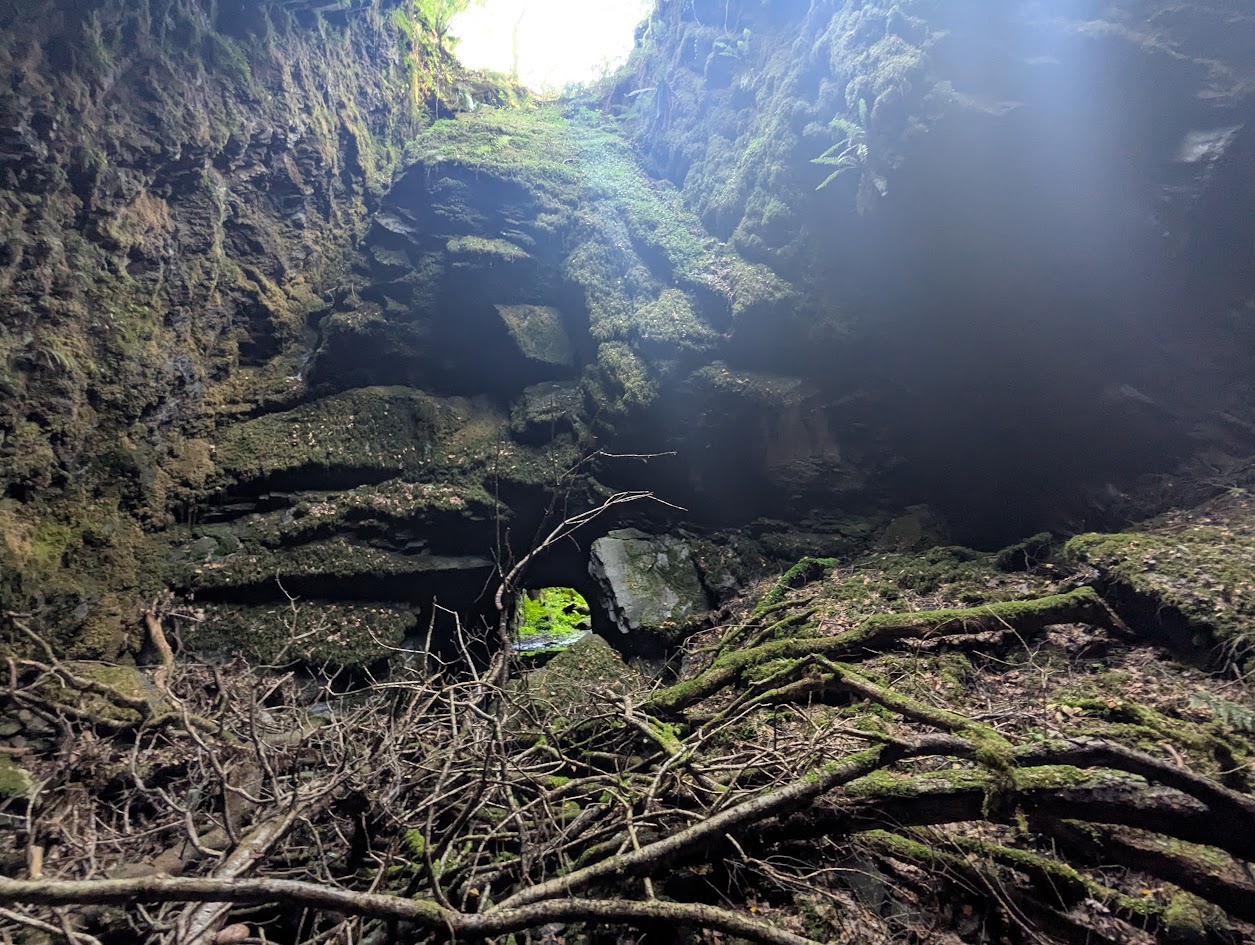
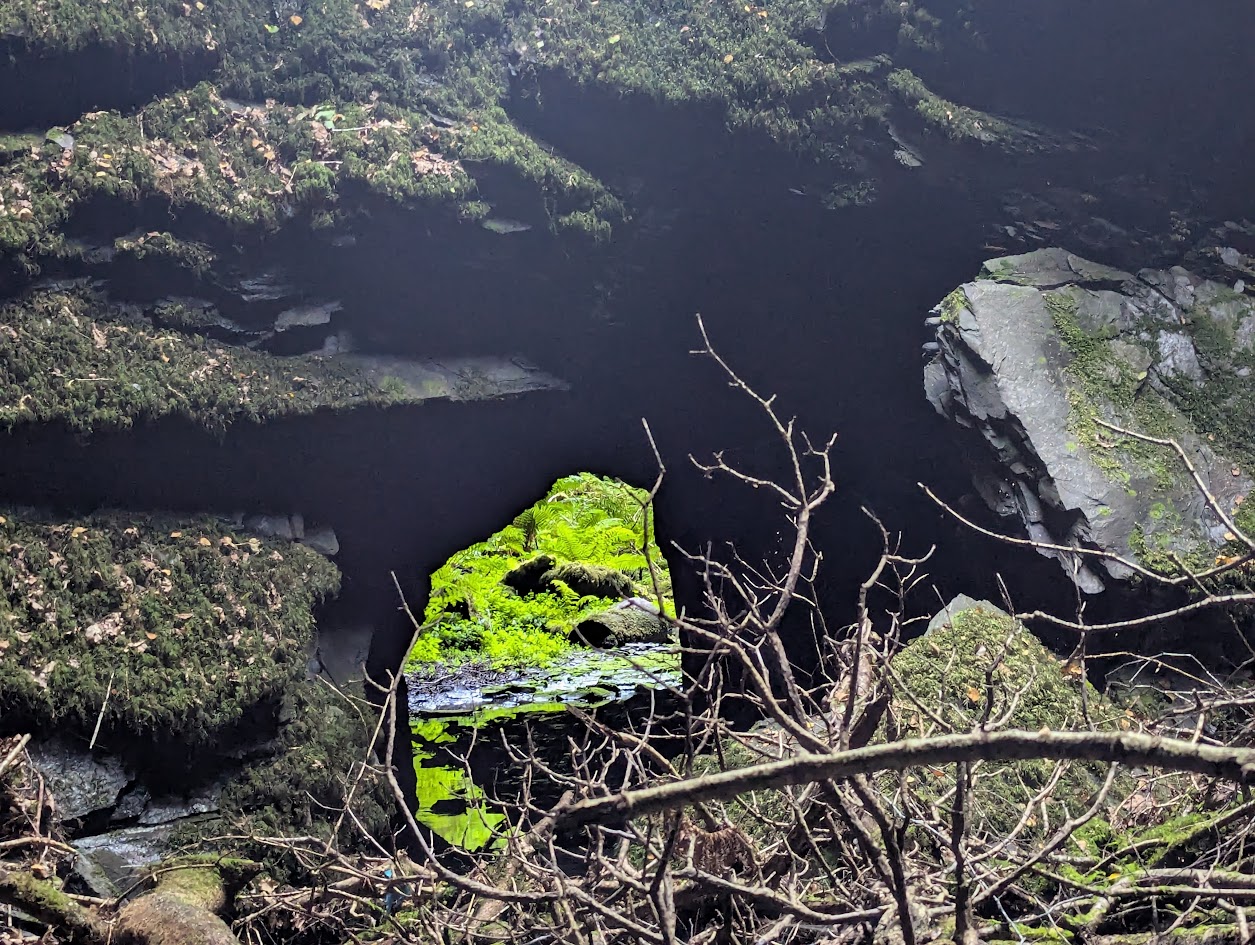
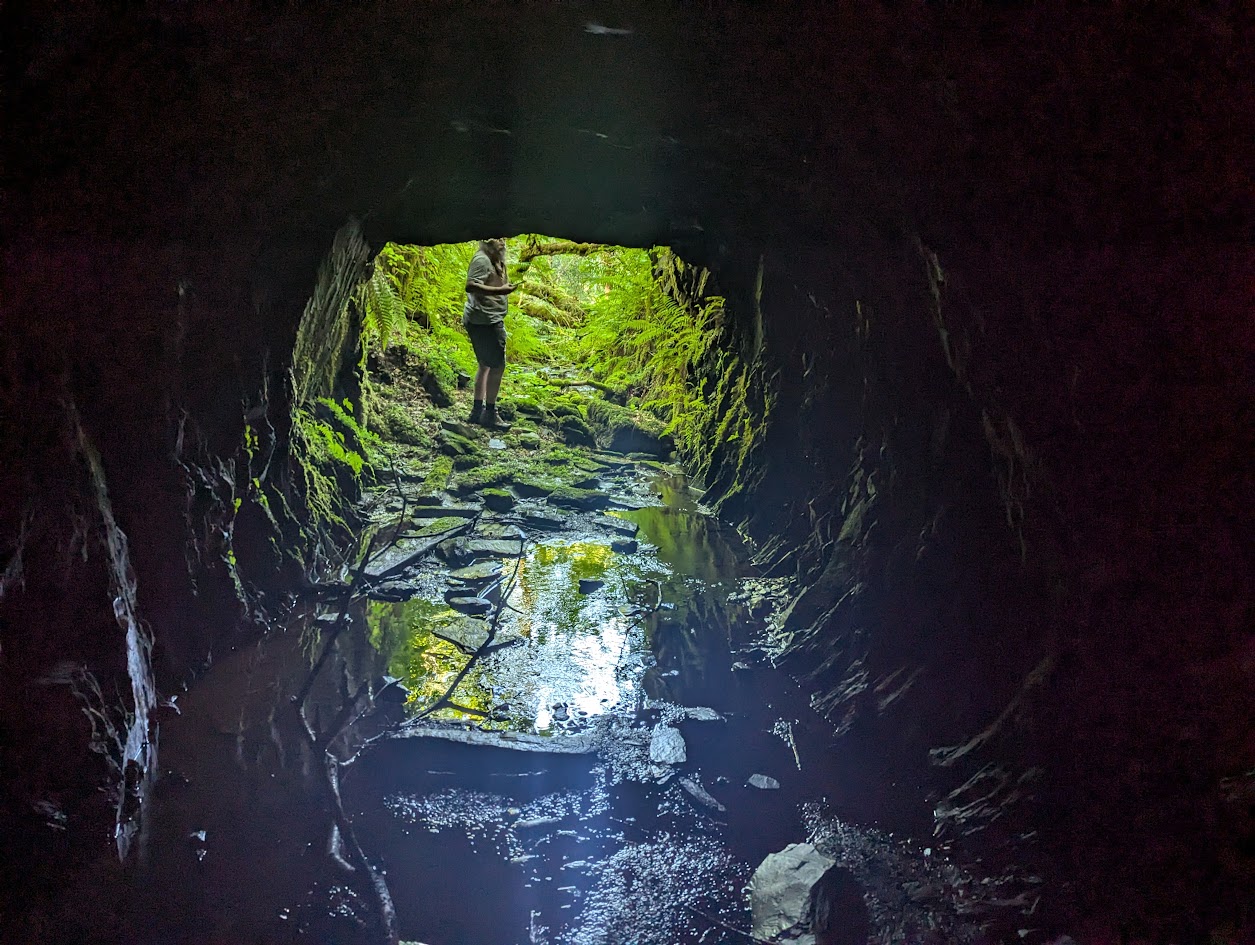
Drainage adit is open, and can be followed first to small open pit, thence to main tip via a short tunnel. There are a lot of fallen branches to negotiate though.
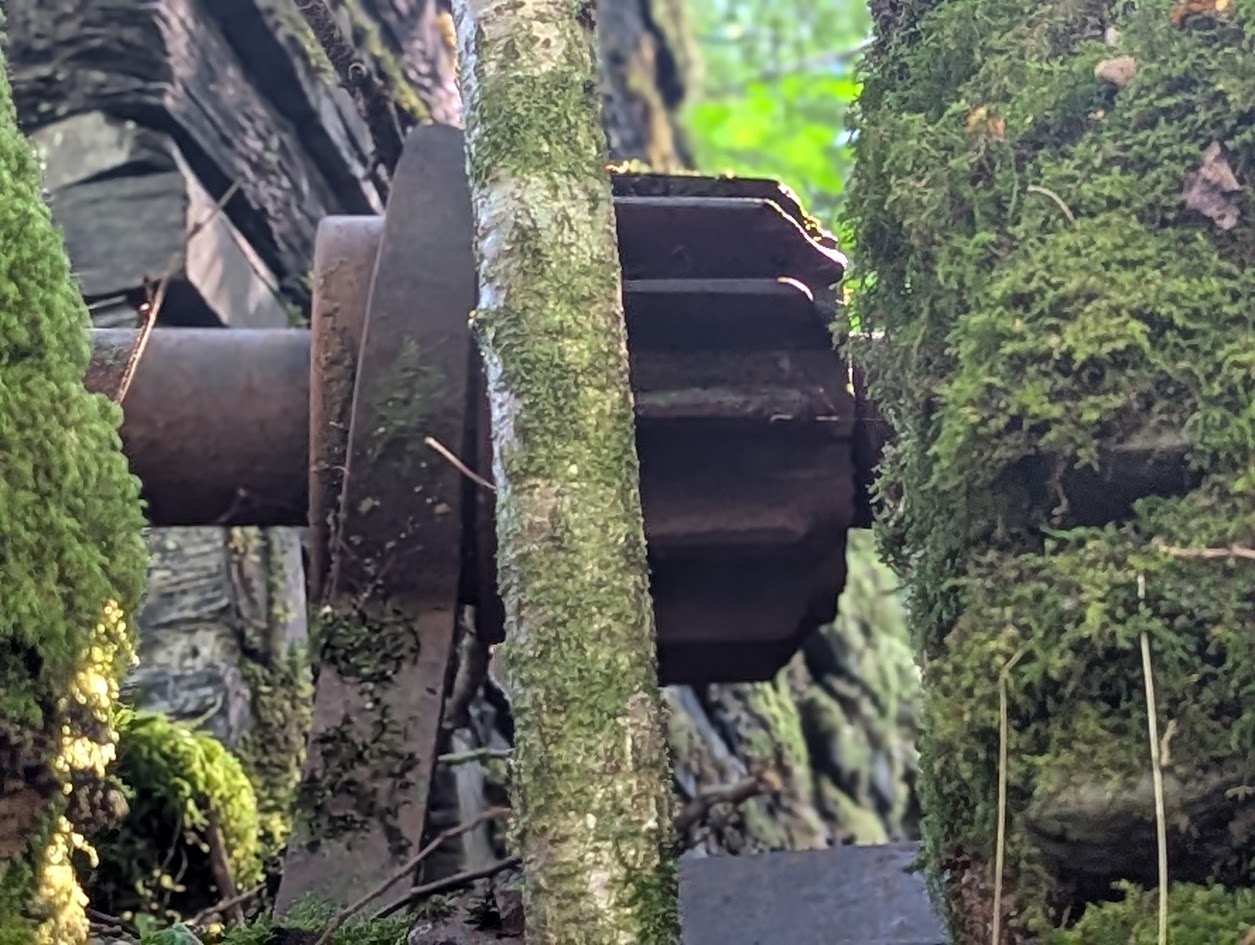
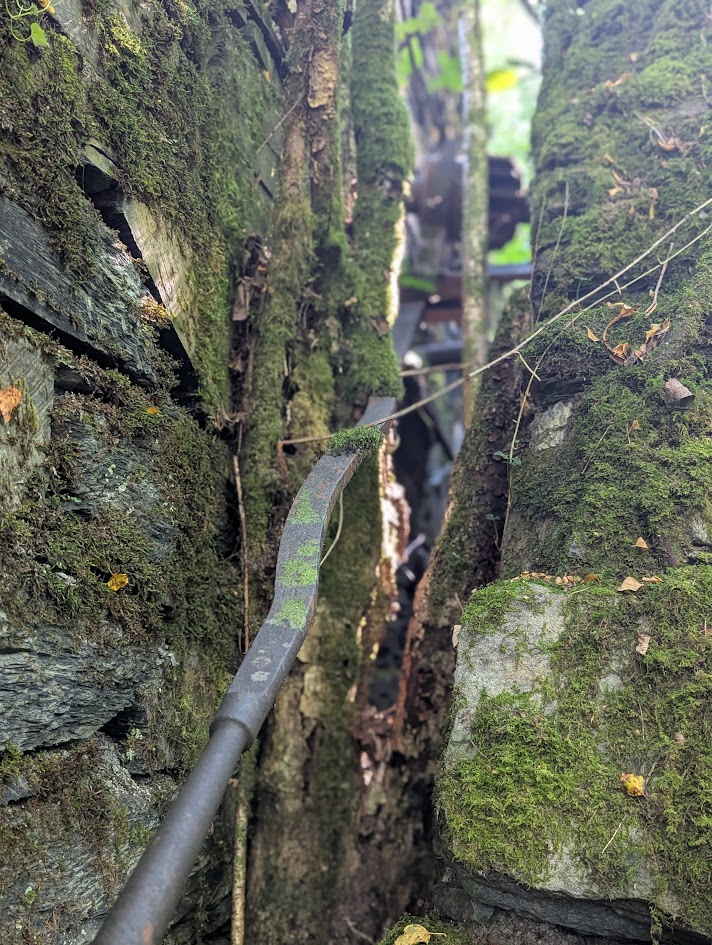
Traces of water wheel. Power seems to have been conveyed to the mill via a floor channel rather than the more usual roof level system. There is a large inbcline with drumhouse at the end of the mill, with some elaborate gearing and lever system visible mill-side.
Developed in the last quarter of the 19C. In 1883, it employed 11 men producing 289 tons, though tonnages sometimes reached 2,000 tons. The quarry produced sills and other products visible in Betws y Coed buildings, some showing coarse Hunter saw marks. Two contiguous pits were worked on six levels, with upper levels not entirely abandoned as work progressed downward. The main mill was sited on the fifth level; blocks from the lowest level were raised by an unusual power conversion of the main exit incline. Output was originally carted to Trefriw, later to Betws y Coed station. A tramway to Betws was never built despite interest from notable railway engineers. The quarry was revived post-World War I by J.J. Riley and finally closed in 1929. It was one of the very few quarries to enamel slate on site.
Publications (9)
- (1998); WMS Newsletter Issue 39 Dec; 8 pages
- (1999); WMS Newsletter Issue 41 Nov; 16 pages
- Gwyn, David, (2015); Welsh Slate: archaeology and history of an industry; Royal Commission on the Ancient and Historical Monuments of Wales; 9781871184518
- Jones, Griff R. (1998); Hafodlas Slate Quarry, Bettws Y Coed. Griff R. Jones. ISBN: 9780953369201
- Lindsay, Jean (1974); History of the North Wales Slate Industry; David & Charles; pp.322; ISBN 0-71536-264-X
- Richards, Alun J. (2013); Slate Quarrying in Wales; Gwasg Carreg Gwalch; ISBN 1-84527-026-6
- Richards, Alun John (1991); Gazeteer of the Welsh Slate Industry, A; Gwasg Carreg Gwalch 978-0863811968
- Richards, Alun John, (1999); The Slate Regions of North and Mid Wales and their Railways; Gwasg Carreg Gwalch; 0863815845
- Richards, Alun John, (2002); Fragments of Mine & Mill in Wales; pp.33, 60 ; Gwasg Carreg Gwalch; 0863818129