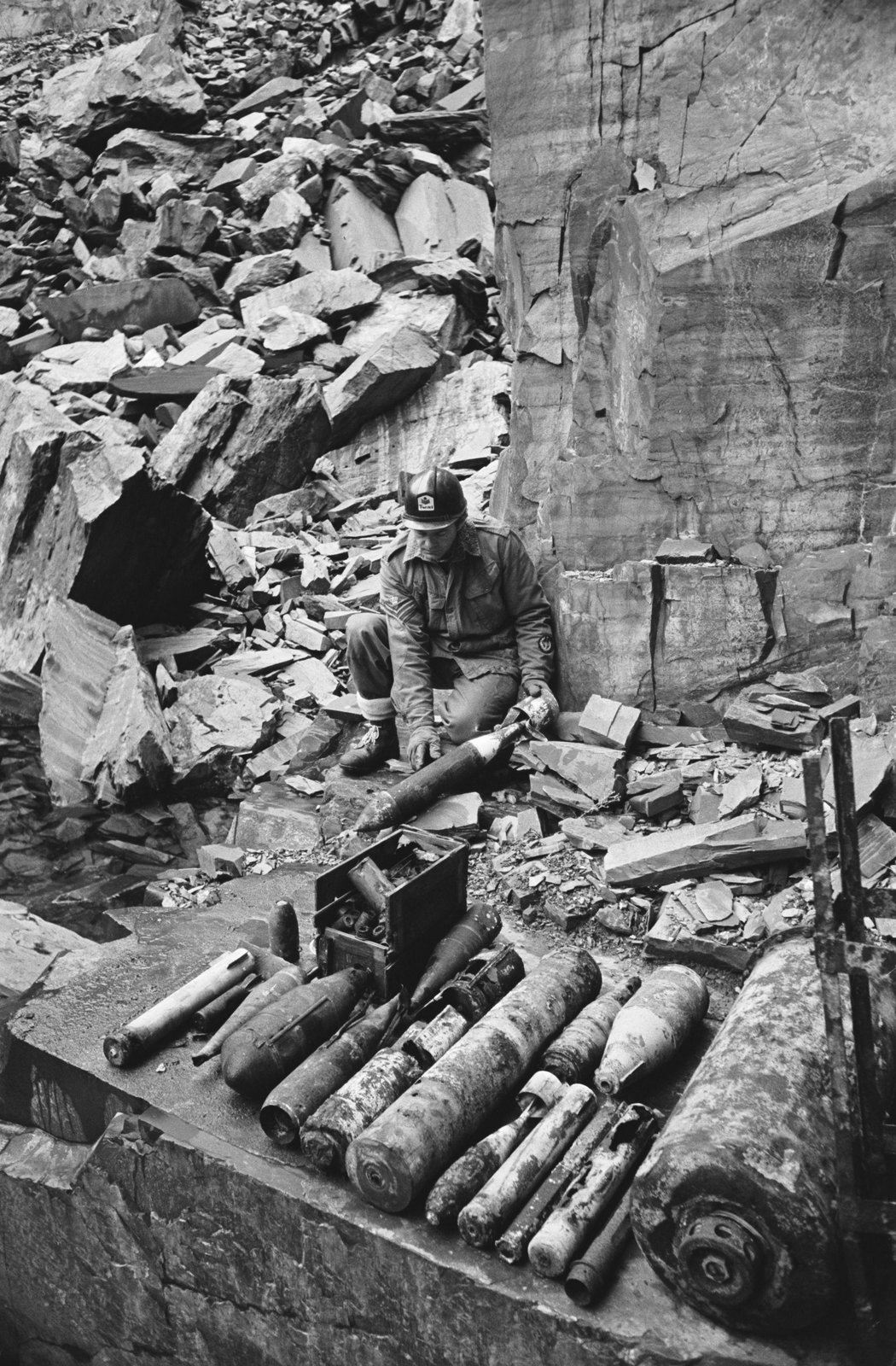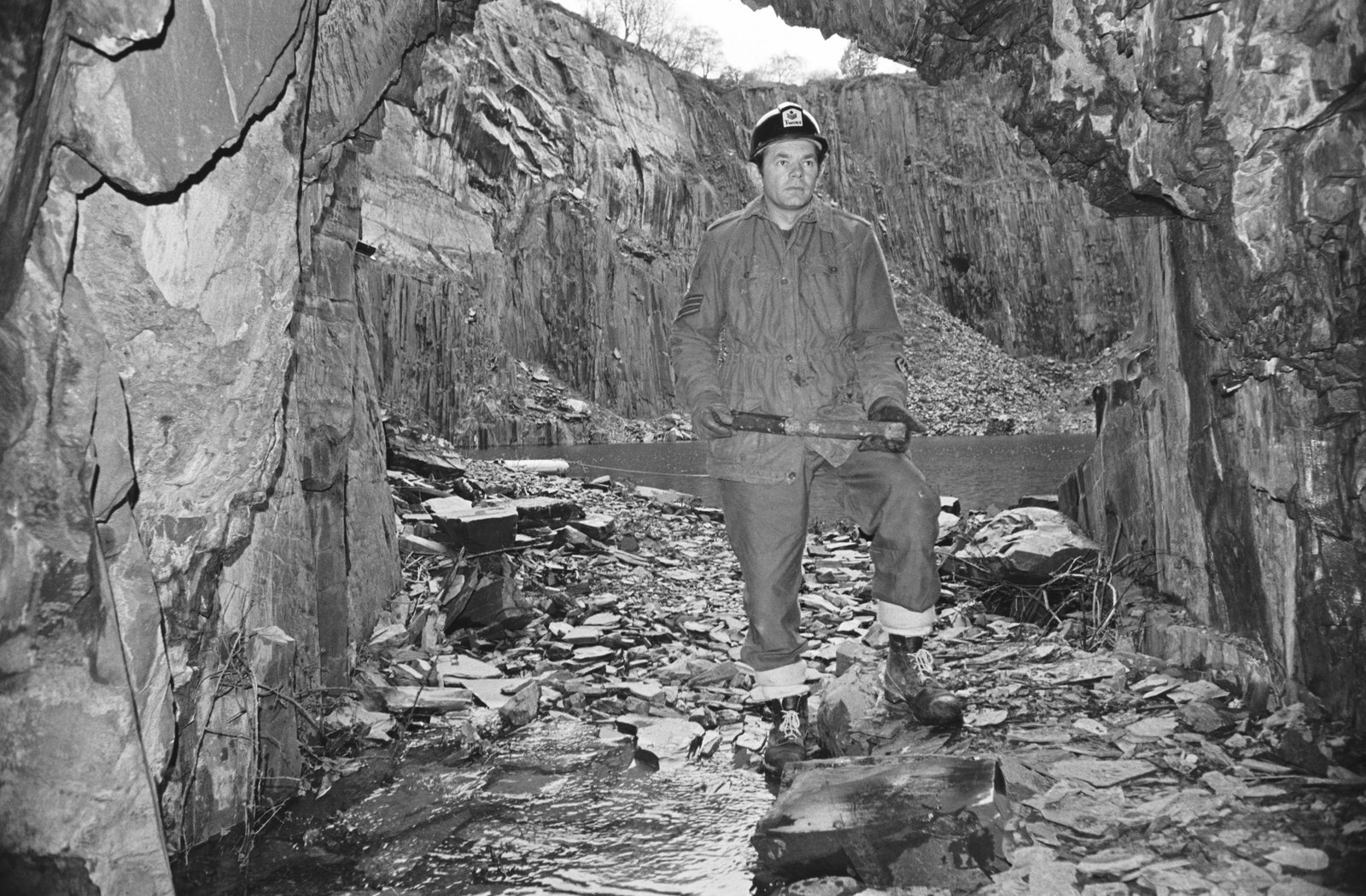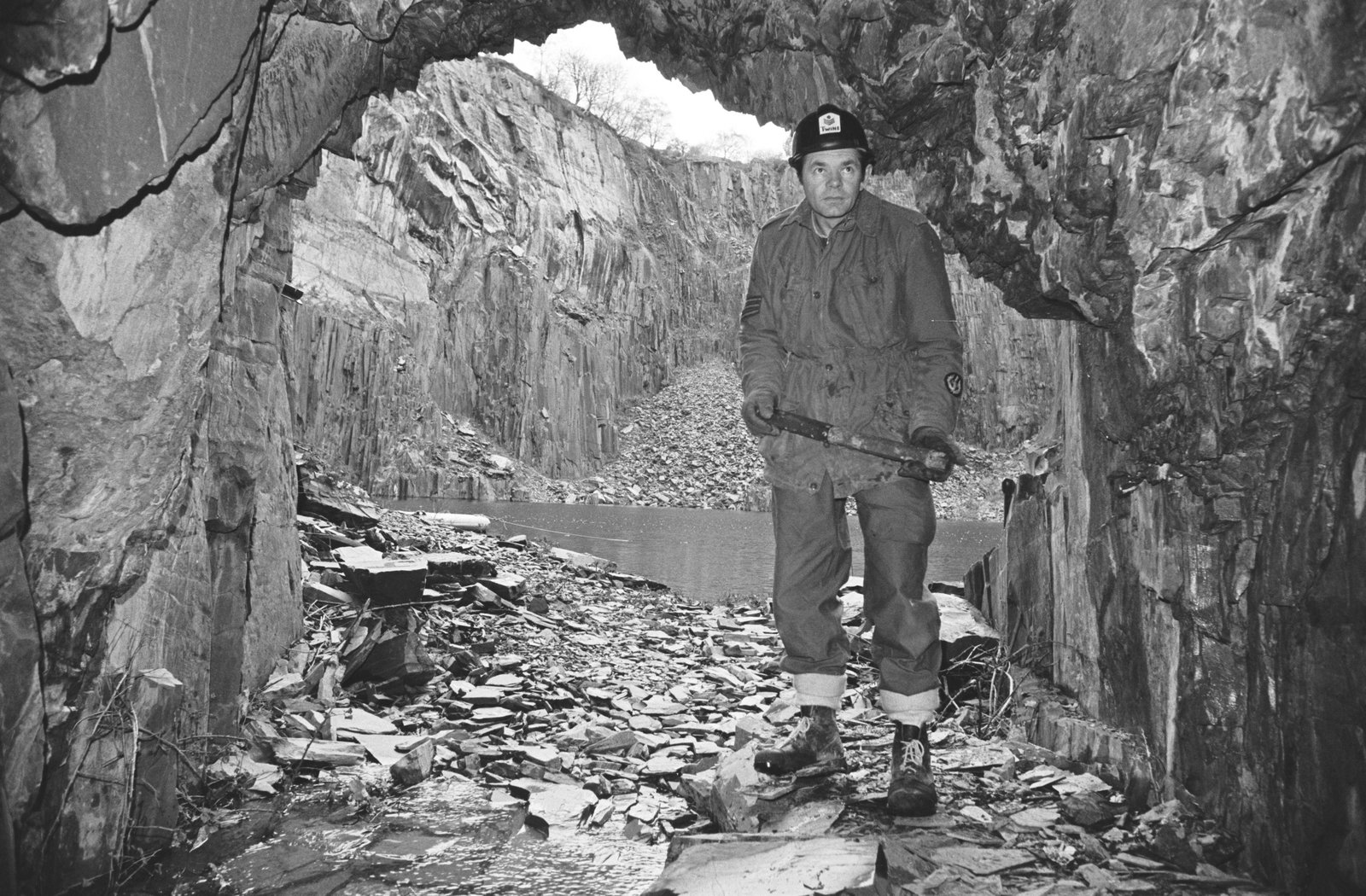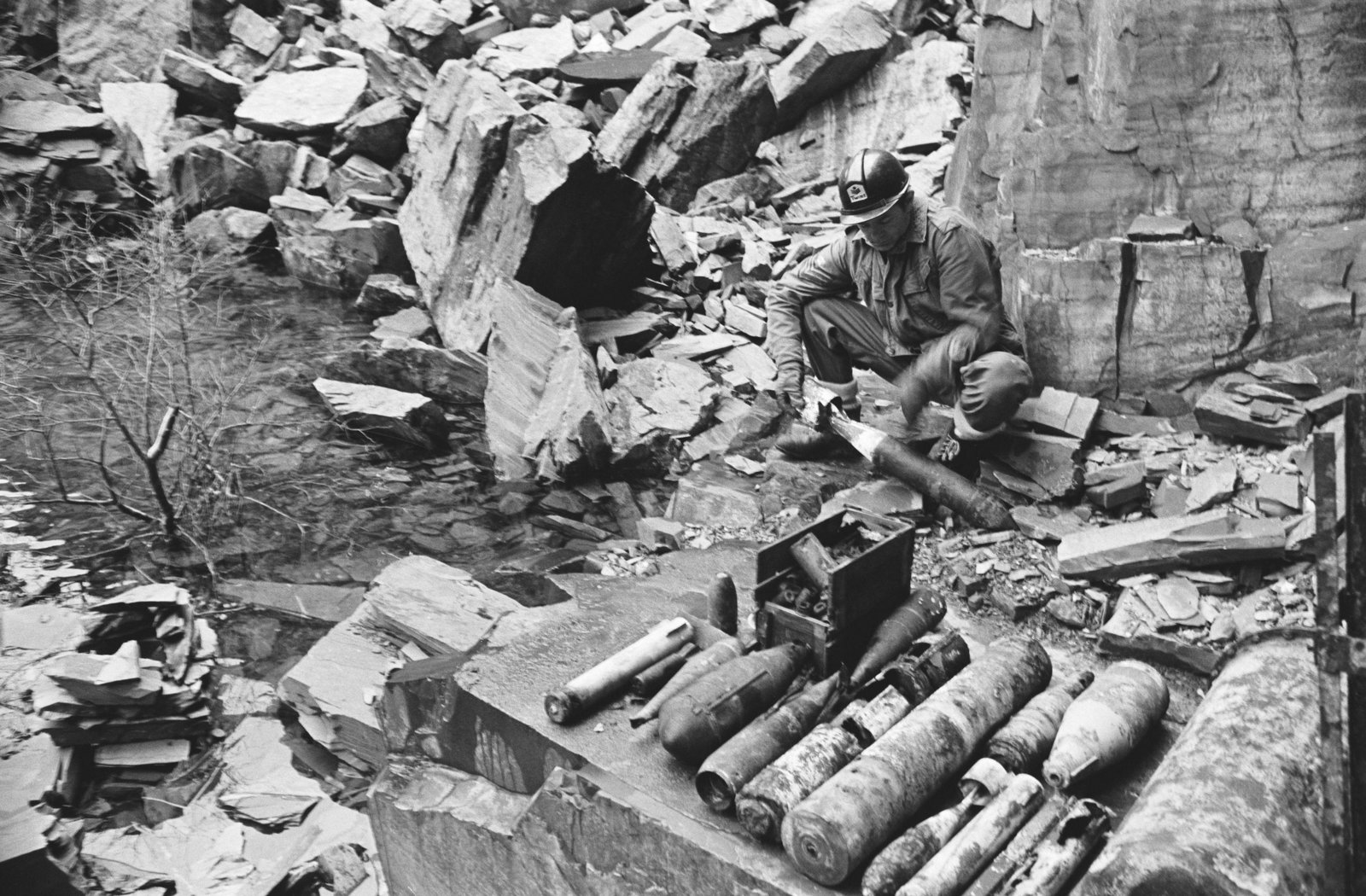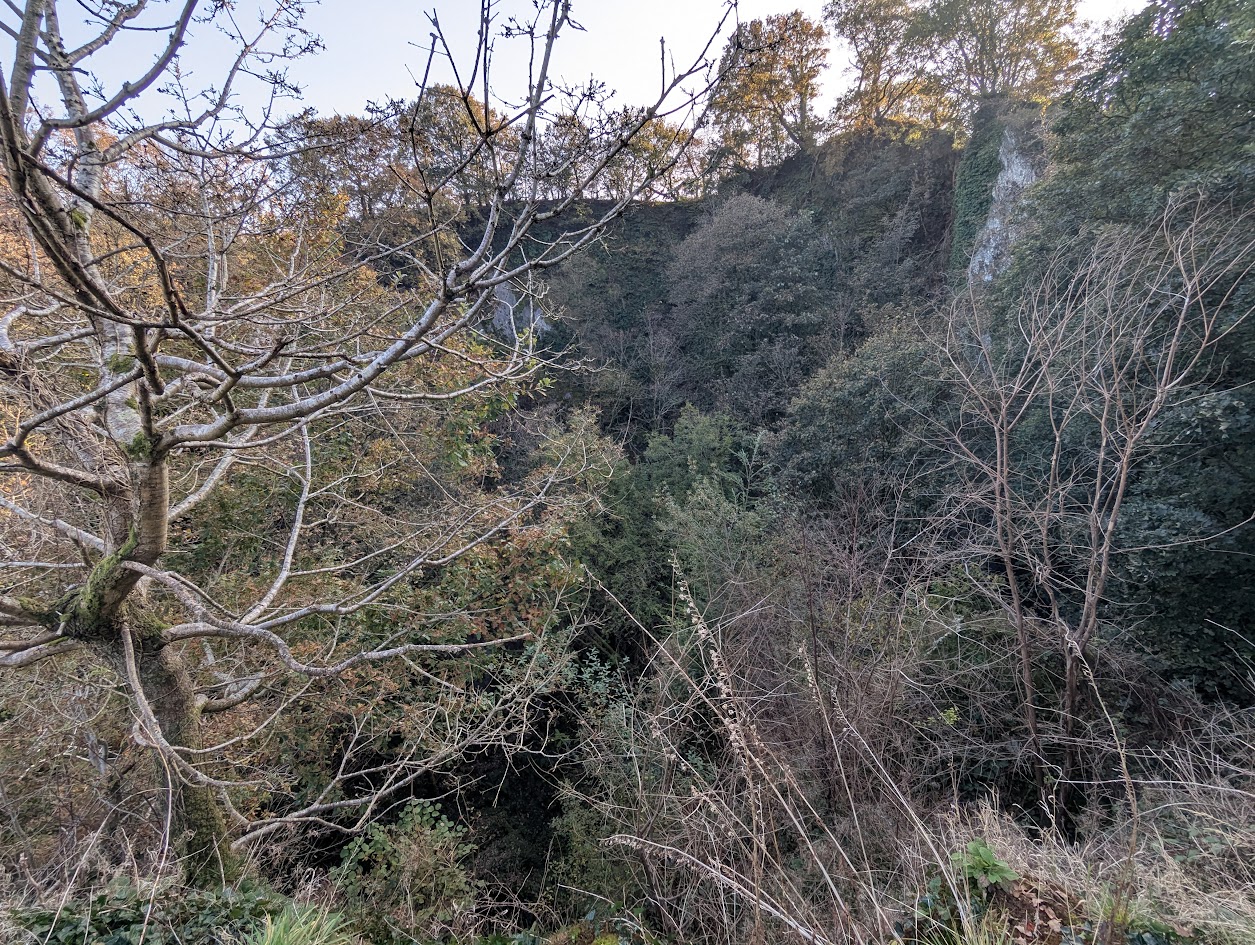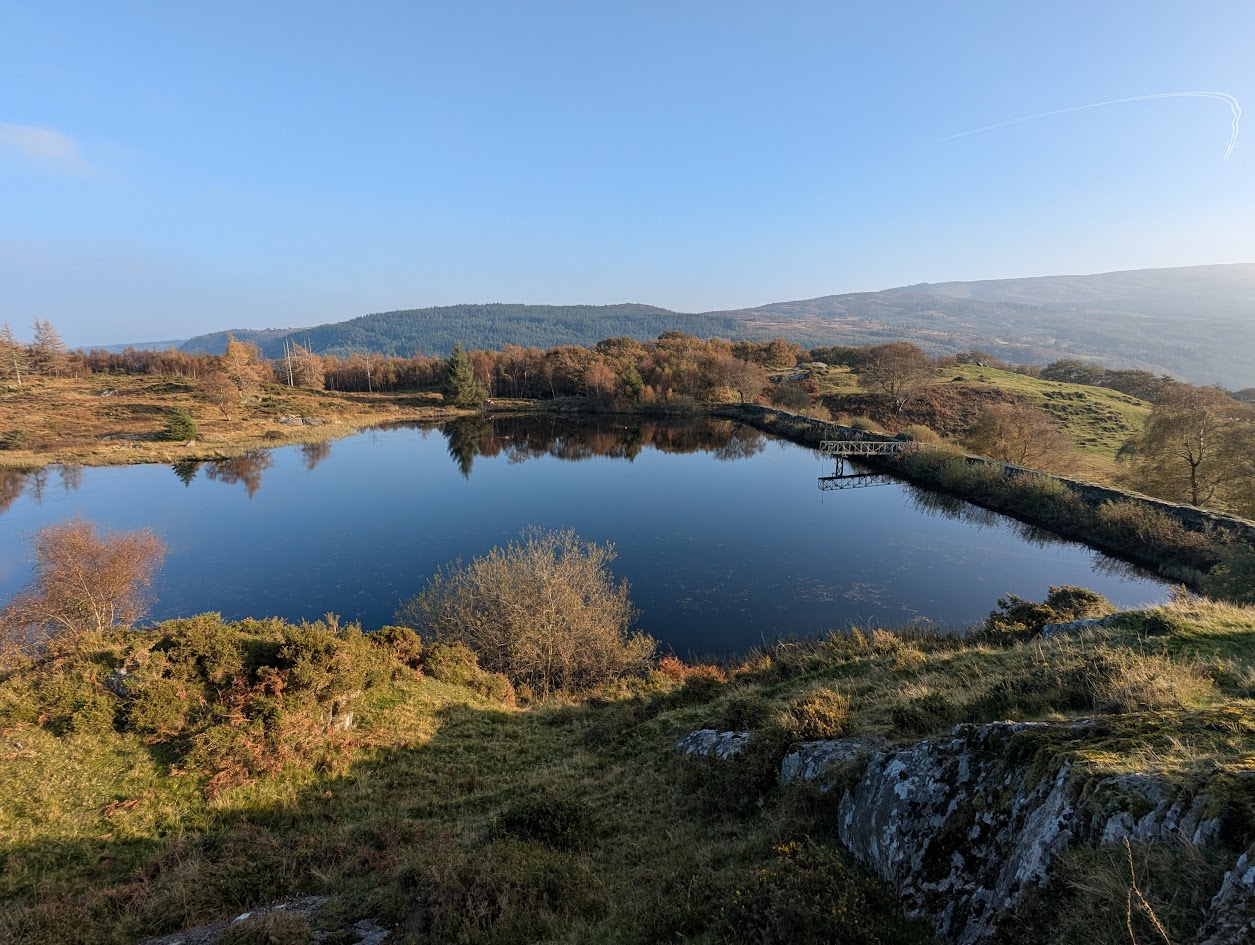



See Glynrhonwy Bomb Store for the pit used for bomb storage during WW2.*
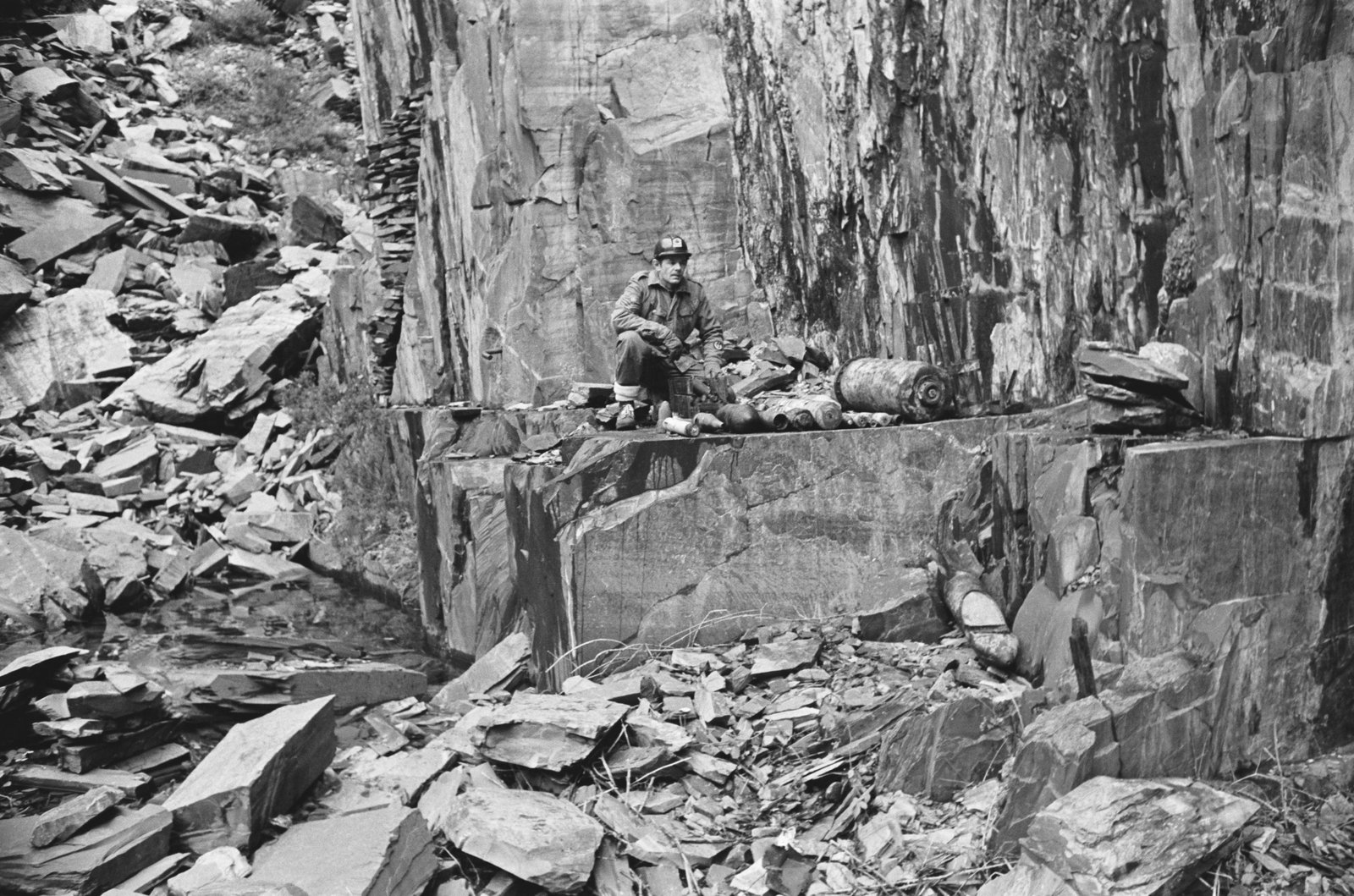
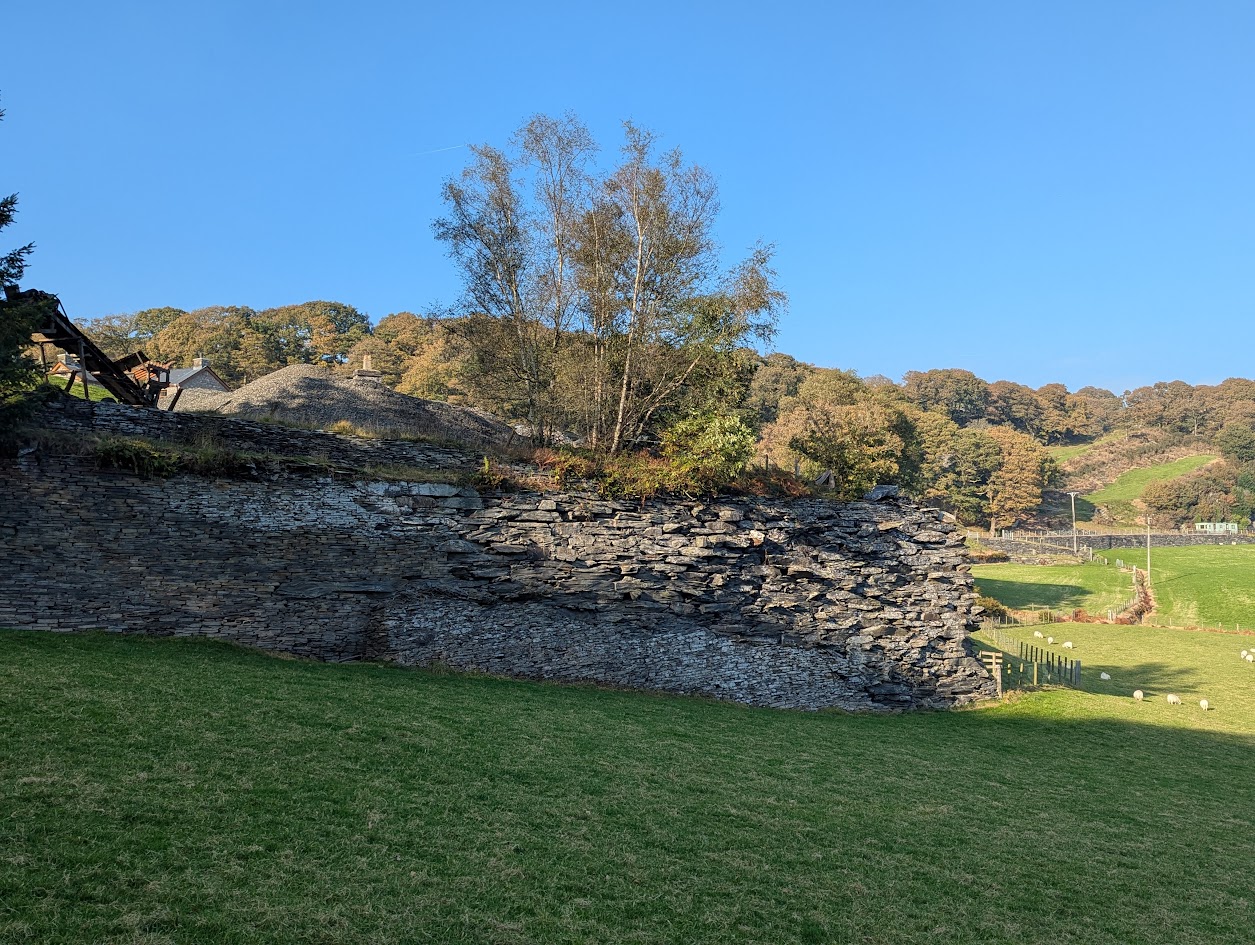
The site has been heavily disturbed by later bulk reworking, industrial reuse, and its use for bomb storage during 1940–43 and bomb disposal until 1956. Collapsed buildings delayed full clearance until 1975. Progressive redevelopment as an industrial estate has left little visible archaeology, but some tramway and railway formations remain. Notable features include a combined tramway and drainage tunnel now blocked under the road to the mills, a railway underpass to dump into Llyn Padarn, and the former crossing of the Ffridd incline at road level. Between the road and railway formation was the site of an 1823 water-powered sand sawmill, later upgraded with conventional saws and a Hunter saw. The former tipping area has been converted into a country park.
The open pit developed from eighteenth-century diggings and was extensively expanded in the 1870s, amalgamating multiple independent pits. At its height, the quarry had several subsidiary pits, a large mill, and an extensive multi-level internal rail system, partly locomotive-operated, making it a pioneer in internal quarry railways. Operations were self-draining with downhill working and direct waste tipping into Llyn Padarn, achieving efficient output of 40 tons per man-year. In 1883, it produced 1,789 tons with 70 men; later output was even higher. Initially, product was transported to Caernarfon, latterly by traction engine, until 1869, when an incline linked the quarry to a main line railway loading point. It was at one time connected to the Ffridd incline. Quarry operations ceased in the early 1930s.
Publications (8)
- (2015); Glyn Rhonwy Pumped Storage Scoping Report; 48 pages
- Glynrhonwy/Llanberis Bombstore; 5 pages
- Gwyn, David, (2015); Welsh Slate: archaeology and history of an industry; Royal Commission on the Ancient and Historical Monuments of Wales; 9781871184518
- Lindsay, Jean (1974); History of the North Wales Slate Industry; David & Charles; pp.321; ISBN 0-71536-264-X
- NMRS; Newsletter Nov/2013; p.10.
- Richards, Alun J. (2013); Slate Quarrying in Wales; Gwasg Carreg Gwalch; ISBN 1-84527-026-6
- Richards, Alun John (1991); Gazeteer of the Welsh Slate Industry, A; Gwasg Carreg Gwalch 978-0863811968
- Richards, Alun John, (1999); The Slate Regions of North and Mid Wales and their Railways; Gwasg Carreg Gwalch; 0863815821