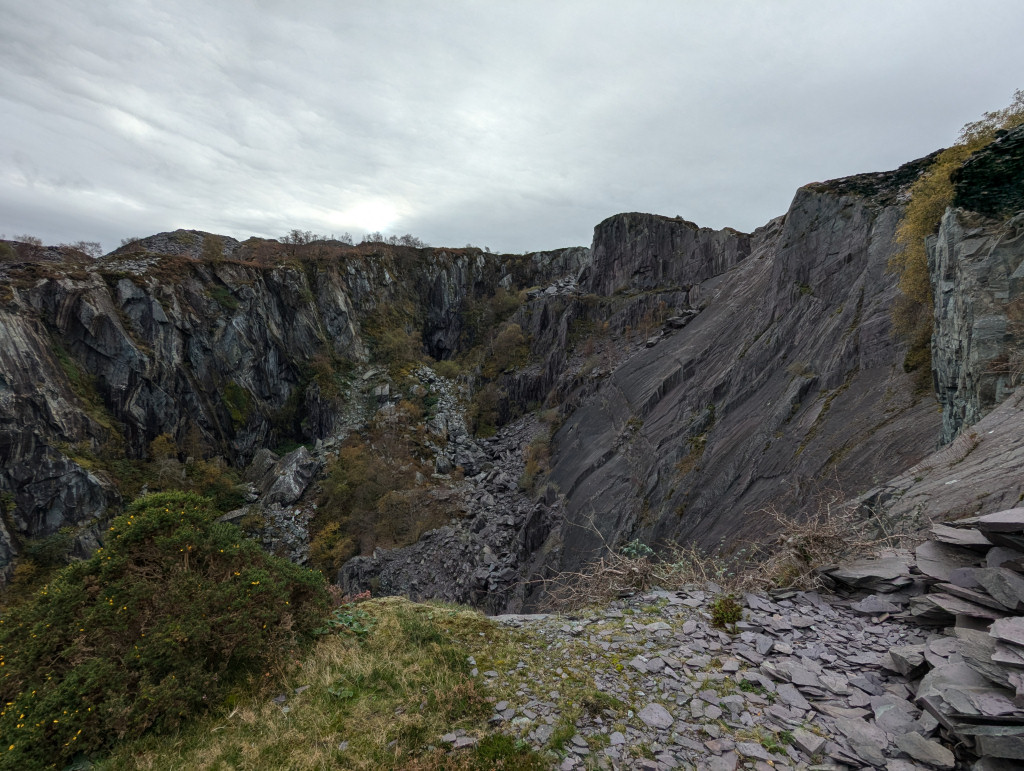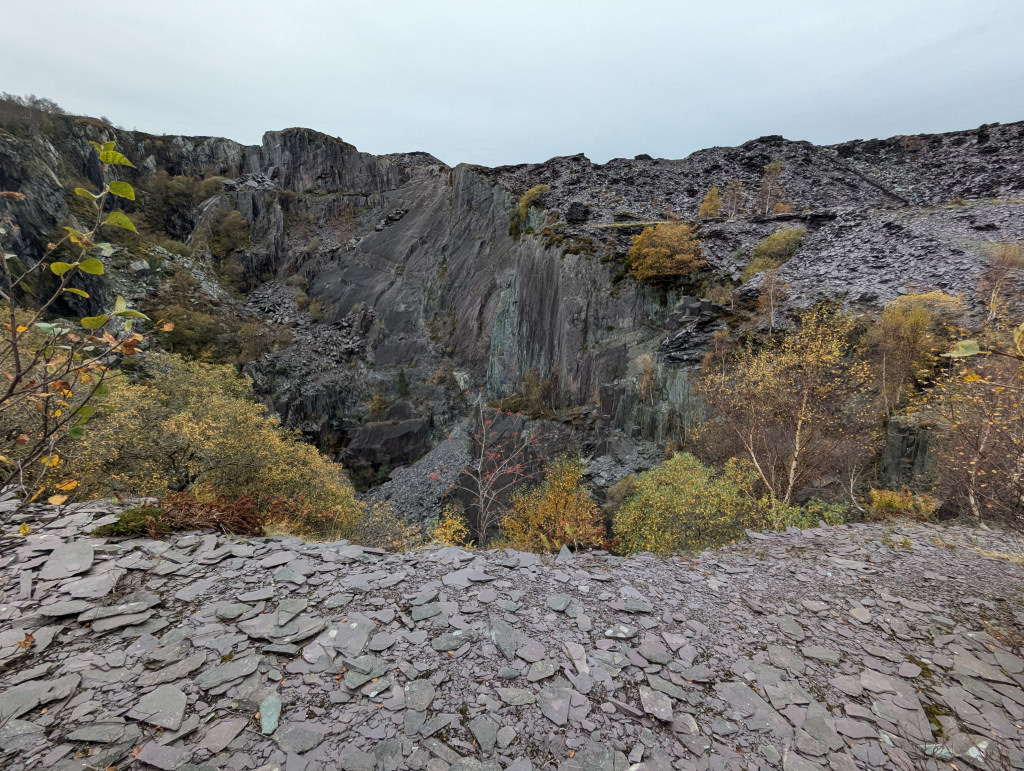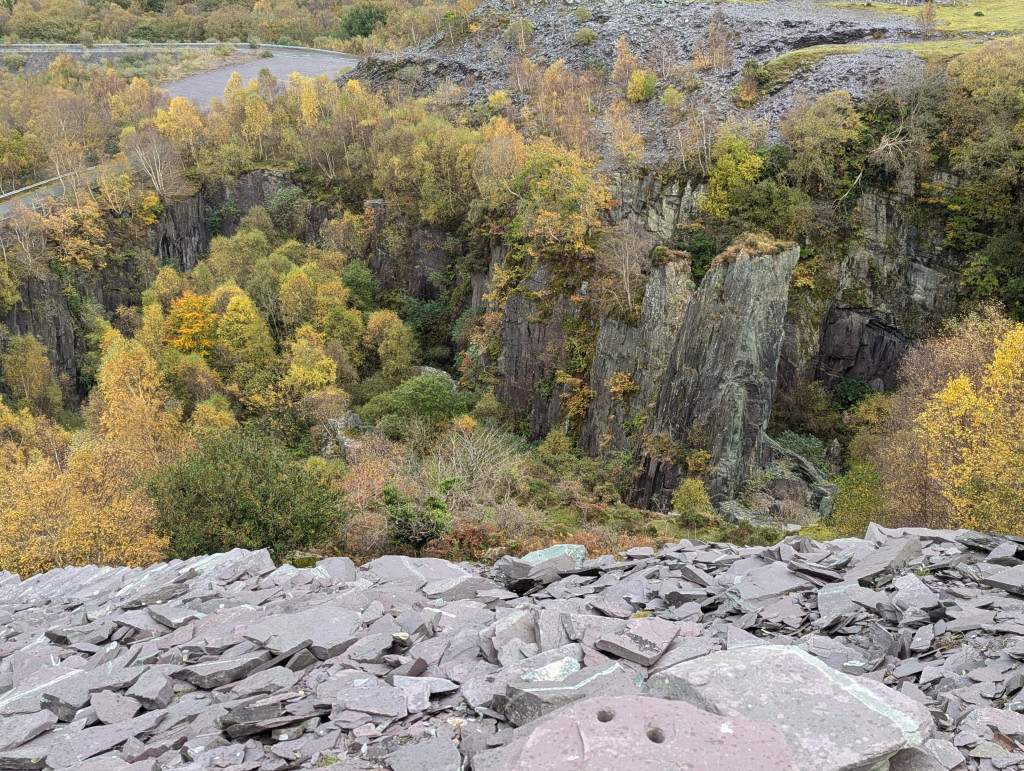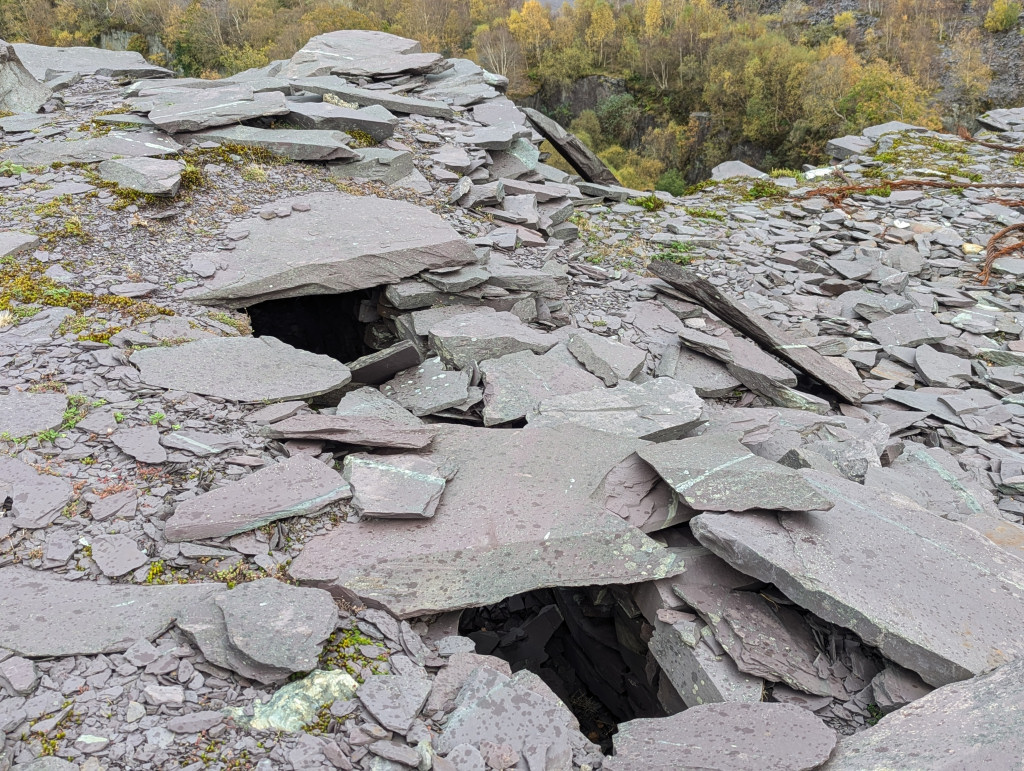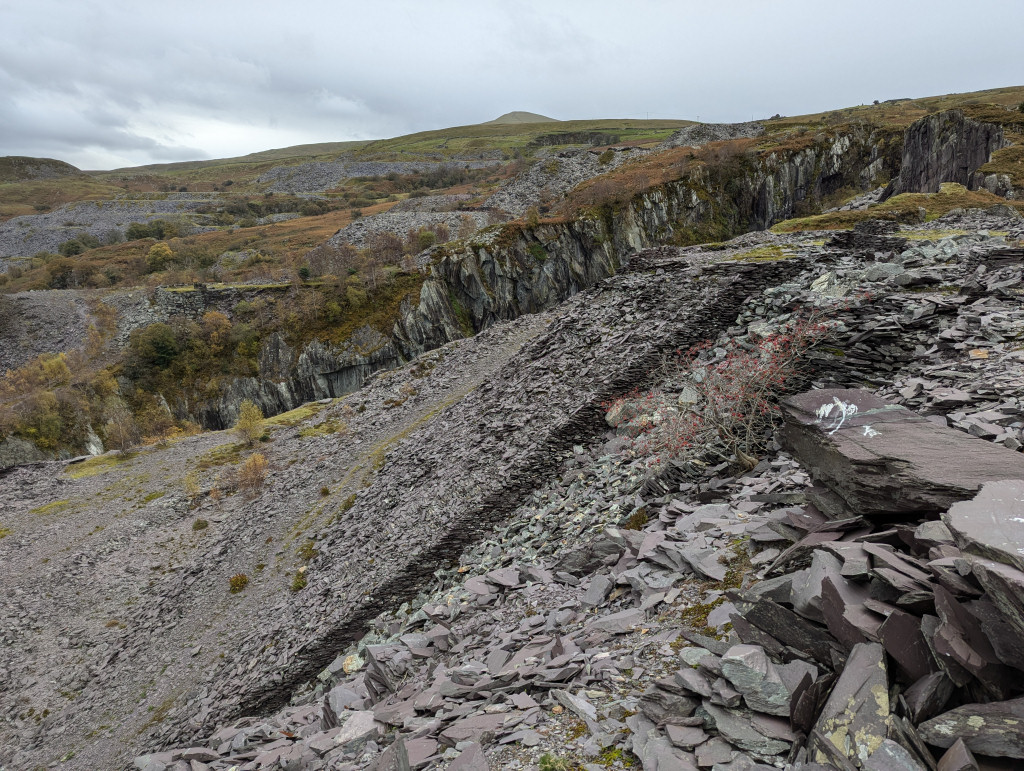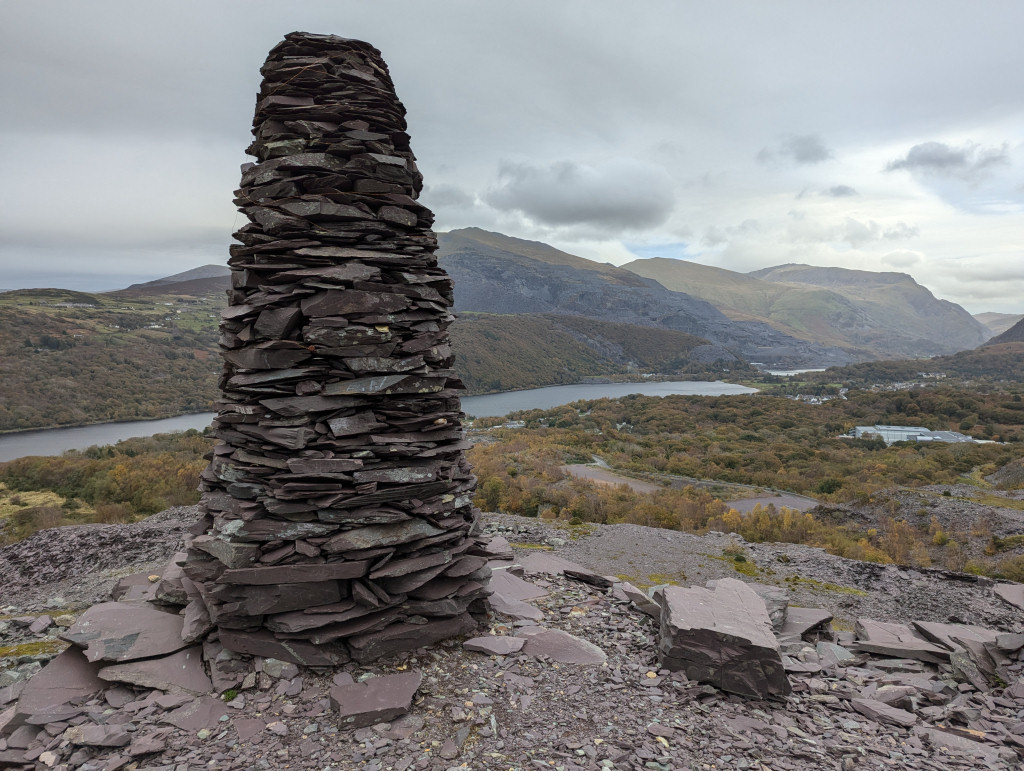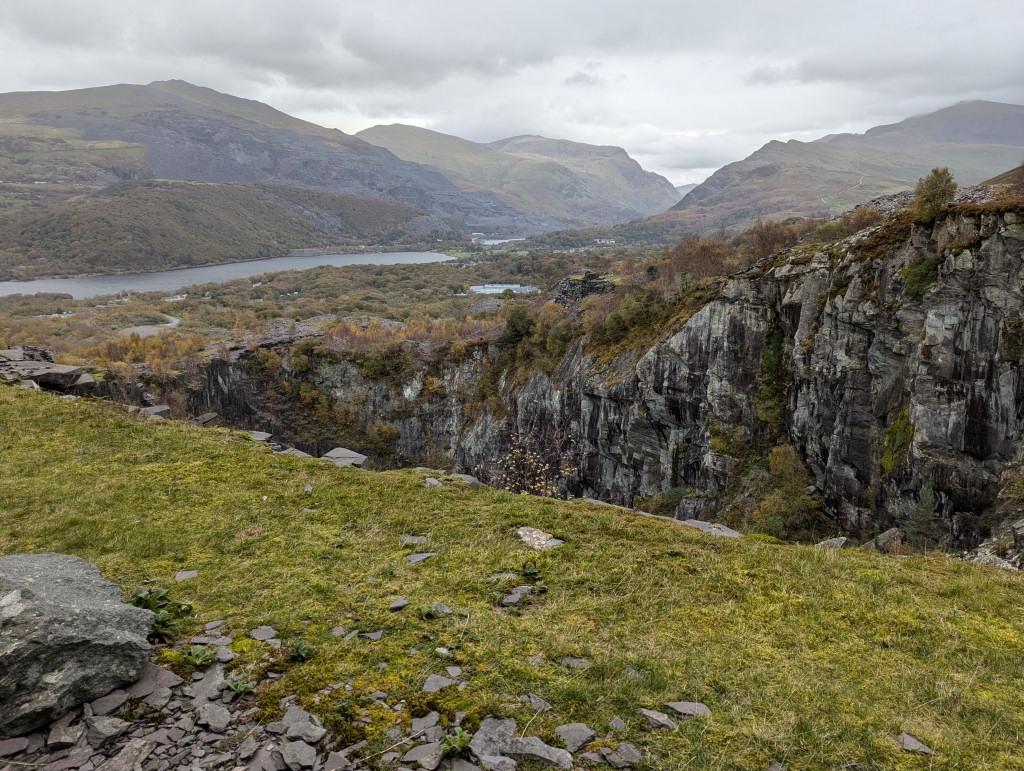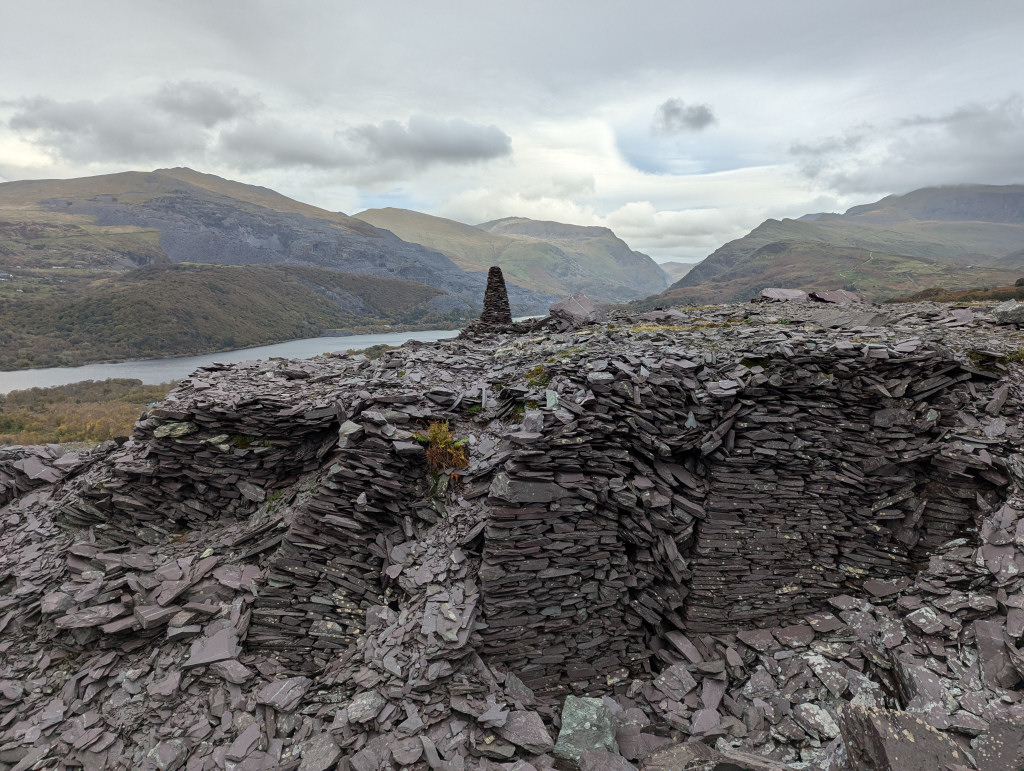



Large double pit with tunnel to Glynrhonwy Lower.*
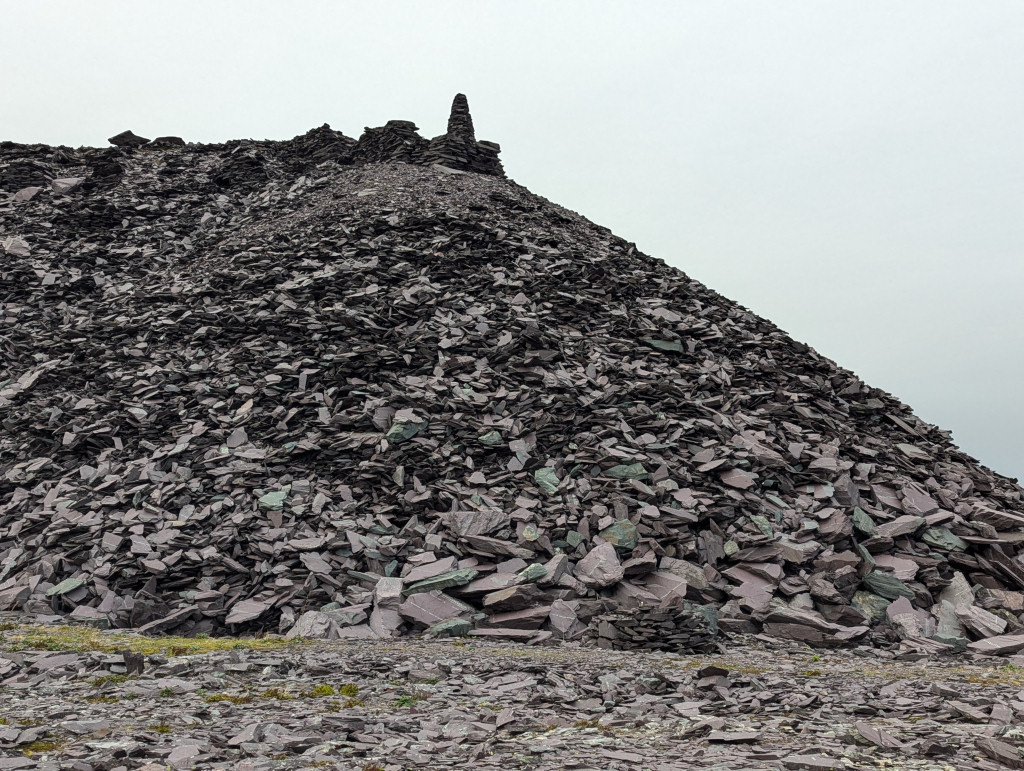
The site retains two impressive pits with extensive rock-cut tramway formations and sections of tunnelling. Remains also include inclines and several buildings associated with the workings. A fine wooden bridge survives, along with the abutments of a former bridge that once carried waste across the road.
Originally separate but contiguous with Glynrhonwy Lower. It was developed in the mid-nineteenth century from earlier small diggings and grew into a substantial operation consisting essentially of two major pits worked in tandem. The quarry featured a notably complex internal rail system, partly locomotive-worked, with some tracks dramatically cantilevered along sheer rock faces. In 1882 it produced 2,181 tons with a workforce of 90 men. It was initially linked to the Ffridd incline, but following amalgamation all output was routed through Glynrhonwy Lower via a connecting tunnel. Average production later stabilised at around 3,000 tons per year. Activity steadily declined until only two men remained at work when the quarry closed in 1939.
Publications (7)
- (2015); Glyn Rhonwy Pumped Storage Scoping Report; 48 pages
- Gwyn, David, (2015); Welsh Slate: archaeology and history of an industry; Royal Commission on the Ancient and Historical Monuments of Wales; 9781871184518
- Lindsay, Jean (1974); History of the North Wales Slate Industry; David & Charles; pp.321; ISBN 0-71536-264-X
- Richards, Alun J. (2013); Slate Quarrying in Wales; Gwasg Carreg Gwalch; ISBN 1-84527-026-6
- Richards, Alun John (1991); Gazeteer of the Welsh Slate Industry, A; Gwasg Carreg Gwalch 978-0863811968
- Richards, Alun John, (1999); The Slate Regions of North and Mid Wales and their Railways; Gwasg Carreg Gwalch; 0863815822
- Richards, Alun John, (2002); Fragments of Mine & Mill in Wales; pp.38 ; Gwasg Carreg Gwalch; 0863818129