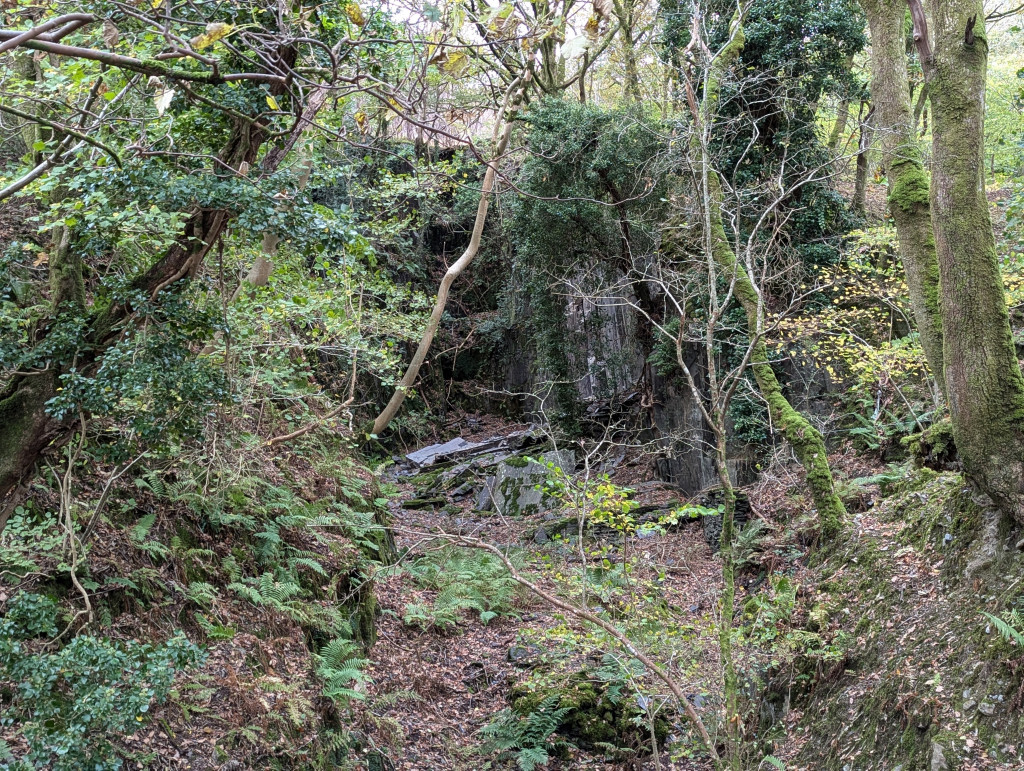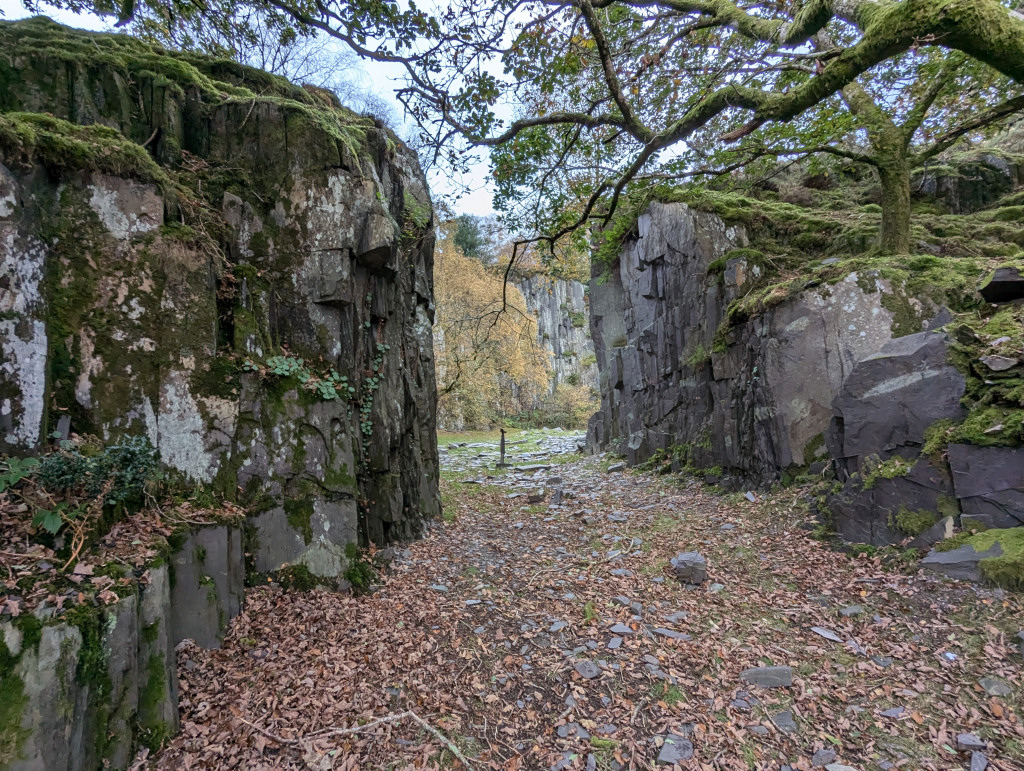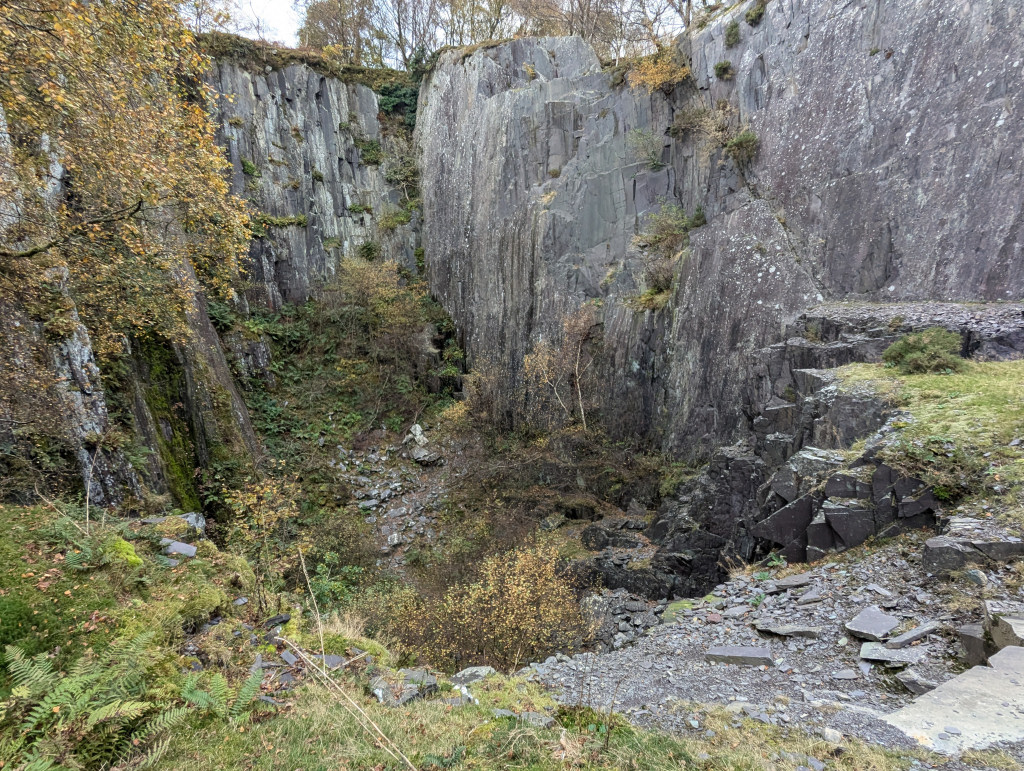



Working with collapsed tunnels.*
Several pits are still visible across the landscape, alongside collapsed tunnel systems. A network of tramway formations crisscrosses the terrain, accompanied by rubbish runs. The ruins of small ancillary buildings are scattered throughout the site, and the foundations of what may have constituted a small steam-powered mill can still be identified among the remains.
This slate working began its operations from the mid-nineteenth century, initially functioning alongside the Goodmans concern. The two businesses were subsequently brought together in 1878 when they amalgamated with Cefn Du. A tramway system was constructed to connect the various workings to the Ffridd incline. The quarry maintained a steady output of approximately one thousand tons per year, with one of the pits becoming particularly distinguished for its production of red slate.
Publications (5)
- Gwyn, David, (2015); Welsh Slate: archaeology and history of an industry; Royal Commission on the Ancient and Historical Monuments of Wales; 9781871184518
- Lindsay, Jean (1974); History of the North Wales Slate Industry; David & Charles; pp.313; ISBN 0-71536-264-X
- Richards, Alun J. (2013); Slate Quarrying in Wales; Gwasg Carreg Gwalch; ISBN 1-84527-026-6
- Richards, Alun John (1991); Gazeteer of the Welsh Slate Industry, A; Gwasg Carreg Gwalch 978-0863811968
- Richards, Alun John, (1999); The Slate Regions of North and Mid Wales and their Railways; Gwasg Carreg Gwalch; 0863815623