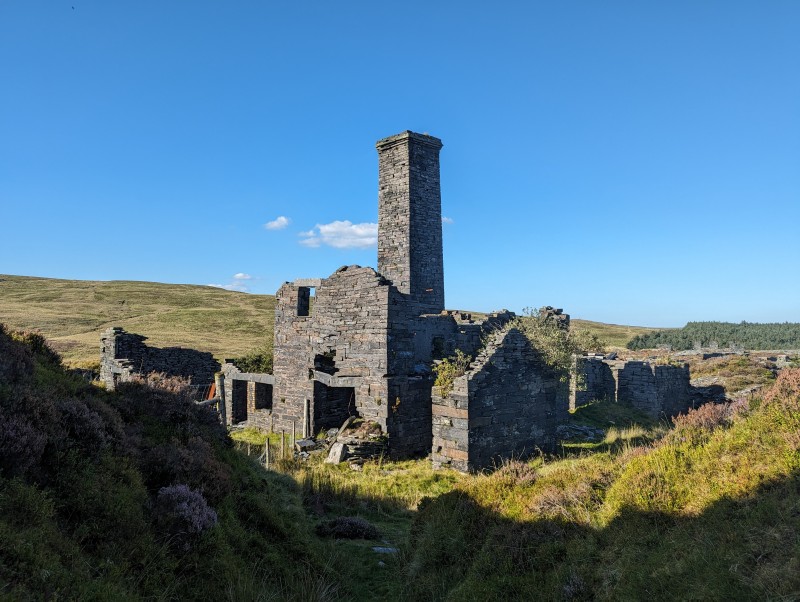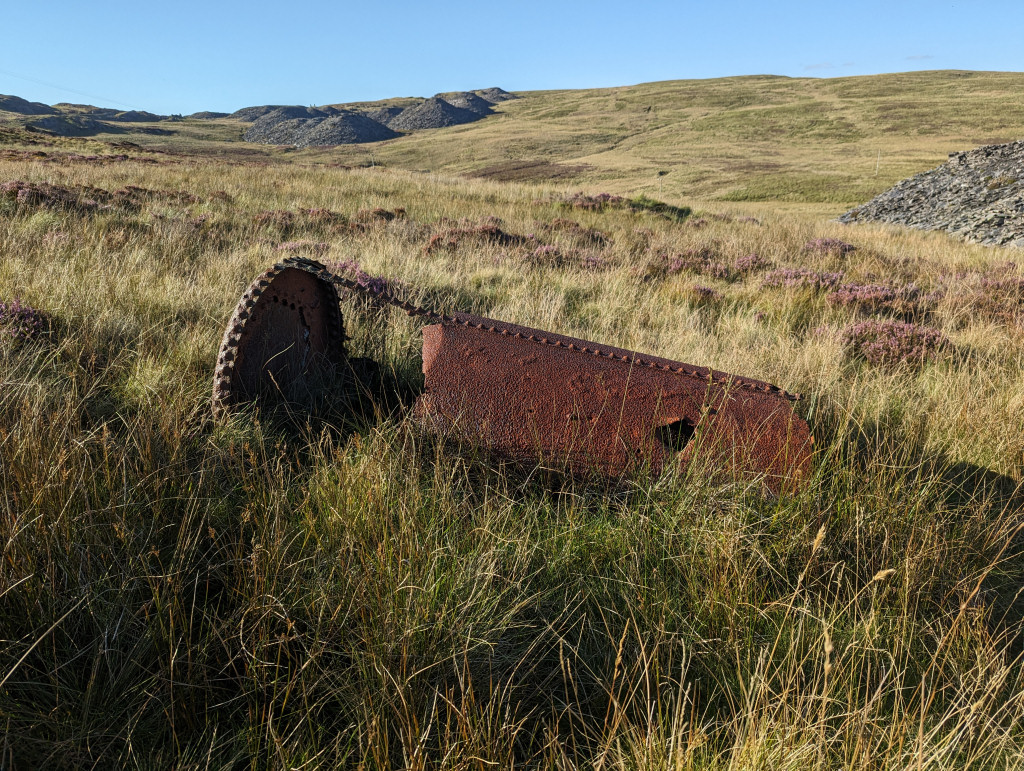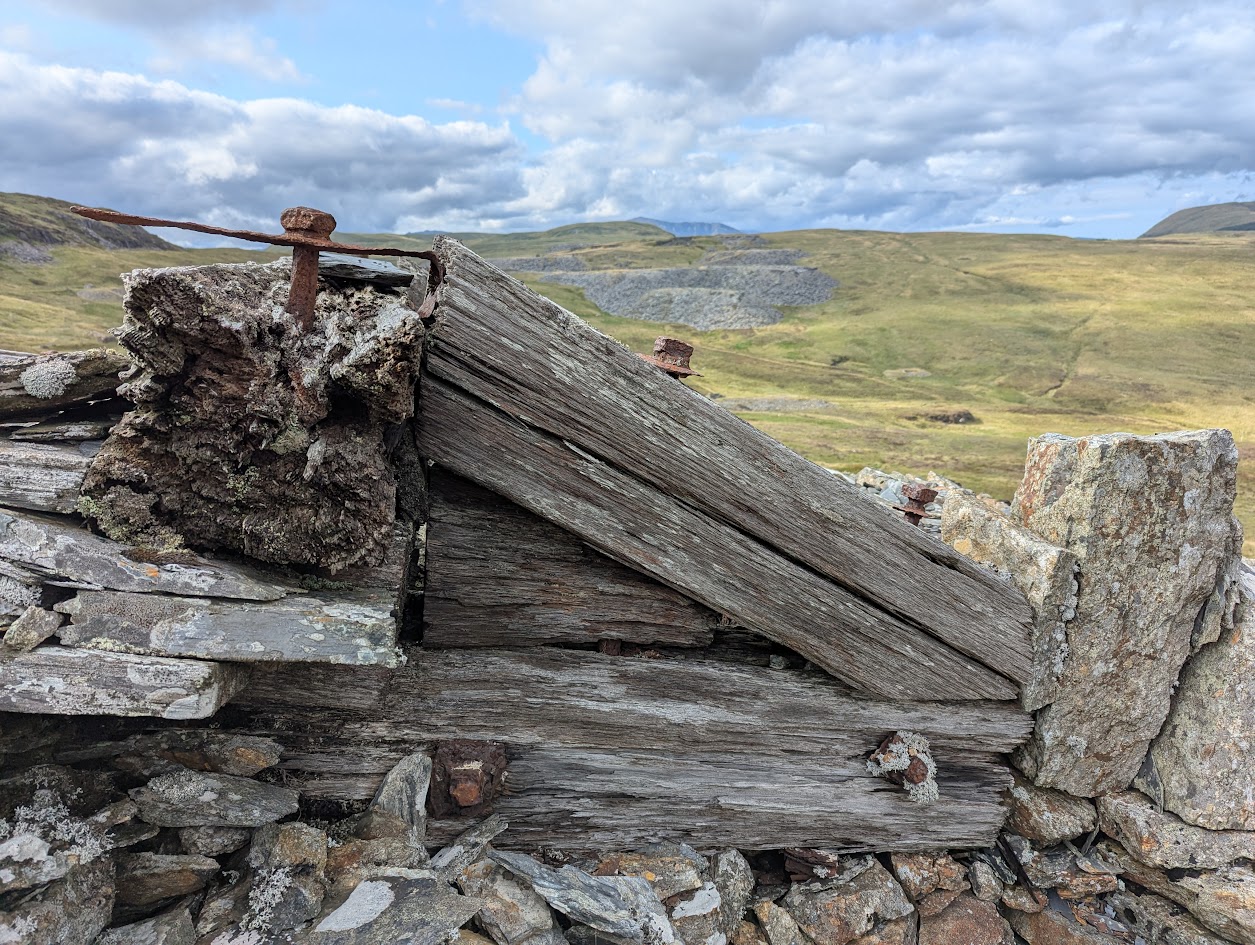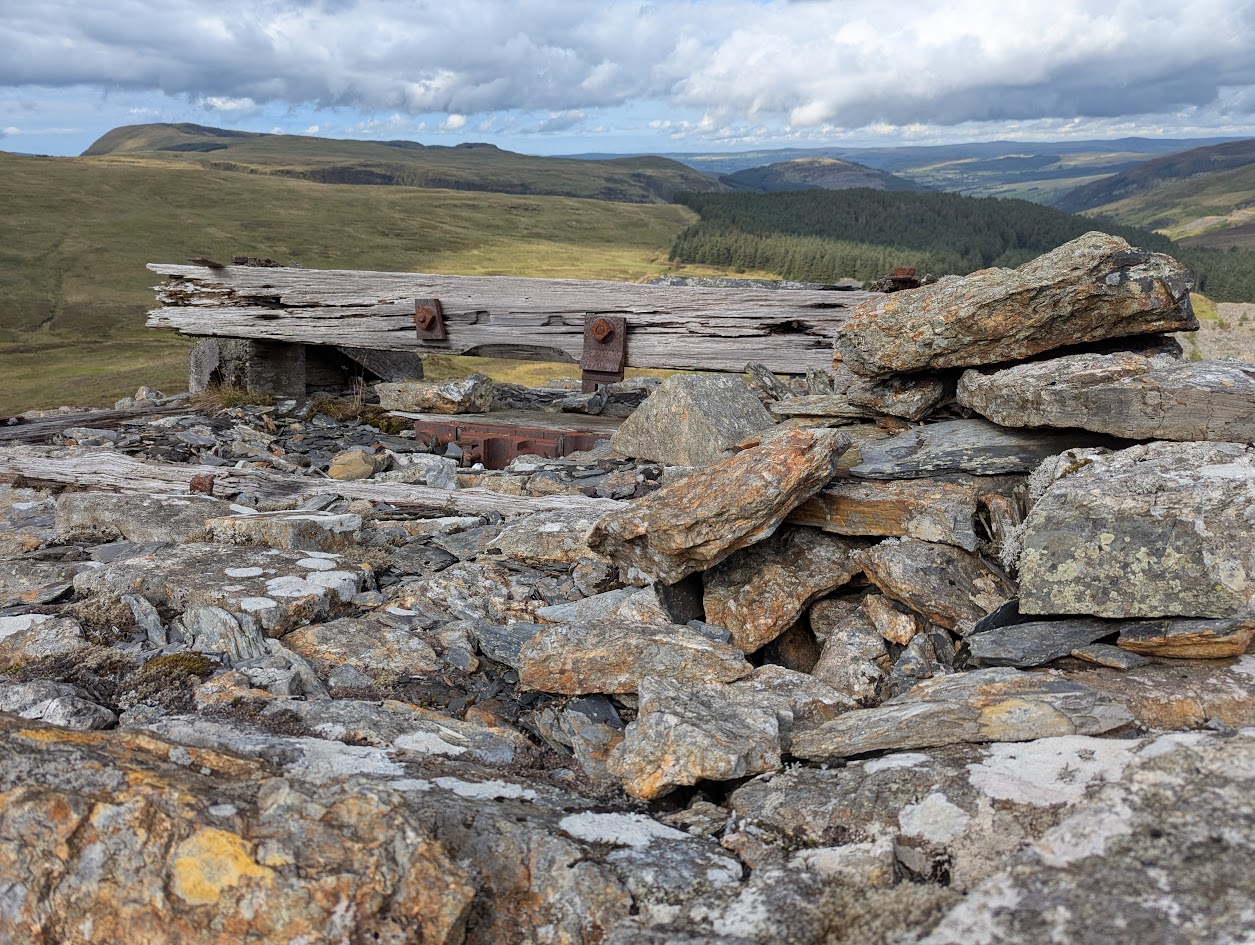



The large mill, built in three distinct sections with a separate engine room, is now partially collapsed. Wooden bases of dressing machines and dust extraction ducting remain evident on site, along with several surviving ancillary buildings including a workshop and office. An incline descending from the early workings lies behind the main mill, accompanied by a nearby powder house. A second powder house and an eating caban with fireplace survive in a half-buried condition. The remains of a long wall, known locally as a ‘gwal’, mark where slate makers sought shelter during their labour.
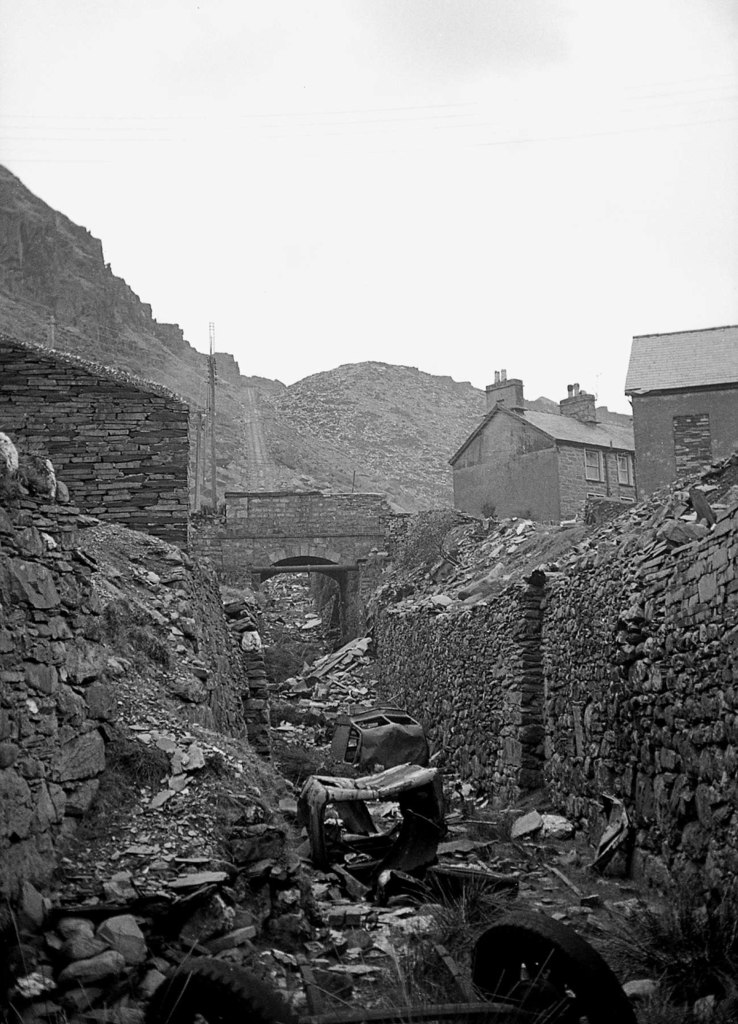
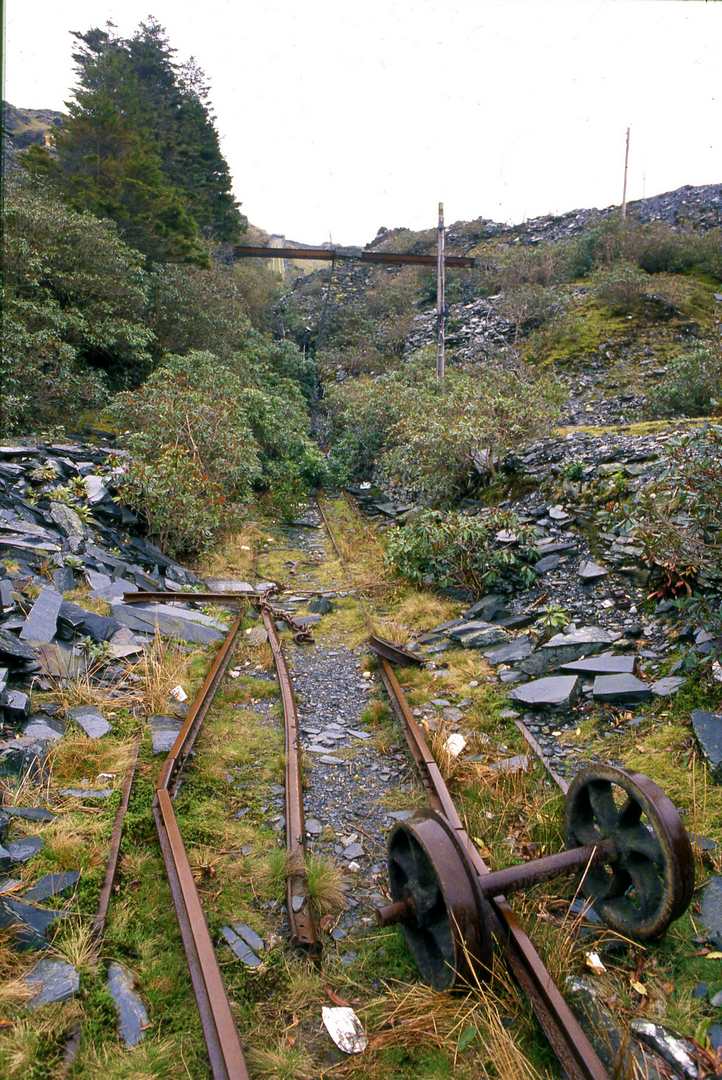
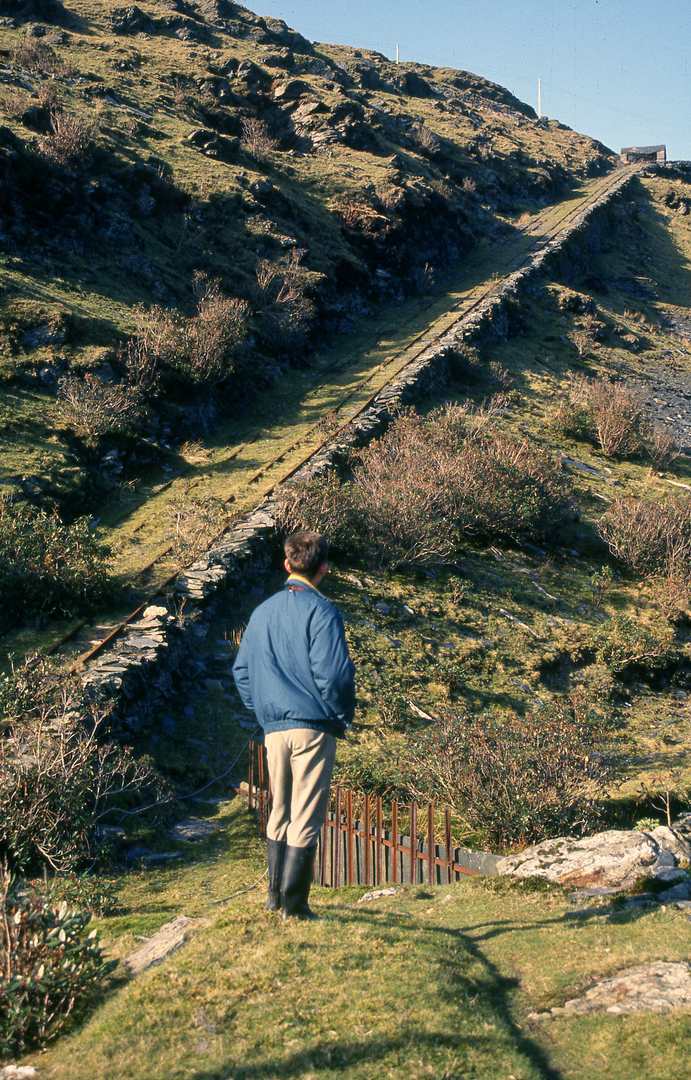
Vestiges of the water balance system persist, with the head of the incline retaining its table and balance tank. The foot of this incline displays traces suggesting a possible lower mill once operated there. Access to the main pit is gained through a cutting and curved tunnel that passes a blast shelter. The pit floor itself contains remnants of post-World War II reworking operations, including tractors, an Austin car engine, and improvised haulage equipment. Rail remains in situ on both the pit floor and within the tunnel system.
The underground chamber system remains substantially preserved. Tunnels lead northward to flooded chambers containing historical relics such as a carbide lighting generator, while southern chambers are mostly dry with the mill-level adit partially tipped but still providing some access. At the quarry’s operational peak, a traction engine, double winch, and weighbridge facilitated material movement, though these have since been removed. Two drums performed distinct functions: one hauled rubbish from the main pit to the weighbridge, while another raised block from the chambers via two pulleys, which survive in their original positions.
The connection to the Rhiwbach Tramway presented unique operational challenges. The slight adverse gradient required trucks to be pulled by a winder driven from the mill shafting, and the sheave mounting near the junction remains as evidence of this arrangement. Barracks located near the tramway junction included a rent-free dwelling for a worker whose wife provided cooking and cleaning services. An ambitious but unrealised scheme had envisioned extending the tramway branch to Cwm Machno via an additional water-balanced incline, a project that was ultimately never completed.
Dates from the early 19th century and expanded substantially following its connection to the Rhiwbach Tramway in the 1860s. At its peak, the operation produced over 3,000 tons annually and employed well over 100 men, many of whom resided in on-site barracks. The mill underwent progressive extension to accommodate 20 saws and 20 dressers as production demands increased.
The extraction and transportation systems evolved considerably as the quarry deepened. Early workings operated at a high level with inclines conveying material down to the mill. As underground expansion continued, slate was brought out via tunnel and short incline, then transported by tunnel at mill level. The deepest workings employed a water balance system to access the mill, though subsequent operations utilised a ropeway for raising material to the surface. The mill was initially powered by steam before conversion to an oil engine. Despite its former scale, the quarry operated on a reduced basis until the 1960s.
Access Agreement between CAL and NRW/WG was terminated in 2022. Documentation for this lapsed agreement available here
https://buddlepit.co.uk/mine-explorer/Library/Library.html?doc=20965
External Links
Publications (16)
- (1981); WMS Newsletter Issue 04 Dec; 3 pages
- (1993); WMS Newsletter Issue 28 Jun; 8 pages
- (2001); WMS Newsletter Issue 45 Dec; 14 pages
- (2014); CATMHS - Newsletter 117-November; 32 pages
- (2018); CATMHS - Newsletter 131-May; 59 pages
- (2018); CATMHS - Newsletter 133-November; 43 pages
- Gwyn, David, (2015); Welsh Slate: archaeology and history of an industry; Royal Commission on the Ancient and Historical Monuments of Wales; 9781871184518
- Lindsay, Jean (1974); History of the North Wales Slate Industry; David & Charles; pp.329; ISBN 0-71536-264-X
- NMRS; Newsletter Dec/2001; p.9
- NMRS; Newsletter Feb/1986; p.8
- NMRS; Newsletter Nov/1988; p. 6.
- NMRS; Newsletter Sep/1988; p.9.
- Richards, Alun J. (2013); Slate Quarrying in Wales; Gwasg Carreg Gwalch; ISBN 1-84527-026-6
- Richards, Alun John (1991); Gazeteer of the Welsh Slate Industry, A; Gwasg Carreg Gwalch 978-0863811968
- Richards, Alun John, (1999); The Slate Regions of North and Mid Wales and their Railways; Gwasg Carreg Gwalch; 0863815988
- Richards, Alun John, (2002); Fragments of Mine & Mill in Wales; pp.45, 104 ; Gwasg Carreg Gwalch; 0863818129