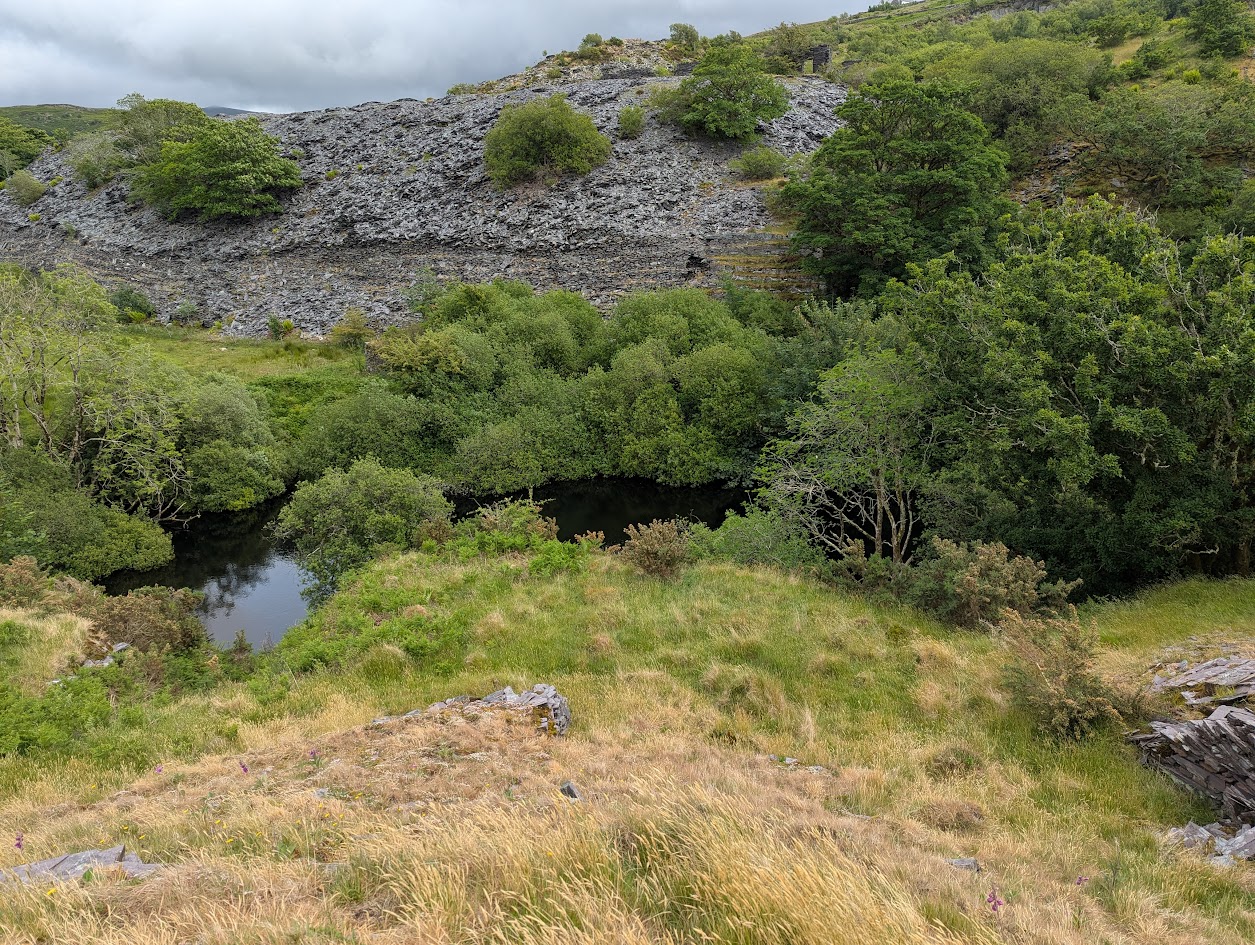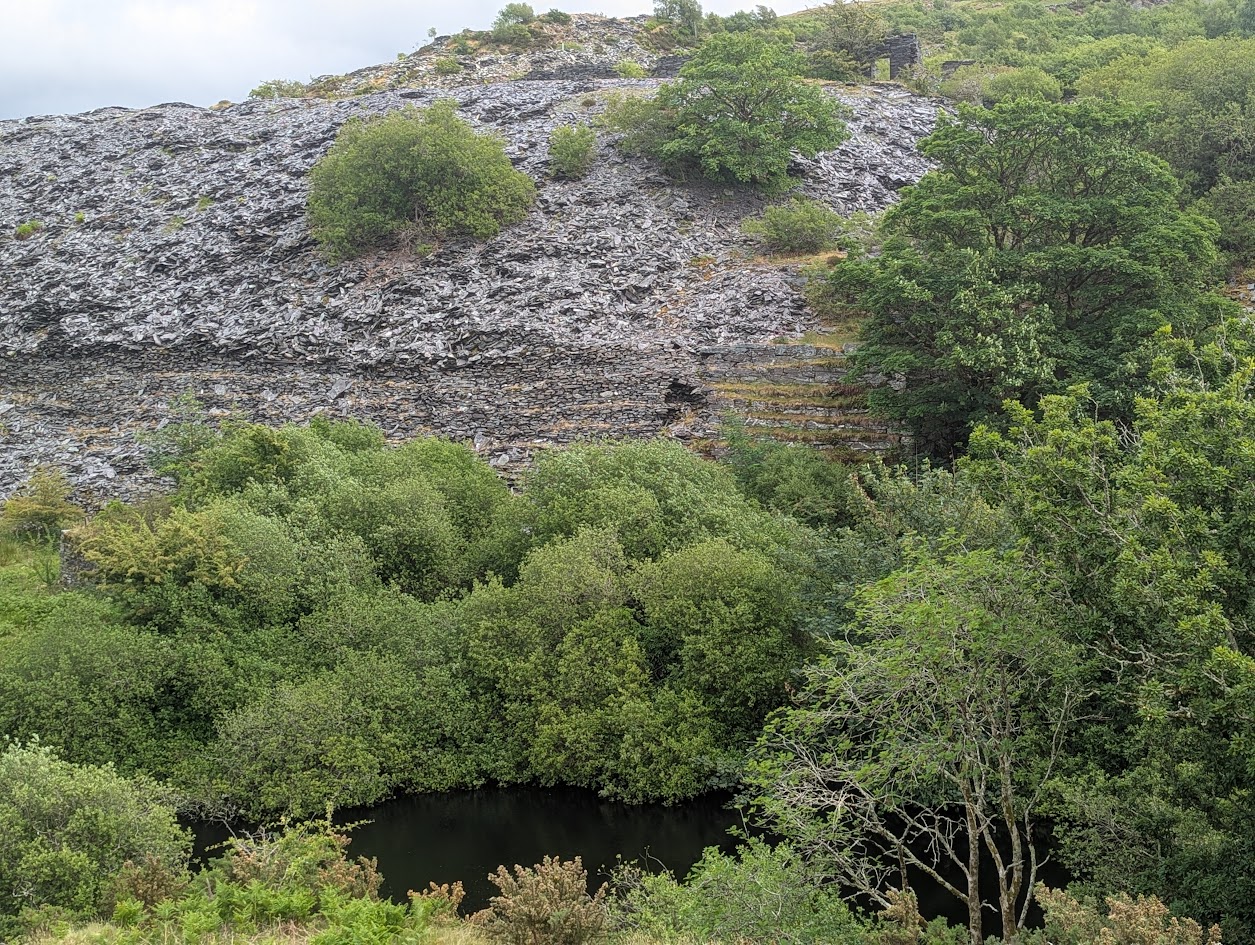



3 pits worked by water power.**
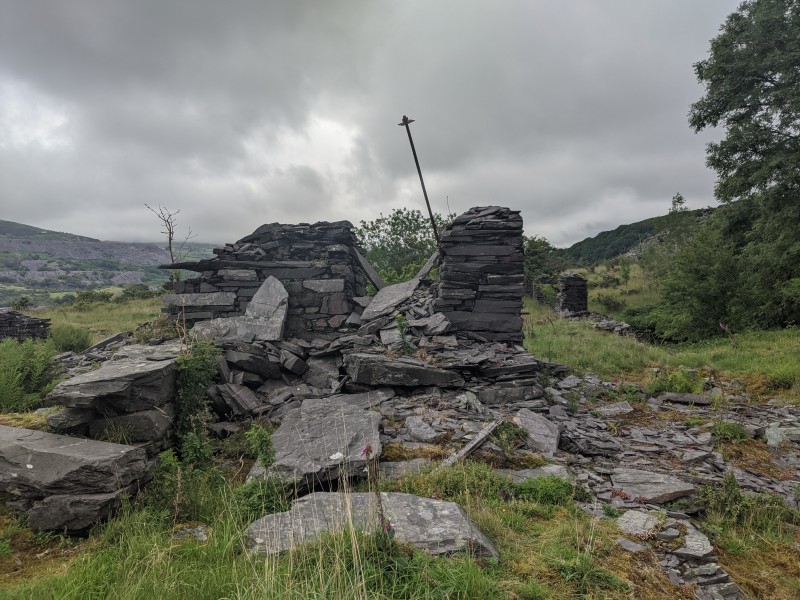
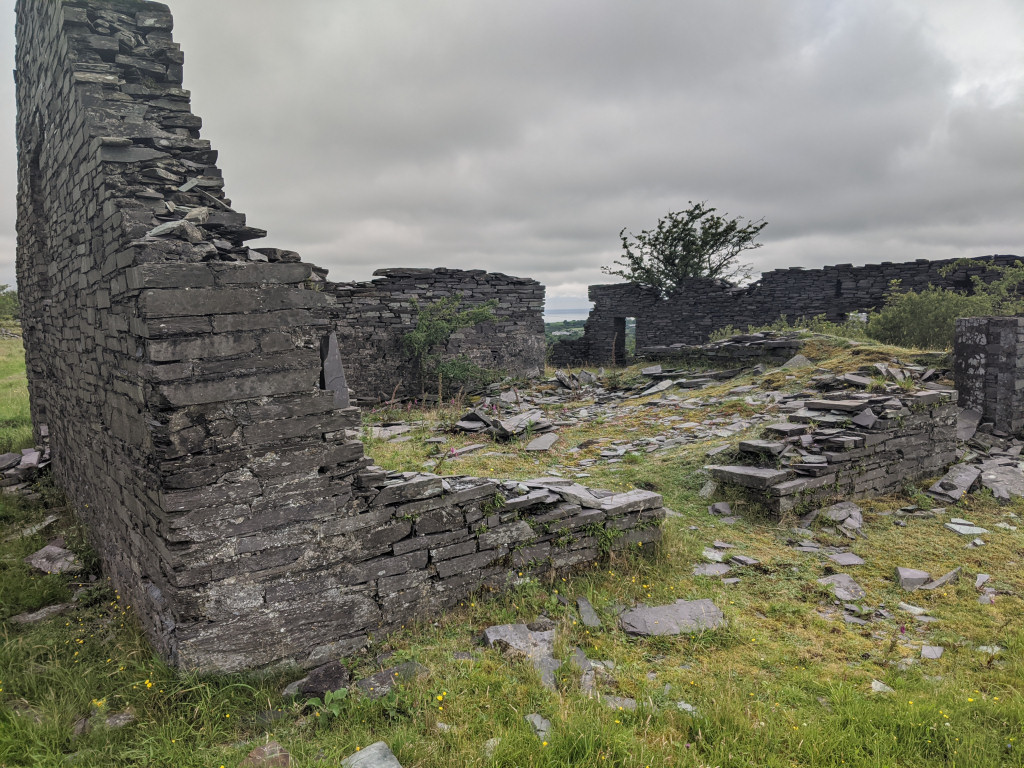
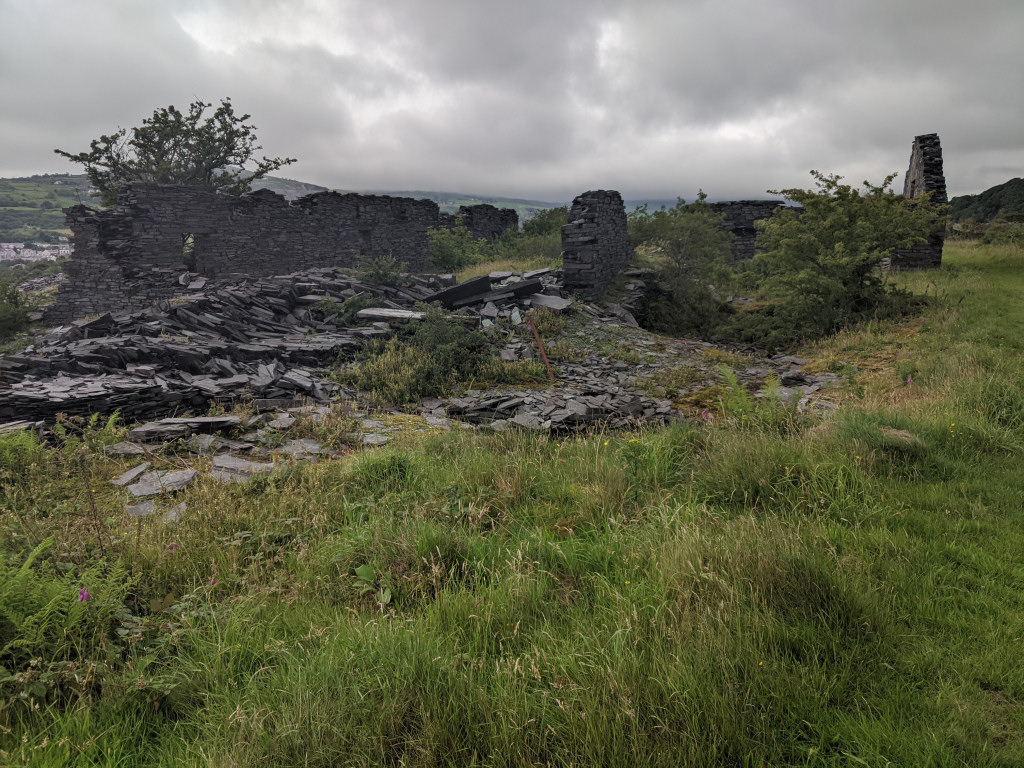
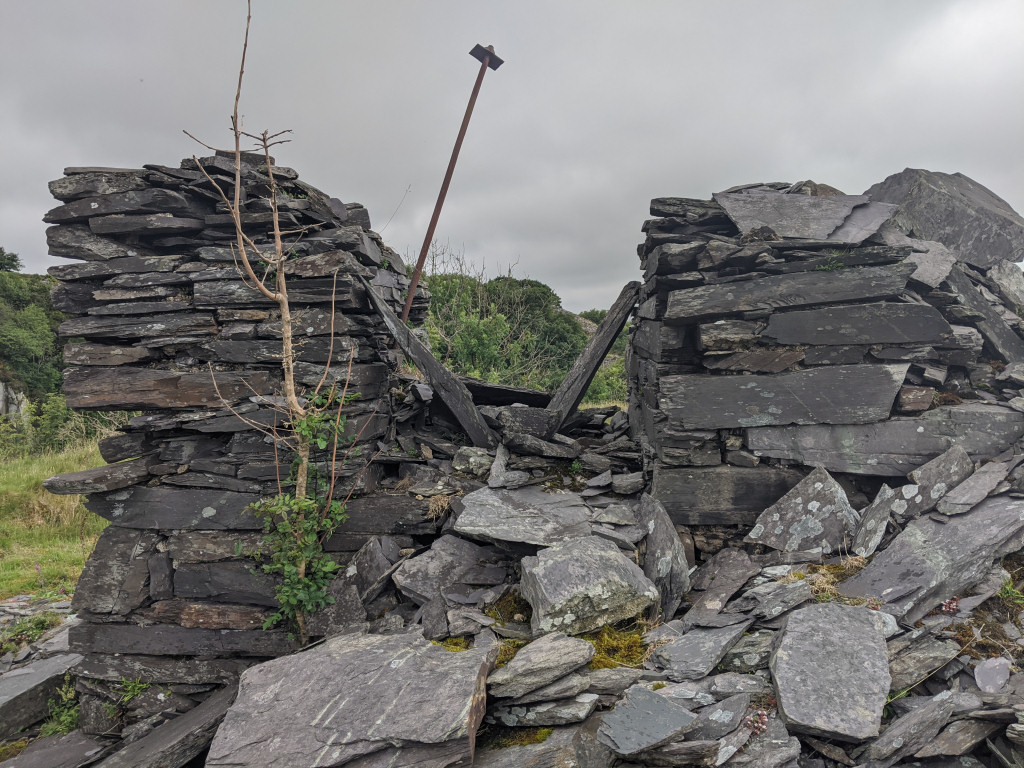
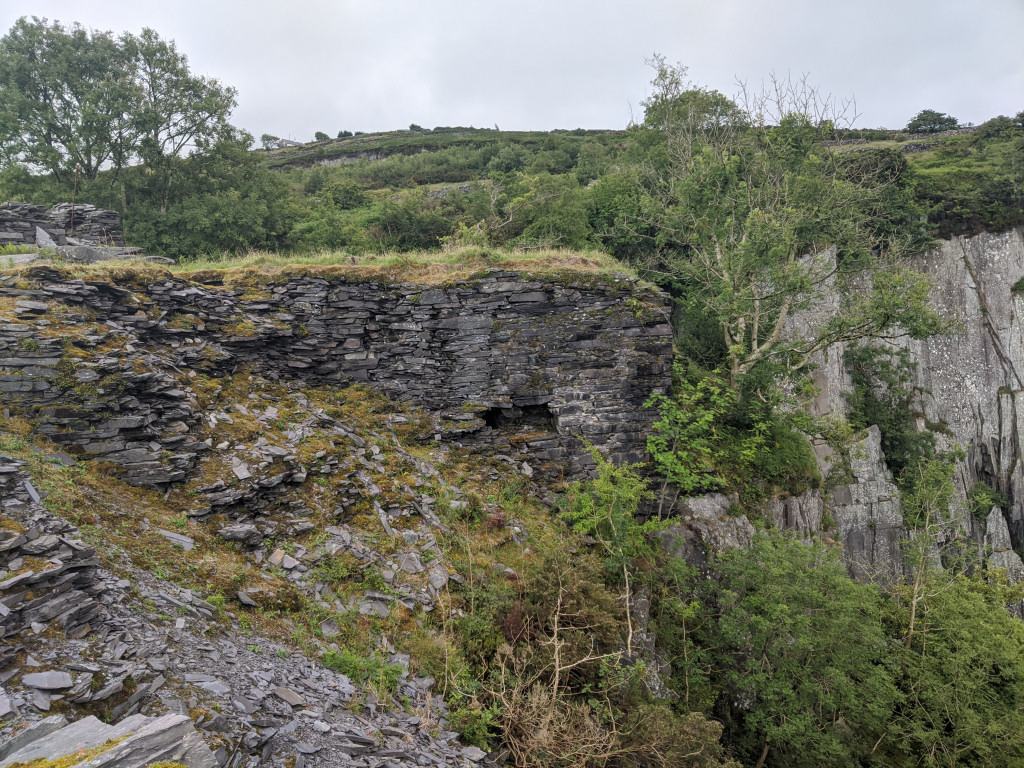
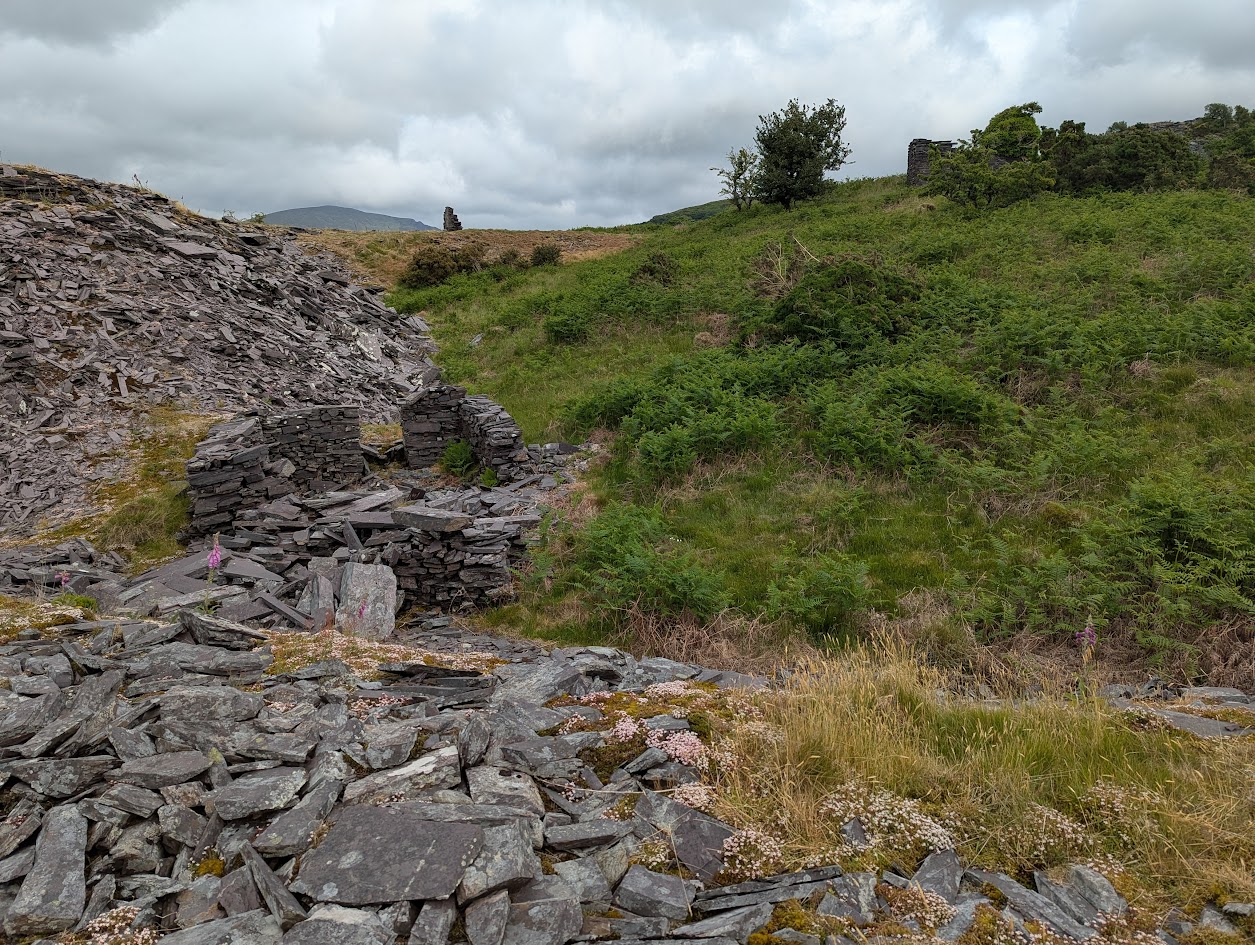
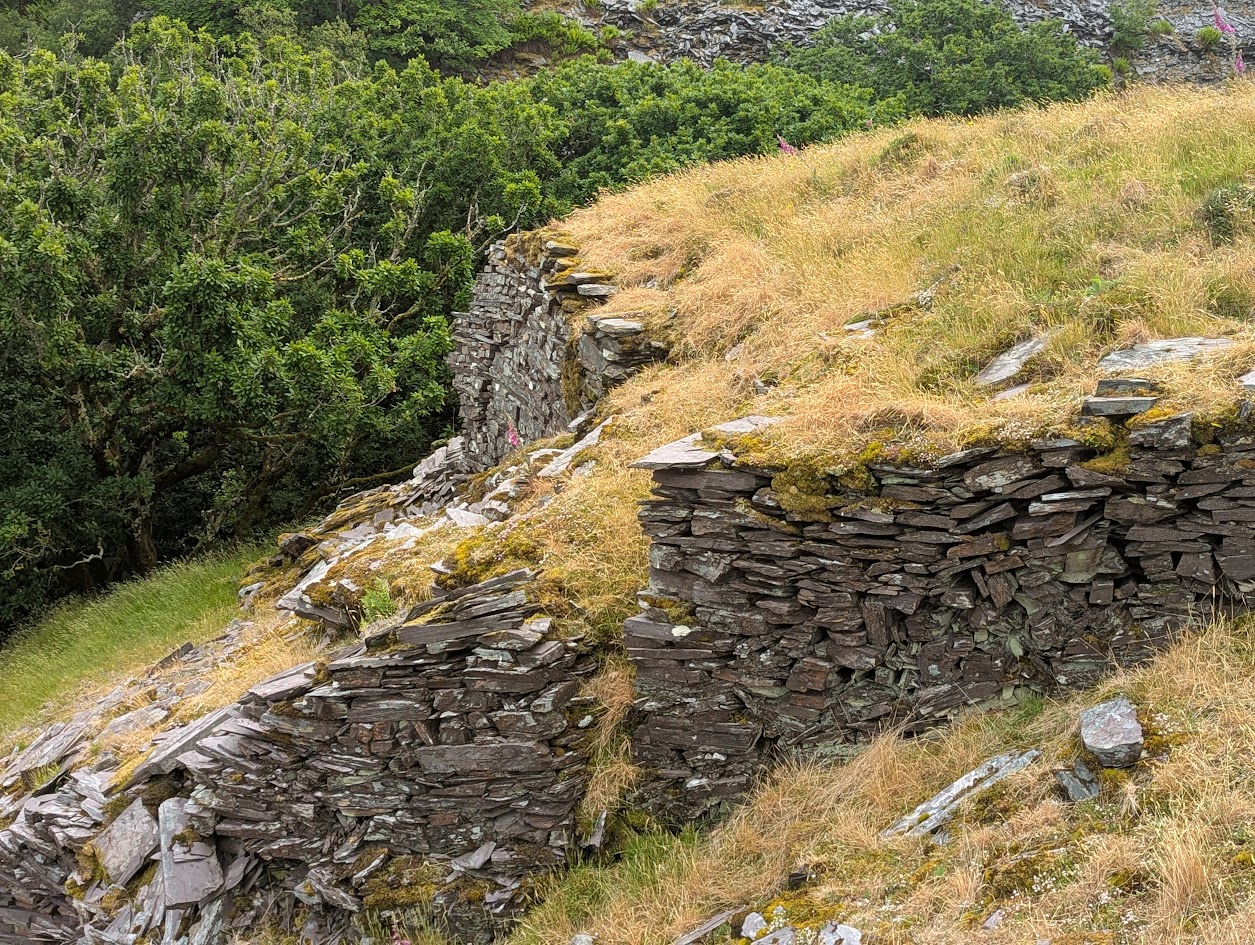
Several stone buildings survive on the site, most notably the mill and a manager’s house. Stone-built inclines remain clearly visible, with one partly cut into the ground to ease its gradient. The lower incline incorporates a tunnel carrying a watercourse, fed by a stone-covered leat that once supplied power to the mill machinery. Scattered across the site are various structural features, including stone pillars that possibly once supported wooden launders for water distribution, and large stone blocks that may have served as anchorages for the chain-incline systems that hauled slate and waste between the different working levels.
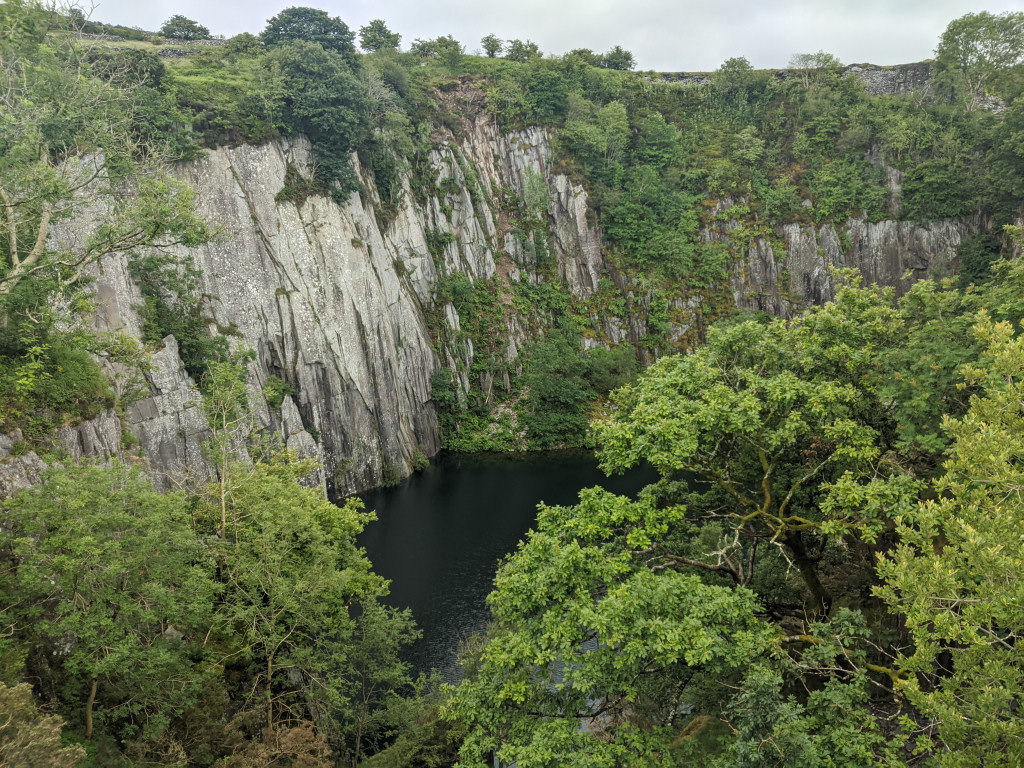
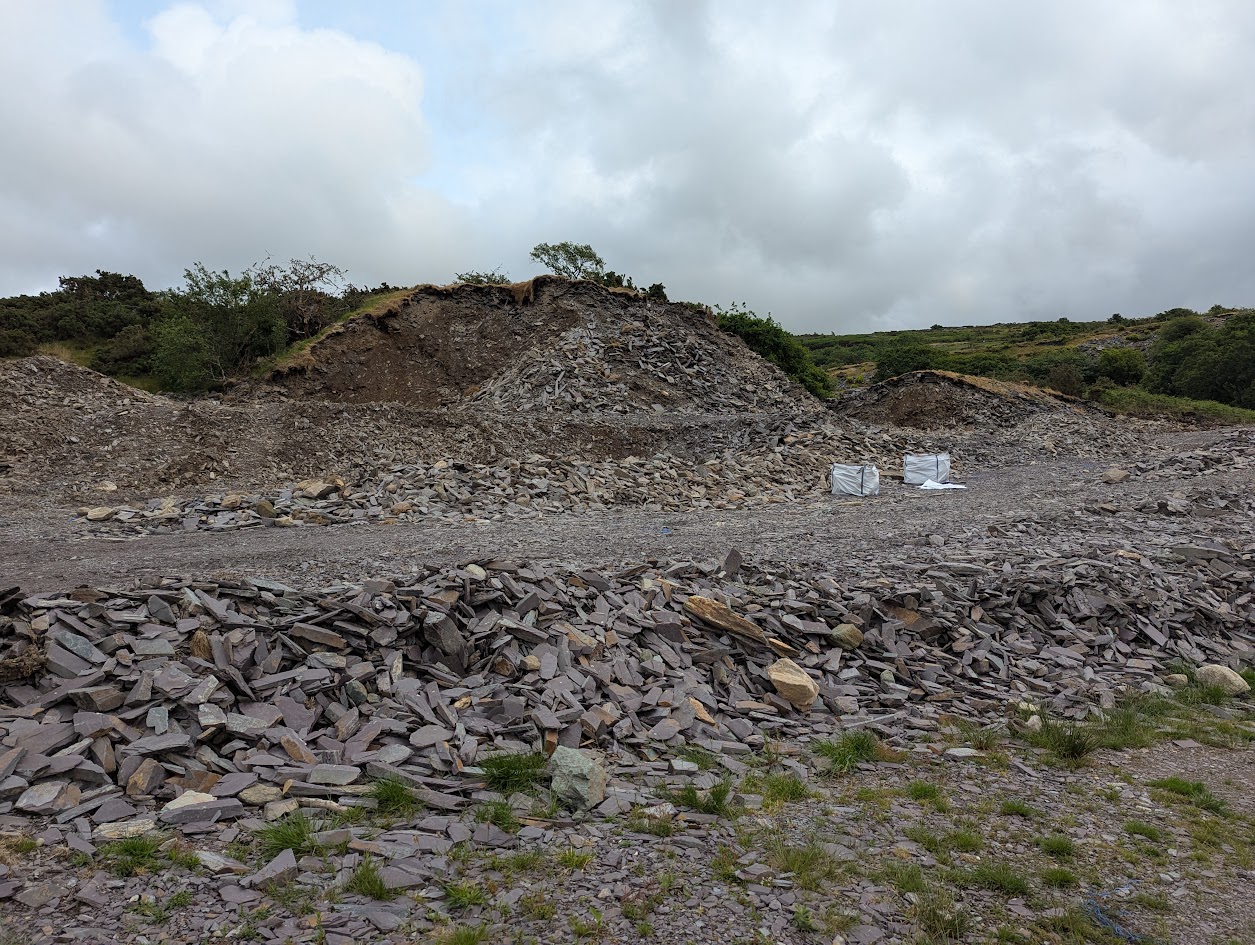
Began working around 1840, initially comprising two adjacent pits. Early haulage was likely powered by a waterwheel, with gravity inclines feeding material down to a water-driven mill situated below the workings. A third pit was subsequently opened below mill level, probably operated by a double-acting water balance that exploited the elevation difference. Production proved intermittent throughout the quarry’s life, but in favourable years output could reach up to 2,000 tons—in 1882, for instance, 1,682 tons were produced by a workforce of around 90 men. The quarry gained a connection to the Caernarvonshire Slate Quarries Railway and was worked jointly with neighbouring Fronlog. Operations formally ceased in 1939, though minor exploratory working took place in the 1970s to obtain samples of the distinctive green slate for which the quarry was known.
Publications (4)
- (2002); WMS Newsletter Issue 47 Oct; 28 pages
- Richards, Alun J. (2013); Slate Quarrying in Wales; Gwasg Carreg Gwalch; ISBN 1-84527-026-6
- Richards, Alun John (1991); Gazeteer of the Welsh Slate Industry, A; Gwasg Carreg Gwalch 978-0863811968
- Richards, Alun John, (1999); The Slate Regions of North and Mid Wales and their Railways; Gwasg Carreg Gwalch; 0863815915