



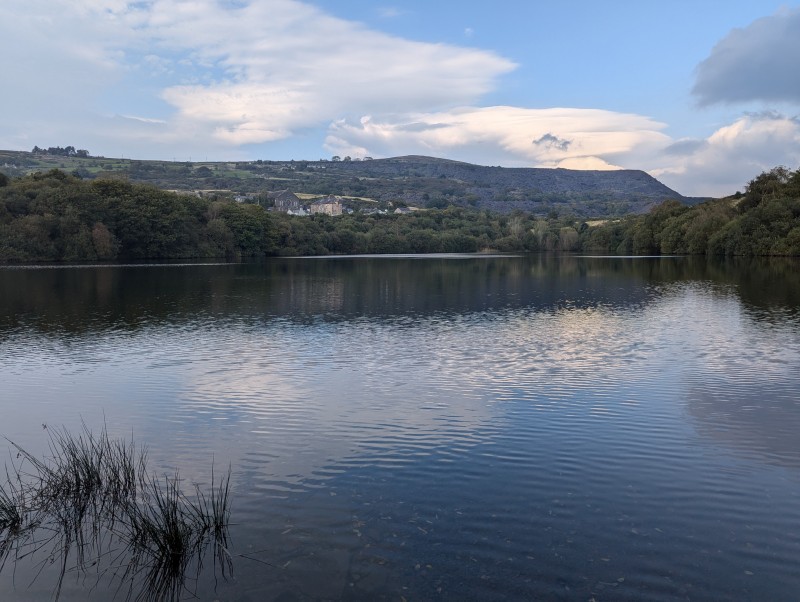
Landscaped, only a lake remains.
This pit quarry was in operation from the early nineteenth century onwards. By 1883, it had grown to employ one hundred and thirty-five workers and achieved an annual output of 2,879 tons. An internal tramway system utilized three de Winton locomotives, while chain inclines moved material within the workings. Initially, the quarry accessed the Nantlle Railway by way of the adjacent Cloddfa’r Coed quarry, but it later secured its own branch line from the London and North Western Railway—a distinction that made it the only quarry in the district to enjoy such a direct rail connection. Operations came to an end in 1908.
Publications (5)
- Gwyn, David, (2015); Welsh Slate: archaeology and history of an industry; Royal Commission on the Ancient and Historical Monuments of Wales; 9781871184518
- Lindsay, Jean (1974); History of the North Wales Slate Industry; David & Charles; pp.314; ISBN 0-71536-264-X
- Richards, Alun J. (2013); Slate Quarrying in Wales; Gwasg Carreg Gwalch; ISBN 1-84527-026-6
- Richards, Alun John (1991); Gazeteer of the Welsh Slate Industry, A; Gwasg Carreg Gwalch 978-0863811968
- Richards, Alun John, (1999); The Slate Regions of North and Mid Wales and their Railways; Gwasg Carreg Gwalch; 0863815673

