


Material taken by tunnel to mills then to Bryngwyn Tramway.
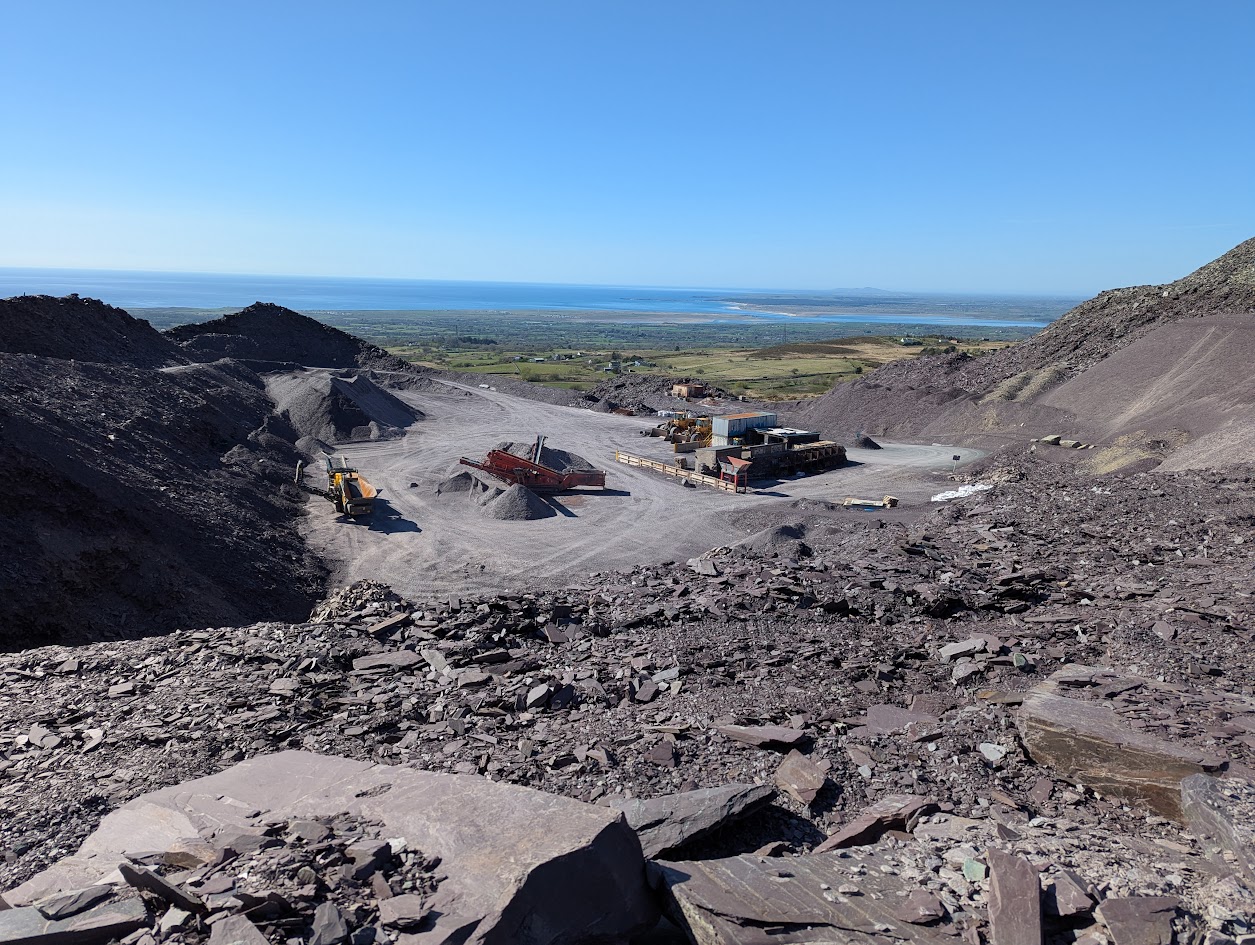
Much has been destroyed by recent re-working, the mill area flattened, now being a rifle range.
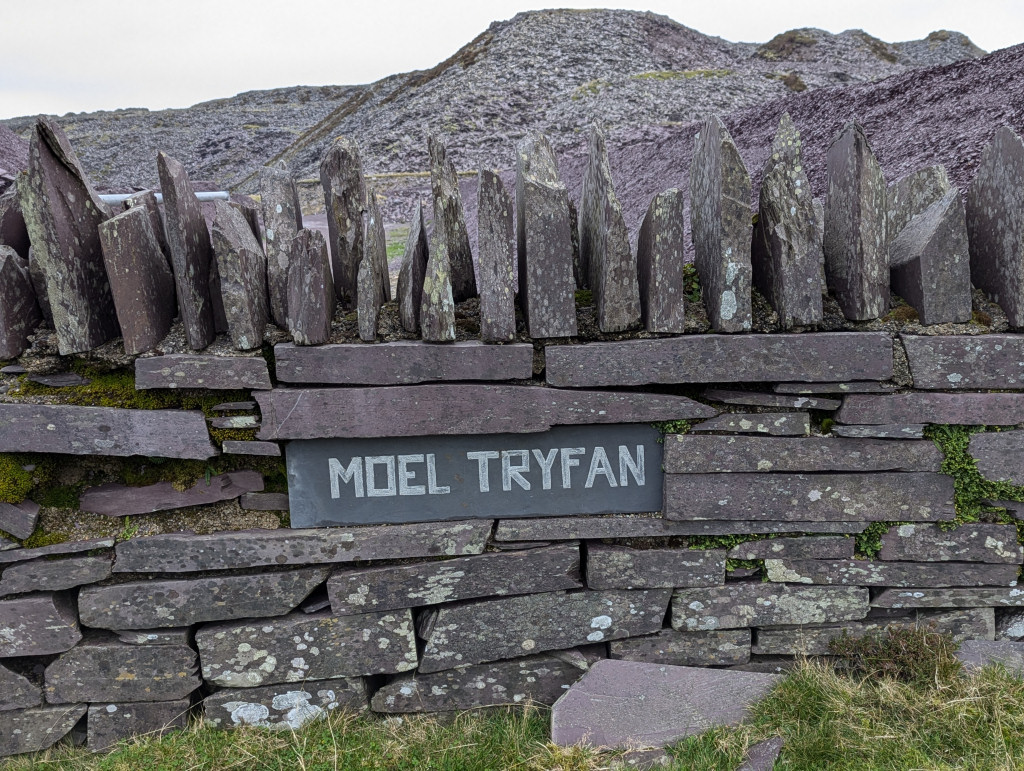
The Moel Tryfan Quarry was already in operation by 1830. By 1867, it had changed hands several times, and in 1879 became the Moel Tryfan Slate & Slab Co. Ltd, which continued until 1918, when it joined the Amalgamated Slate Association, and later (1932) became part of Caernarvonshire Crown Slate Quarries Ltd. It was a relatively small site initially, but thanks to its connection with the North Wales Narrow Gauge Railway (NWNGR), it expanded rapidly in the 1880s—contrary to the general trend in other quarries—employing over 200 men at its peak. Slate was worked underground and conveyed by tunnel to the mills area, while finished products were lowered down a long incline to the Bryngwyn drumhead for transport. Following amalgamation with Alexandra Quarry, output in the Moel Tryfan mills was reduced. Working was intermittent over the years: before 1914, from 1918–1929, 1933–1939, in the 1940s, and from 1959 onwards, surviving into the 1970s. In the late 1800s, the quarry employed over 80 men and produced nearly 1,900 tons of slate in 1882. Its operations included narrow-gauge locomotives such as De Winton geared engines and Hunslet 0‑4‑0STs, before switching to lorry haulage in the mid‑20th century.
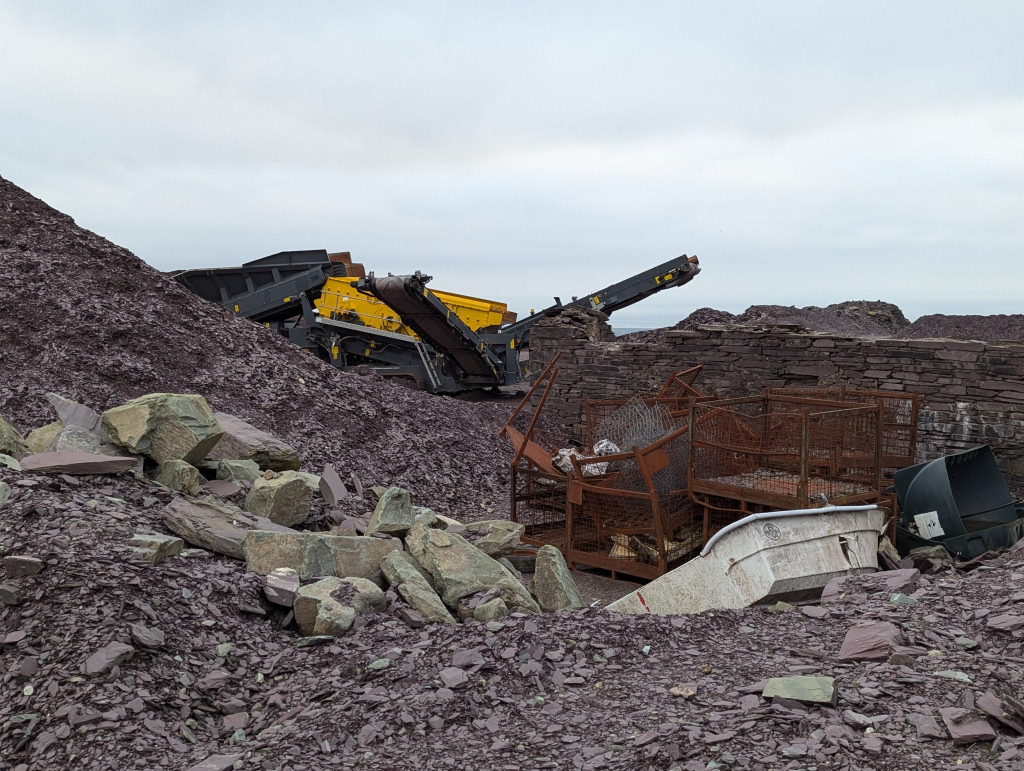
In 2025 it was processing the tips as bulk material.
Publications (6)
- Gwyn, David, (2015); Welsh Slate: archaeology and history of an industry; Royal Commission on the Ancient and Historical Monuments of Wales; 9781871184518
- Jones, Gwynfor P., Richards, Alun J. (2004); Cwm Gwyrfai; pp.282-293; Gwasg Carreg Gwalch ISBN 0-86381-897-8
- Lindsay, Jean (1974); History of the North Wales Slate Industry; David & Charles; pp.325-326; ISBN 0-71536-264-X
- Richards, Alun J. (2013); Slate Quarrying in Wales; Gwasg Carreg Gwalch; ISBN 1-84527-026-6
- Richards, Alun John (1991); Gazeteer of the Welsh Slate Industry, A; Gwasg Carreg Gwalch 978-0863811968
- Richards, Alun John, (1999); The Slate Regions of North and Mid Wales and their Railways; Gwasg Carreg Gwalch; 0863815895