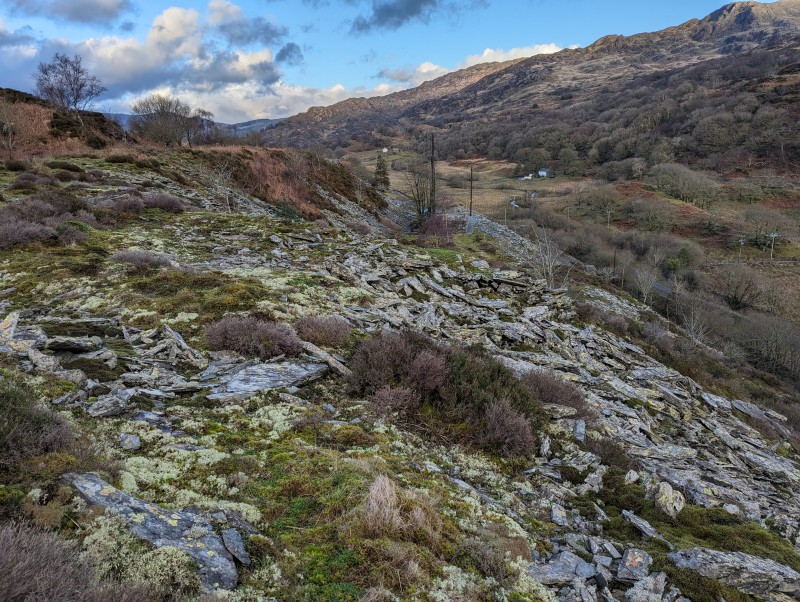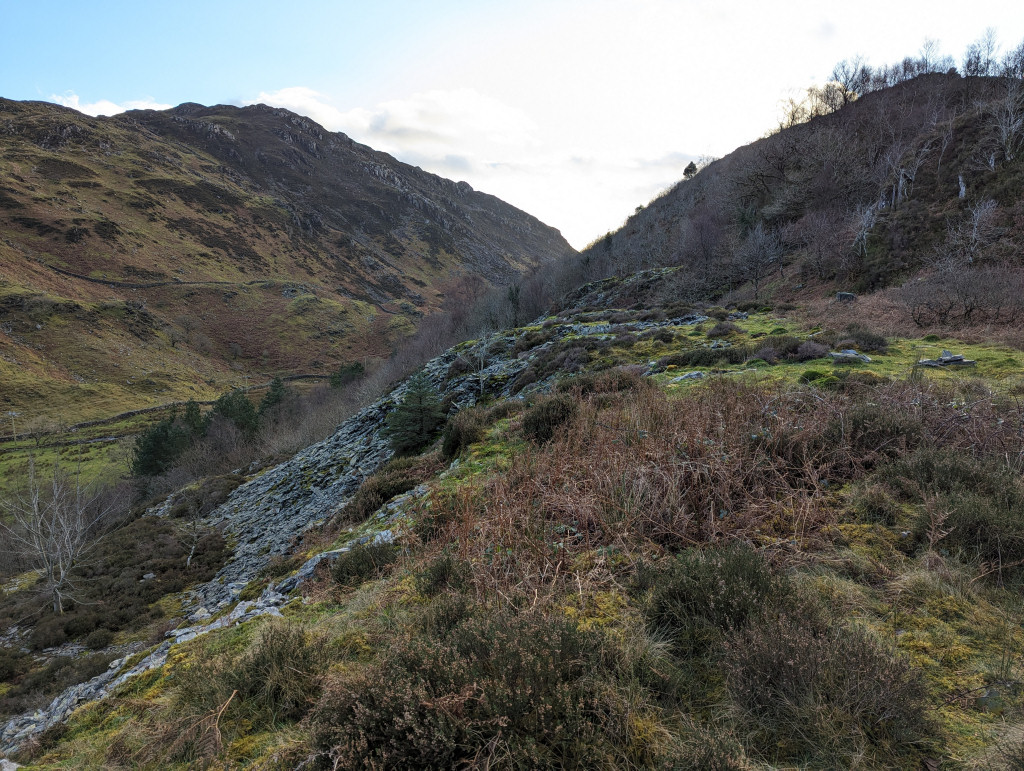



Open pit.
The working was served by a gravity incline leading to a water-powered mill. A substantial stone-built incline ramp is a notable feature, an uncommon element in a pit quarry since such a fixed structure would typically restrict later extraction. Its construction suggests an expectation that future workings would progress on the opposite side of the pit. The incline formation continues down to the mill site, which once featured a central wheel pit. The original power source for internal lifting is uncertain, though a hand-cranked windlass is plausible.
The incline ramp survives as an impressive stone structure. The mill was formerly a fine and well-built complex, but due to its proximity to the public road, both the mill and the wall-retained tip were cleared and landscaped during the 1990s
Typically worked in conjunction with Berthlwyd. Active around 1870, producing roughly 200 tons per year. Manning estimates vary from 30 men, possibly including part-time labour, to a more plausible 12. Output may have been dispatched via the Croesor Tramway siding at Pont Hyldrem.
Publications (5)
- (1990); WMS Newsletter Issue 22 Jun; 8 pages
- Jones, Gwynfor P., Richards, Alun J. (2004); Cwm Gwyrfai; pp.214-216; Gwasg Carreg Gwalch ISBN 0-86381-897-8
- Richards, Alun J. (2013); Slate Quarrying in Wales; Gwasg Carreg Gwalch; ISBN 1-84527-026-6
- Richards, Alun John (1991); Gazeteer of the Welsh Slate Industry, A; Gwasg Carreg Gwalch 978-0863811968
- Richards, Alun John, (1999); The Slate Regions of North and Mid Wales and their Railways; Gwasg Carreg Gwalch; 0863815812