


*Confusingly called Cwt y Bugail by Mc Alpine. Breedon Group (trading as Welsh Slate) continue to use this name. Extraction license renewed up to 2048.
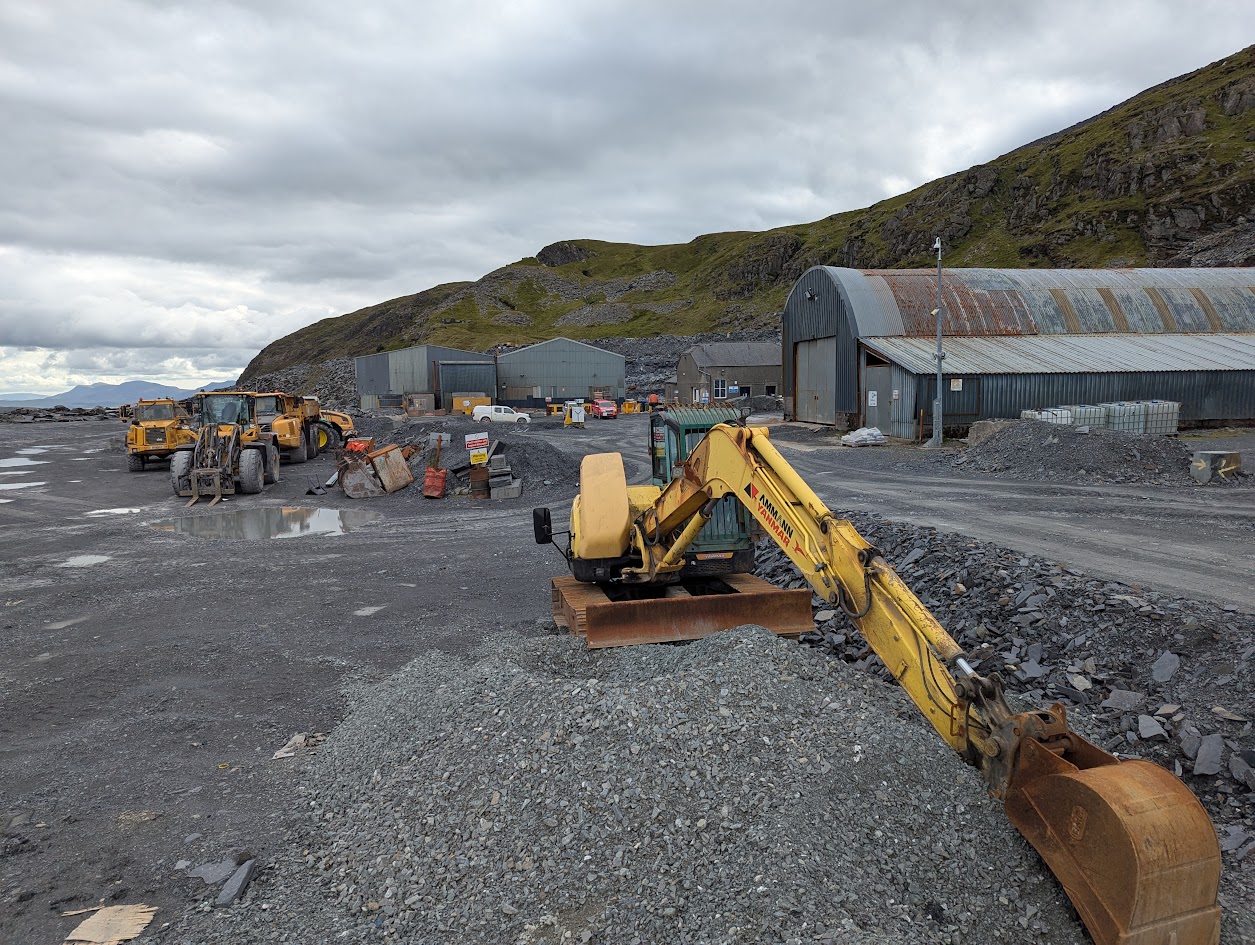
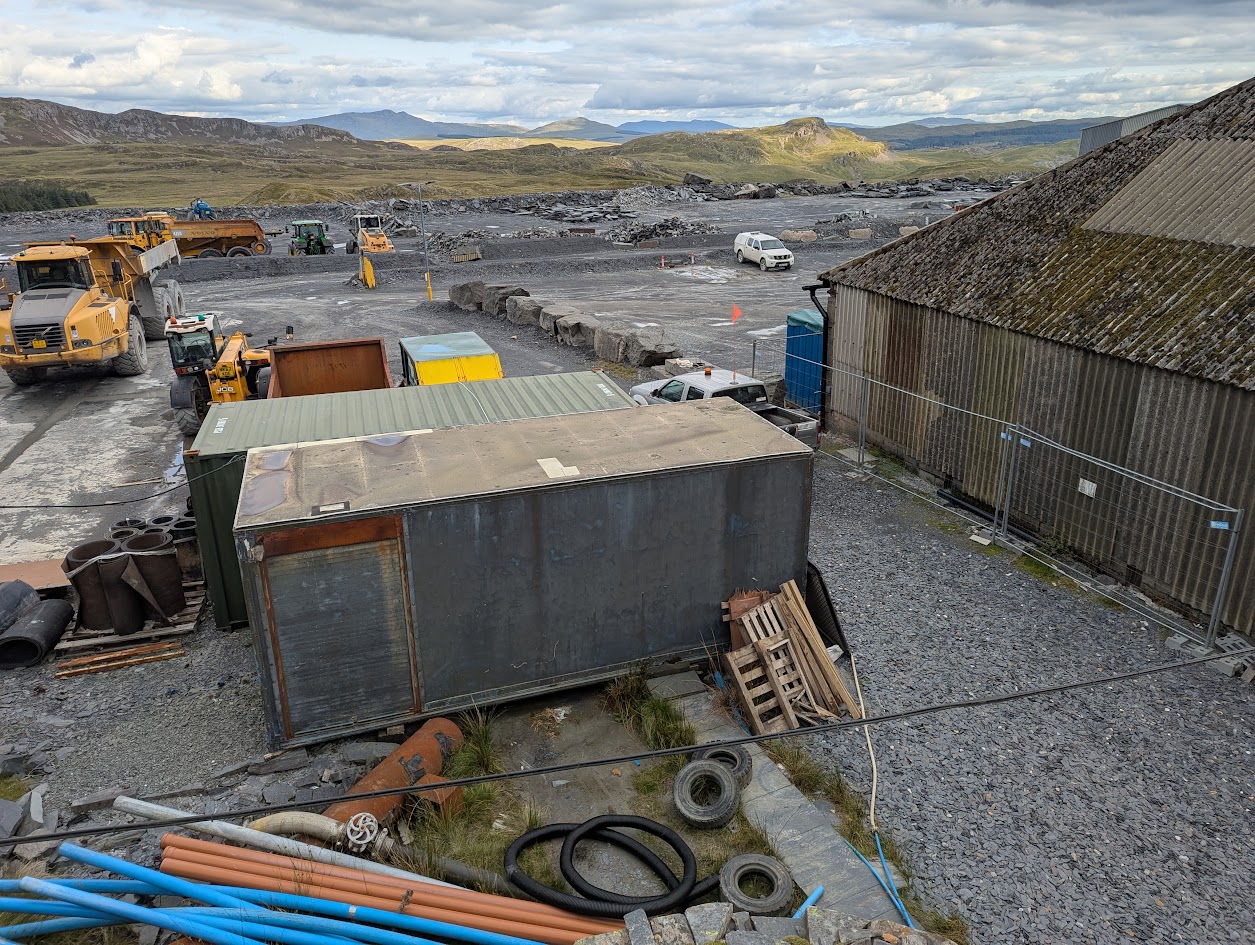
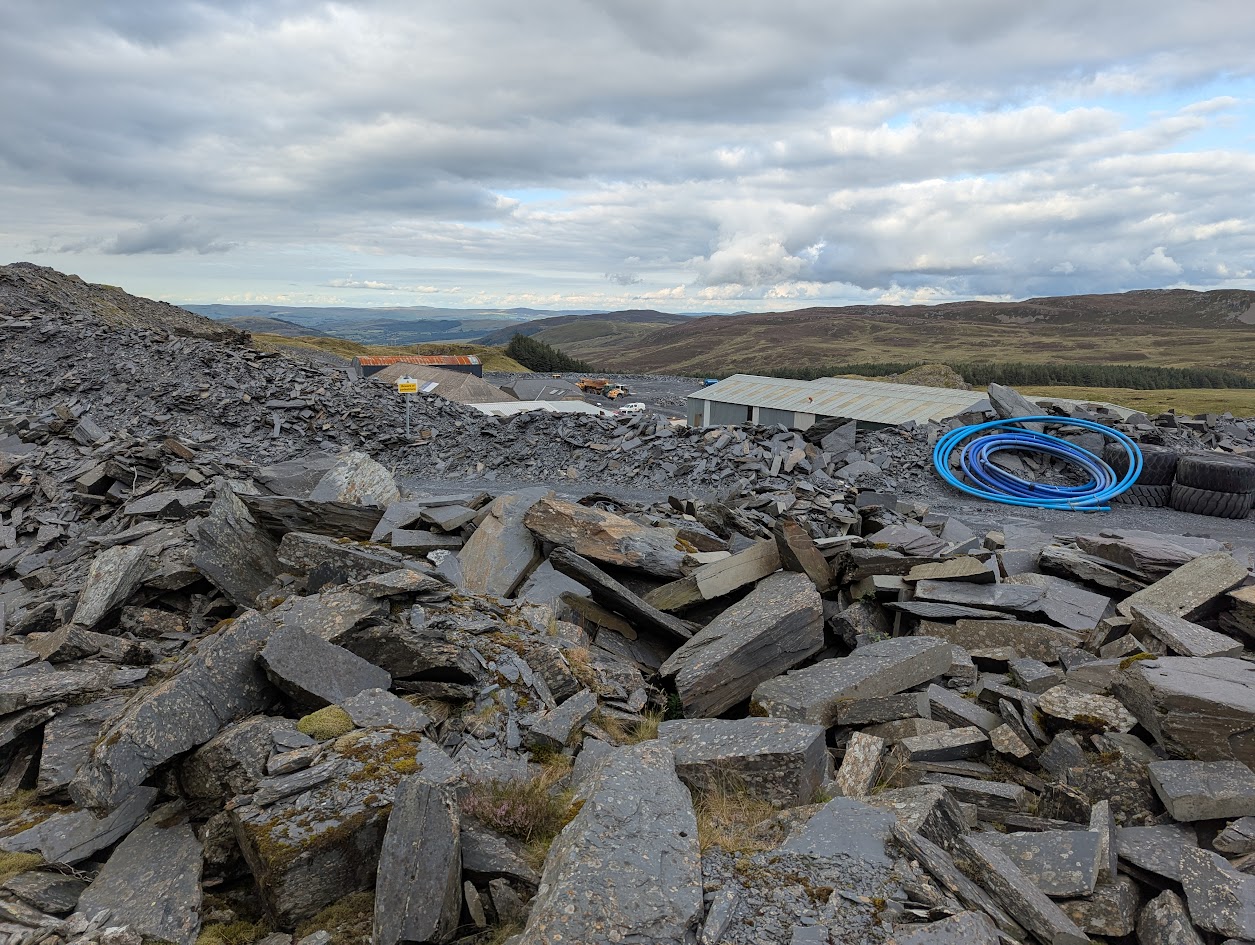
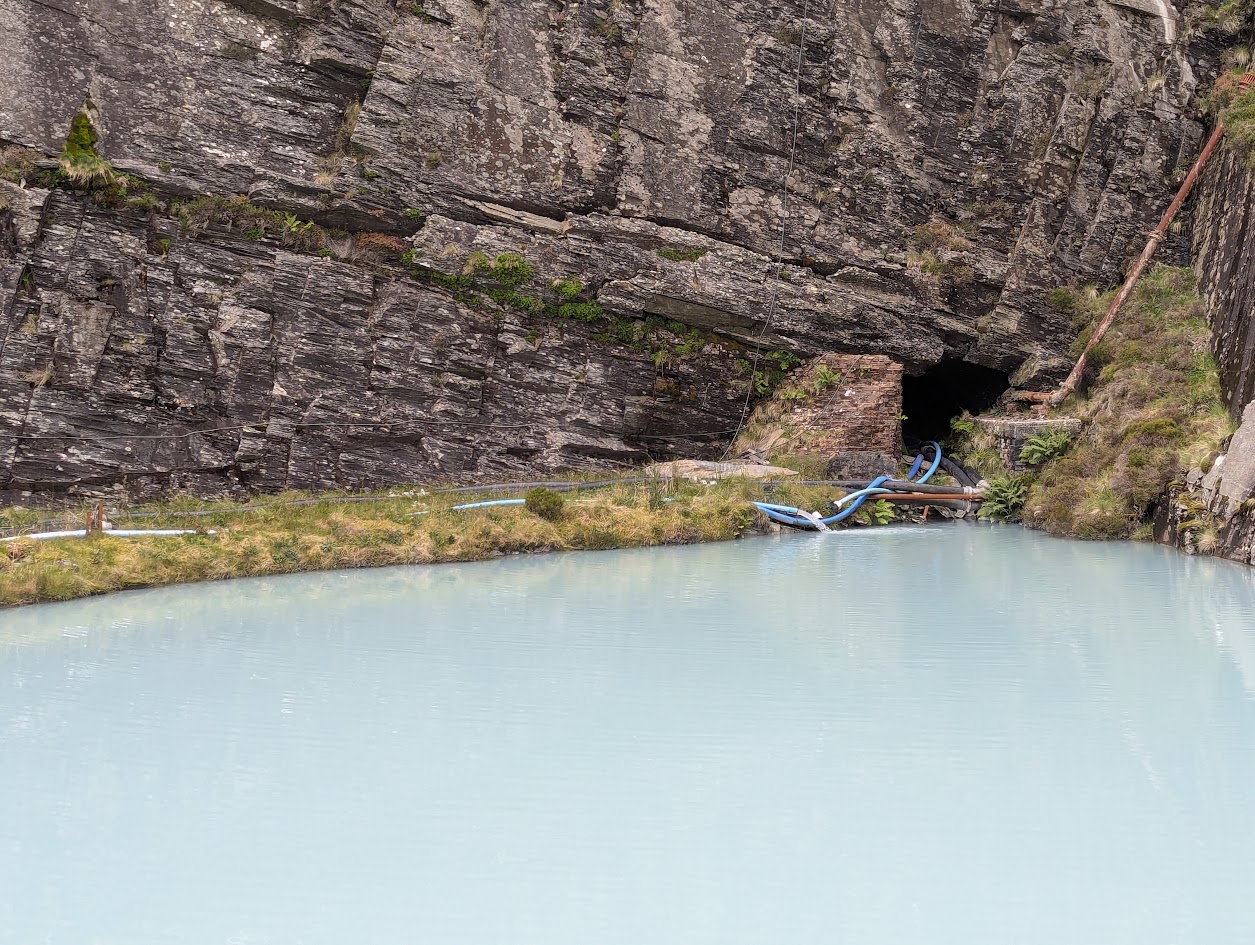
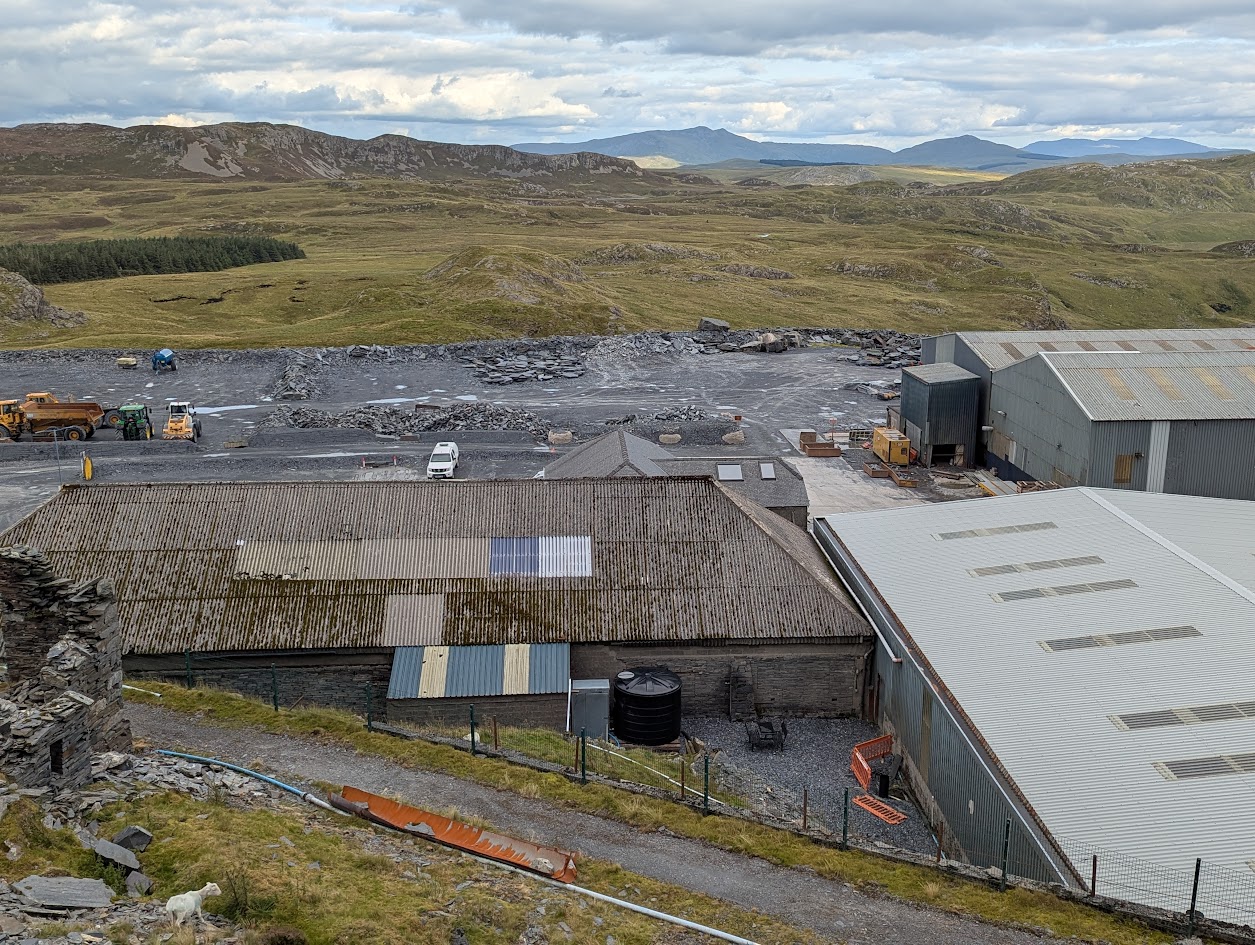
The site is heavily disturbed by ongoing operations and newly cut roads have substantially reshaped much of the landscape. The 1900s incline system has been almost completely obliterated by this activity. The present mill is a modern structure replacing earlier installations, yet the historic office building nevertheless survives as a reminder of the quarry’s past. A fine powder house remains on site, with part of its original wooden lining still intact. Evidence of the former connection to the Rhiwbach Tramway is visible in the line it once followed, and the reversing loop associated with this connection can also be traced across the landscape.
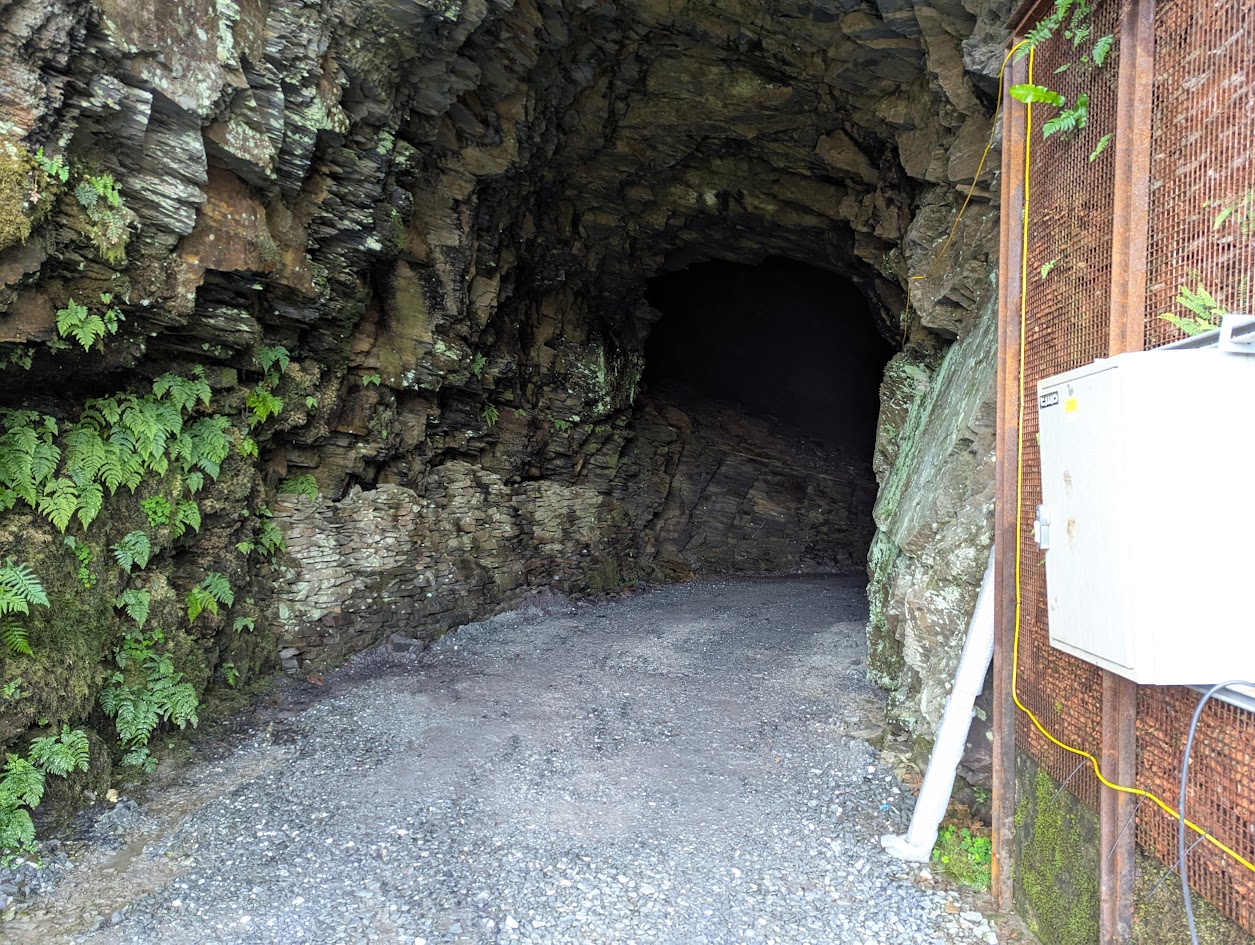
Manod quarry dates from the early 19th century and developed primarily as an underground operation. Connection to the Rhiwbach Tramway in 1866 prompted the installation of a steam-powered mill, marking a significant modernisation of the site. In the early 20th century, the quarry expanded with a subsidiary site opened at SH730458, linked to the main workings by an incline system.
Geological challenges shaped the quarry’s development and productivity. The slate in this area is notably harder to extract due to the lack of foot joints in the rock east of Manod mountain, a factor that constrained output throughout the quarry’s operation. Annual production fluctuated significantly over the years but probably never exceeded around 1,000 tons, making it a relatively modest producer compared to larger regional competitors.
Transport arrangements evolved considerably over time. The original route for moving slate was via Cwm Teigl, a traditional path that proved economical enough to reinstate in the 1930s as a means of avoiding tramway tolls. The quarry’s fortunes changed during World War II when road improvements were created for wartime art storage purposes. These same roads were subsequently utilised by the Department of the Environment during their occupation of the site until the early 1980s. Shortly after de-requisition, the area became a centre for vigorous untopping work in conjunction with Graig Ddu. In its present phase of operation, output is sent as block material to Penrhyn.
Active quarry. A public RoW affords access to view the current mill area. Old inclines are on CRoW land.
External Links
Publications (7)
- (2002); WMS Newsletter Issue 46 Apr; 23 pages
- (2004); WMS Newsletter Issue 50 Spring; 40 pages
- Lindsay, Jean (1974); History of the North Wales Slate Industry; David & Charles; pp.312, 325; ISBN 0-71536-264-X
- Rawlins, F.I.G., (1954);The Evacuation of Pictures from the National Gallery, Studies in Conservation
- Richards, Alun J. (2013); Slate Quarrying in Wales; Gwasg Carreg Gwalch; ISBN 1-84527-026-6
- Richards, Alun John (1991); Gazeteer of the Welsh Slate Industry, A; Gwasg Carreg Gwalch 978-0863811968
- Richards, Alun John, (1999); The Slate Regions of North and Mid Wales and their Railways; Gwasg Carreg Gwalch; 0863815607