



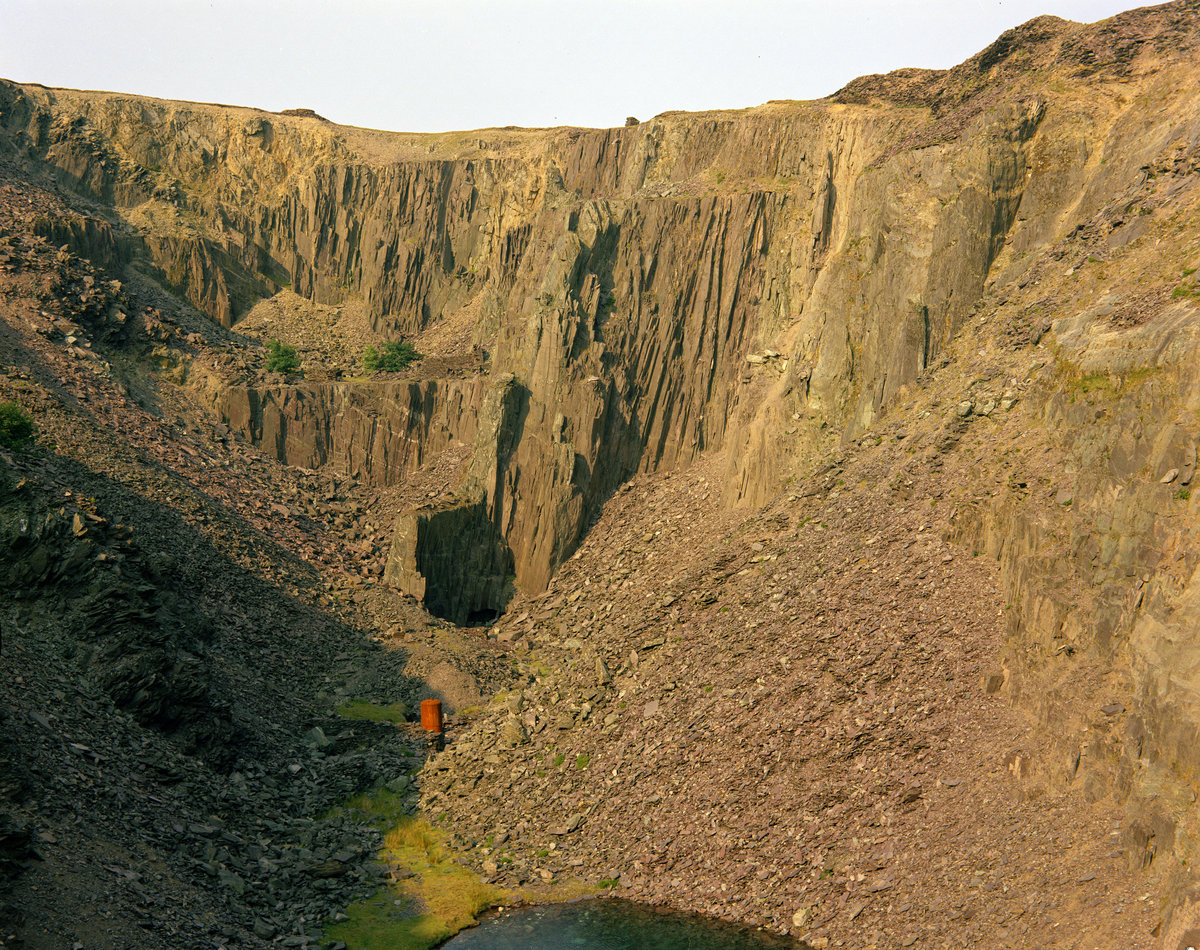
A crater-like pit is surrounded by spoil heaps, with the tunnel to the incline head still open. Tramway routes are traceable, including a link to Brynmawr quarry; slates alongside may reflect later reworking. No buildings survive, though some may have existed in the pit area before the tunnel connection to Cefn Du. A collapsed rubbish-tunnel and vestiges of a short incline remain. *
The quarry is the uppermost of a line of eighteenth-century or earlier quarries on Moel Eilio’s northern slope, though it remained a small operation until the late 1860s. Initially slate was carted to Caernarfon via Waunfawr, but was later linked by tramway to the Ffridd incline for more efficient transport. After amalgamation in 1883, the tramway was abandoned and slate was taken through a tunnel, which also served as a drain, to Cefn Du quarry for processing.
Publications (7)
- (2001); WMS Newsletter Issue 45 Dec; 14 pages
- (2015); Glyn Rhonwy Pumped Storage Scoping Report; 48 pages
- NMRS; Newsletter Dec/2001; p.9.
- NMRS; Newsletter Nov/2013; p.10.
- Richards, Alun J. (2013); Slate Quarrying in Wales; Gwasg Carreg Gwalch; ISBN 1-84527-026-6
- Richards, Alun John (1991); Gazeteer of the Welsh Slate Industry, A; Gwasg Carreg Gwalch 978-0863811968
- Richards, Alun John, (1999); The Slate Regions of North and Mid Wales and their Railways; Gwasg Carreg Gwalch; 0863815641
