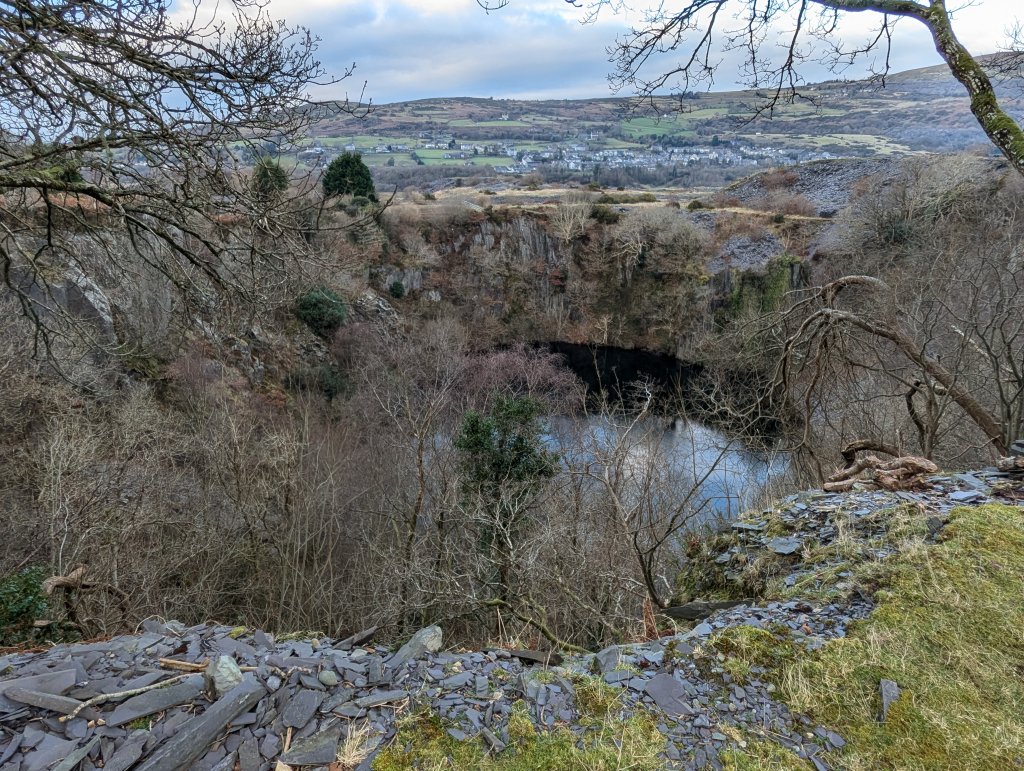



Flooded pit, incline and barracks.**
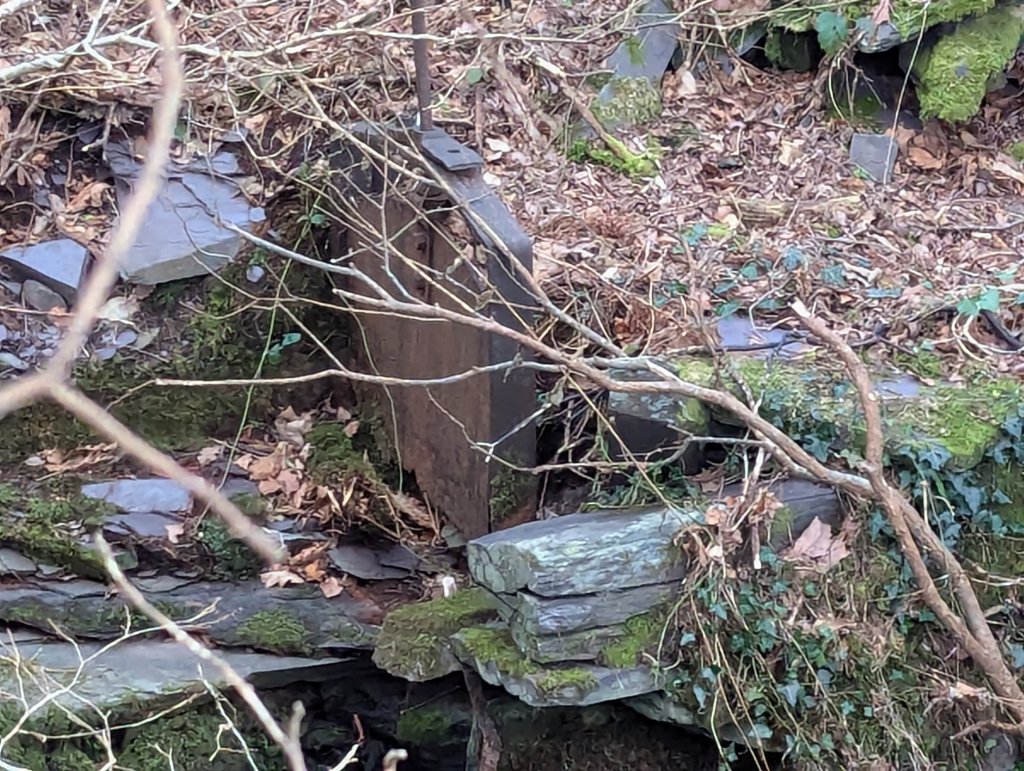
The main working now survives as a flooded pit. Scattered remains include sheds dating from the late period of activity and the formation of the original up-haul incline that carried slate from the pit. Vestiges of earlier structures are still discernible across the site, among them a wheel pit where one of the water-wheels was housed, the abutment of a bridge that once crossed the road, and what may be the ruins of a barracks that accommodated workers.
Sluice at SH 4918 5229 probably related.
Opened in 1805, with slate initially hauled upwards to the north from the workings. Later developments saw a mill constructed on waste tips on the opposite side of the road, improving the efficiency of processing. The quarry worked intermittently throughout its life: in 1873 it recorded an output of around 1,000 tons with 40 men employed, though this was likely an exceptional peak rather than typical production. Transport improved when the quarry gained a connection to the Caernarvonshire Slate Quarries Railway via Fron Heulog. At various times the site possibly operated up to three water-wheels, at least one of which may have been dedicated to pumping operations. By 1938 the workforce had dwindled to just 11 men, and only very small-scale operations continued after the Second World War. Minor extraction persisted on a limited basis until the 1980s.
Public footpath gives access to good viewpoint from the south.
Publications (5)
- (2002); WMS Newsletter Issue 47 Oct; 28 pages
- Gwyn, David, (2015); Welsh Slate: archaeology and history of an industry; Royal Commission on the Ancient and Historical Monuments of Wales; 9781871184518
- Lindsay, Jean (1974); History of the North Wales Slate Industry; David & Charles; pp.332; ISBN 0-71536-264-X
- Richards, Alun J. (2013); Slate Quarrying in Wales; Gwasg Carreg Gwalch; ISBN 1-84527-026-6
- Richards, Alun John (1991); Gazeteer of the Welsh Slate Industry, A; Gwasg Carreg Gwalch 978-0863811968